





More News: Used Vehicle Supply, Prices Dip in January
Wholesale Used-Vehicle Prices Decline in February
The latest numbers more activity in the lanes at Manheim in the second half of the month and finished the last week of February with some of the strongest weekly gains in wholesale prices for many years.
March 7, 2024
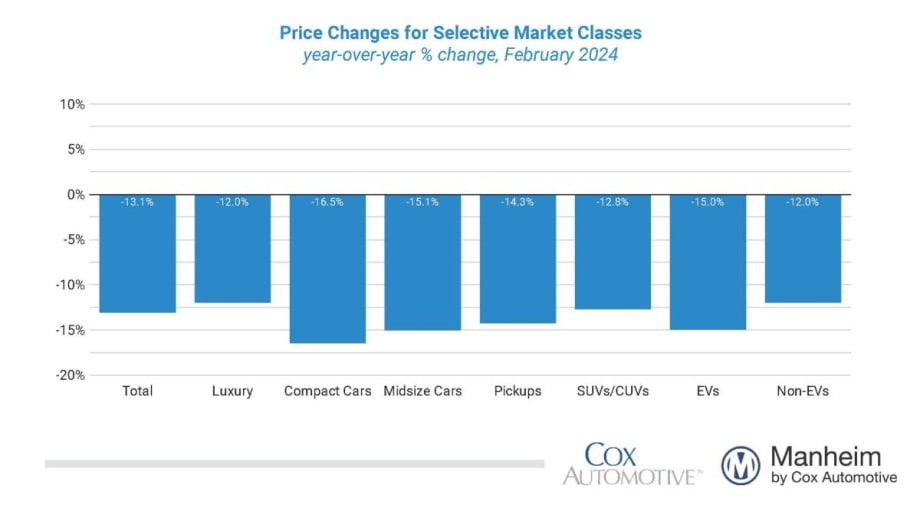
The major market vehicle segments saw seasonally adjusted prices that remained lower year over year in February.
Graphic: Cox Automotive
5 min to read
Wholesale used-vehicle prices (on a mix, mileage, and seasonally adjusted basis) were down in February compared to January, according to the Manheim Used Vehicle Value Index (MUVVI) released March 7.
The index fell to 203.8, a decline of 13.1% from a year ago. It was down 0.1% against January 2024. But the seasonal adjustment magnified February’s results. The non-adjusted price in February increased by 1.7% compared to January, moving the unadjusted average price down 11% year over year.
“Though February activity was muted as we started the month, we saw more activity in the lanes at Manheim in the second half of the month and finished the last week of February with some of the strongest weekly gains in wholesale prices for many years,” said Jeremy Robb, senior director of economic and industry insights for Cox Automotive, in a news release. “Tax refunds have picked up over the last two weeks, with the average refund now 4% higher than 2023 levels at this time. This has put money into consumers’ pockets, and retail purchase activity is increasing. In turn, dealers are coming to the lanes and buying units at Manheim right at the start of the spring selling season for wholesale markets.”
In February, Manheim Market Report (MMR) values saw above-average weekly increases for most of the month and ended February on a high note. During the last four weeks, the Three-Year-Old Index increased an aggregate of 1.6%, including a rise of 0.8% in the last week of the month. Those same four weeks delivered an average increase of 0.8% between 2014 and 2019. For February, daily MMR Retention, which is the difference in price relative to the current MMR, averaged 99.9%, meaning market prices were just below MMR values but moved higher than January. The average daily sales conversion rate increased to 61%, which indicates that demand was improving relative to January, normal for this time of year. For comparison, the daily sales conversion rate averaged 58.6% in February during the last three years.
YOY Prices in Major Vehicle Segments
The major market segments saw seasonally adjusted prices that remained lower year over year in February. Compared to February 2023:
Luxury lost less than the industry, down just 12%
SUVs performed a little better than the industry, declining 12.8%.
Compact cars continued as the worst performers year over year, down 16.5%
Midsize cars were off by 15.1%, and pickups, down 14.3%.
Compared to last month, trucks lost 1.4%, and compact cars were down 0.2%. Declining less than the market overall, midsize cars were up 0.8%, and both luxury and SUVs increased 0.3%.
With the increase in interest in electric vehicle (EV) values versus the non-EV market, Cox is working on sharing metrics for those segments. Seasonally adjusted EV values for February 2024 were down 15%, while non-EVs were down 12% year over year. Considering values against last month, seasonally adjusted EV values increased 1% from January 2024, while non-EVs increased by 0.3% over the same period.
Used Retail Vehicle Sales Increased in February
Assessing retail vehicle sales based on observed changes in units tracked by vAuto, Cox estimates that used-vehicle retail sales in February rose 18% compared to January, while used retail sales are estimated to be up 5% year over year in February. The average retail listing price for a used vehicle declined 1.6% during the last four weeks.
Using estimates of used retail days’ supply based on vAuto data, an initial assessment indicates February ended at 46 days’ supply, down eight days from 54 days at the end of January but two days higher than how February 2023 ended at 44 days.
February’s total new-light-vehicle sales were up 9.6% year over year, with one more selling day than February 2023. By volume, February new-vehicle sales were up 16.6% month over month. The February sales pace, or seasonally adjusted annual rate (SAAR), came in at 15.8 million, an increase from last February’s 14.9 million pace and up significantly from January’s revised 14.9 million level.
Combined sales into large rental, commercial, and government fleets increased 21.4% year over year in February, according to Bobit data. Sales into rental fleets were up 46% year over year, sales into commercial fleets were down 4%, and sales into government fleets were up 1%. Including an estimate for fleet deliveries into dealer and manufacturer channels, the remaining retail sales were estimated to be up 8.8% from last year, leading to an estimated retail SAAR of 12.8 million, up 0.8 million from last year’s pace, and up from January’s 12.3 million level. Fleet share was estimated to be 20%, up slightly from last year’s 19.4% share.
Rental Risk Prices Mixed; Mileage Dropped Significantly in February
The average price for rental risk units sold at auction in February declined 9.1% year over year. Rental risk prices increased by 0.6% compared to January. Average mileage for rental risk units in February (at 46,700 miles) continues to be down compared to a year ago, declining by 23.1% against February 2023. Mileage for units in February was up 8.1% from January.
Most Measures of Consumer Confidence Saw Declines in February
The Conference Board Consumer Confidence Index declined by 3.8% in February, as views of the present situation gave up some of January’s gains and views of the future also declined. Consumer confidence was up 3.2% year over year. Plans to purchase a vehicle in the next six months increased and were up substantially year over year.
Consumer sentiment according to the sentiment index from the University of Michigan also declined in February. The Michigan index declined 2.7% for the month but was up 15% year over year. The median consumer expectation for inflation in a year increased to 3%, but the expectation for five years remained at 2.9%. The consumers’ view of buying conditions for vehicles increased to the highest level since July 2021 as views of prices and interest rates were less negative.
The daily index of consumer sentiment from Morning Consult increased in February and left the index up 11.4% year over year. The divergence with the other two indices is likely related to the timing of when surveys are collected. All the indices are up so far in 2024. The daily index increased 2.8% from the end of January.
Gas prices increased in February. The national average price for unleaded gasoline increased 5.7% to $3.33 per gallon as of Feb. 29, which was down 1% year over year, according to AAA.
Originally posted on Automotive Fleet
More Remarketing
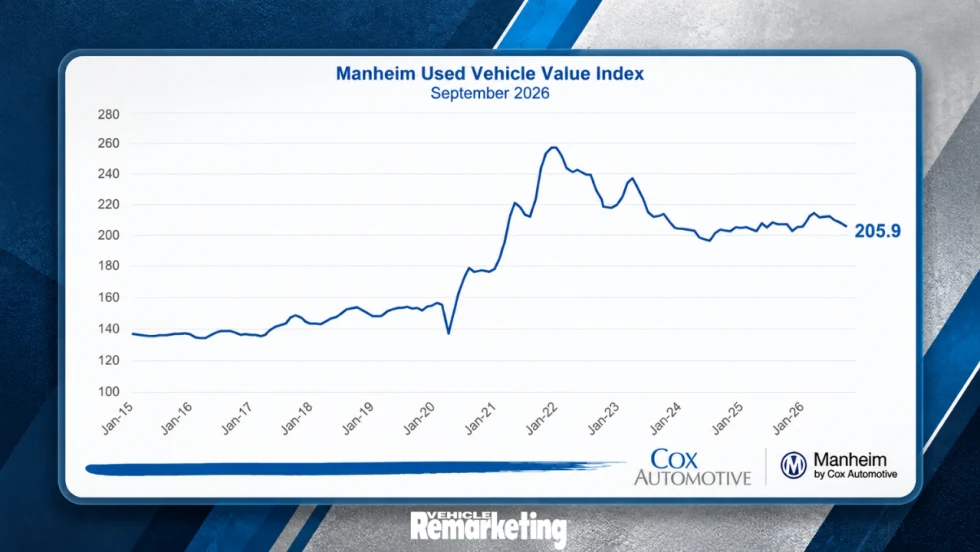
Wholesale Used-Vehicle Values Fall as Cox Automotive Cuts 2026 Forecast
Wholesale used-vehicle prices declined in September as depreciation accelerated, prompting Cox Automotive to lower its year-end forecast.
Read More →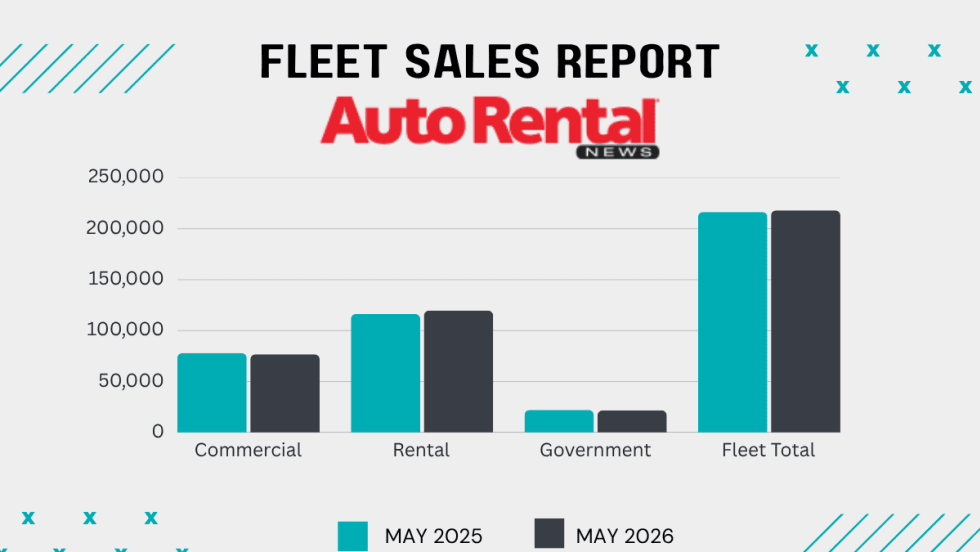
Rental Fleet Sales Skating Just Above 2025 Levels
The U.S. economy's continued growth and positive business investment are creating a favorable environment for fleet vehicle demand.
Read More →
Cross-Pressures, Evolving Trends Drive 2026 Rental Car Industry
A combination of cautious economic behavior, shifts in the rental vehicle market, and technological influences are shaping car rental operator decisions.
Read More →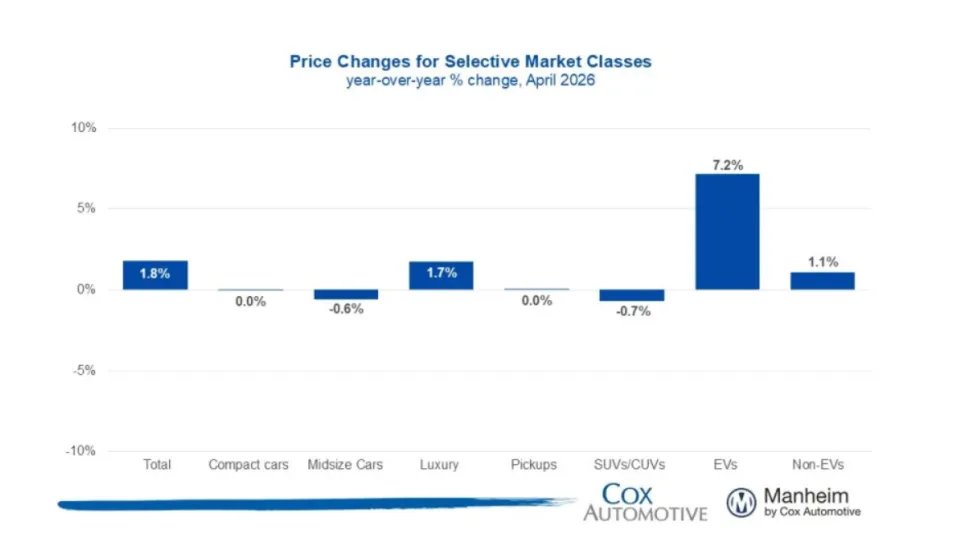
Wholesale Used Vehicle Prices Slightly Up In April
The Iranian conflict and rising gas prices inject much uncertainty into the future wholesale used vehicle markets, as higher gas prices soak up spendable income from vehicle buyers.
Read More →
Surprice Opens Two Rental Branches In Japan
The launch highlights the global car rental operation’s growing presence in Asia.
Read More →
Wholesale Used Vehicle Prices Up In February
Solid demand at Manheim auctions with higher sales conversion rates indicate an appetite from dealers to buy.
Read More →
Rental Fleet Sales Slow In February Ending A Strong Streak
Commercial fleets posted the most gains, sustaining increases in monthly and year-to-date fleet sales
Read More →
Avis Budget Group Reports Near $1 Billion Loss Tied To 2025 EV Fleet Write-Down
Following Hertz, the company is the second global car rental conglomerate to sustain sizable losses due to lower customer demand and usage of electric rental cars.
Read More →
2025 Rental Vehicle Remarketing Summary And Outlook
The year brought modest and flatter results across wholesale values, total off-rental supply, and rental risk units.
Read More →
Auctions Record Highest Vehicle Sales Since 2019
2025 figures show a steady recovery in wholesale vehicle activity this decade.
Read More →