





Background News:New Vehicle Supply Rises Despite UAW Strike
U.S. Auto Sales Up in October Despite UAW Strike
While the UAW strike has slowed output at auto factories nationwide, the fallout has not fully hit consumers in dealer showrooms.
October 30, 2023
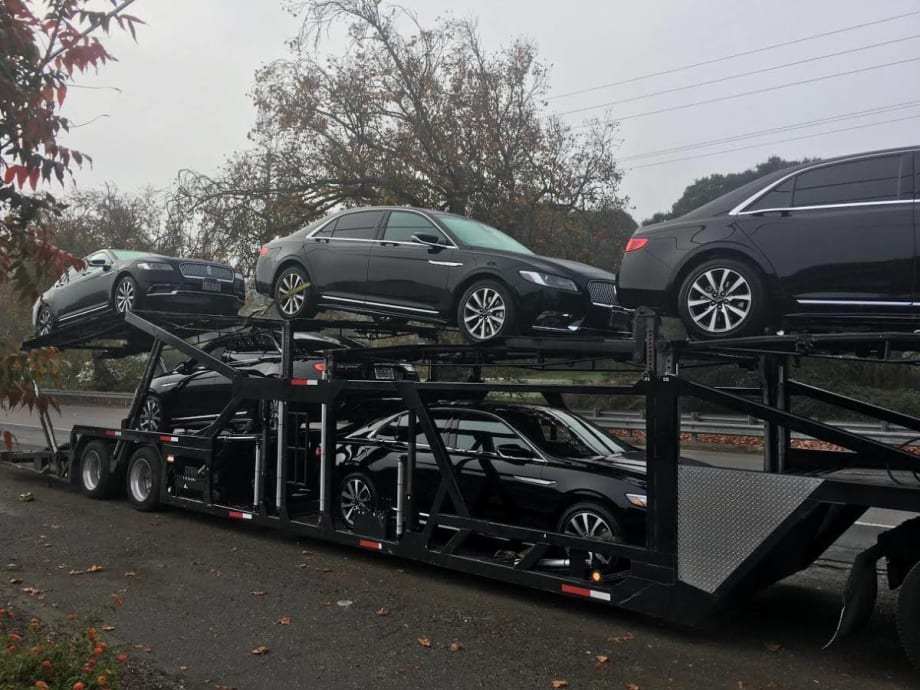
Vehicle inventory is holding up so far during the UAW strike, with enough product arriving at dealerships to meet demand.
File photo: Bobit
3 min to read
Amid economic and political uncertainty throughout October, new-vehicle sales remain remarkably stable, according to a forecast by Cox Automotive released Oct. 25.
New-vehicle sales volume in the U.S. is expected to rise nearly 4% compared to October 2022, a market that was in the early stages of recovery from severe product shortages.
The October seasonally adjusted annual rate (SAAR), or sales pace, is expected to finish near 15.8 million, up 1.1 million from last year’s pace and a slight gain over last month’s 15.7 million level. The sales strength continues to stand out, given the current economic climate and the fact average new-vehicle auto loans are flirting with 10%.
However, some of these sales gains and good news can be attributed to seasonal adjustments, as October has one less selling day than October 2022 and last month.
“Though there are many headwinds in the market today, new-vehicle sales continue to show gains over last year’s supply-constrained market," said Charlie Chesbrough, senior economist at Cox Automotive, in a news release. " Concerns about high interest rates, a potential economic recession, and the ongoing UAW strike are all likely holding back some potential vehicle buyers. However, there are still enough individuals and businesses with the need and ability to buy vehicles, which has helped sustain the sales recovery.”
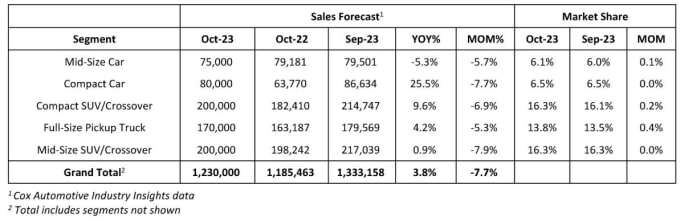
Estimates from vAuto in mid-October suggest industry-wide, new-vehicle inventory in the U.S. was at 2.3 million units, up from 2.1 million in mid-September, when the strike began, and well above the estimate of 1.5 million for mid-October 2022.
Graphic: Cox Automotive
New-Vehicle Inventory Levels Grow
A key driver of new-vehicle sales strength has been growing inventory levels across the industry. Despite the ongoing UAW strike slowing production across the major Detroit-based automakers, estimates from vAuto in mid-October suggest industry-wide, new-vehicle inventory in the U.S. was at 2.3 million units, up from 2.1 million in mid-September, when the strike began, and well above the estimate of 1.5 million for mid-October 2022. Days’ supply in mid-October reached 62, the highest point since the spring of 2021. A year ago, days’ supply was at 48.
Toyota and Honda continue to show the lowest measure of days’ supply, at under 23 days. Of the Detroit brands, where production is being hurt by the UAW strike, Chevrolet and Cadillac had the tightest supply in mid-October, both below the industry average of 62. Ford had 90 days’ supply in the same timeframe, while Lincoln and the core Stellantis brands had inventory levels well above 100 days’ supply.
“While the UAW strike is certainly slowing down production at select assembly plants across the U.S., the impact has not yet fully materialized for consumers in the showroom," Chesbrough said. "Compared to this point last year, industry inventory levels are much higher, which is helping support — to this point at least — relatively healthy new-vehicle sales.”
All percentages are based on raw volume, not daily selling rate. There were 25 selling days in October 2023, one less than September and one less than October 2022.
Originally posted on Vehicle Remarketing
More Fleet Acquisition
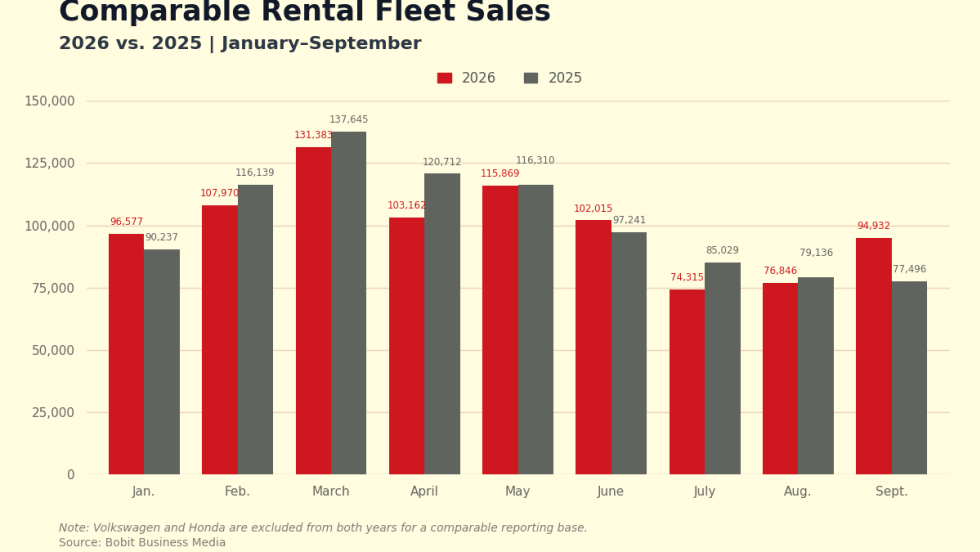
September Rental Fleet Sales Jump 22.5%, Narrowing Year-to-Date Decline
Comparable rental fleet sales remained 1.8% below 2025 through September, as a stronger month cut the year-to-date shortfall by more than half.
Read More →
Rental Vehicle Orders Remain Steady Amid Supply Concerns
With Hyundai’s South Korean strike creating uncertainty for 2027-model-year deliveries, Mike Muehlenfeld of Walser Automotive Group says rental operators are maintaining normal purchasing levels and generating strong returns at disposal.
Read More →
Global Carsharing Fleet Projected to Reach 768,000 Vehicles By 2030
A new Berg Insight forecast outlines several business models driving the projected growth in public carsharing worldwide through 2029.
Read More →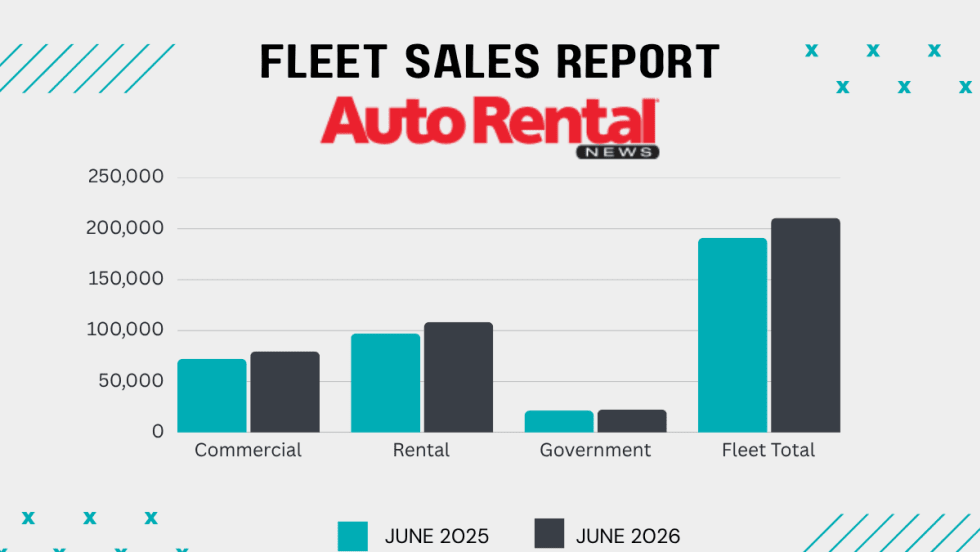
Rental Car Fleet Sales Show Mid-Year Strength
June gains ensured rental fleets closed out the first half of 2026 in positive territory.
Read More →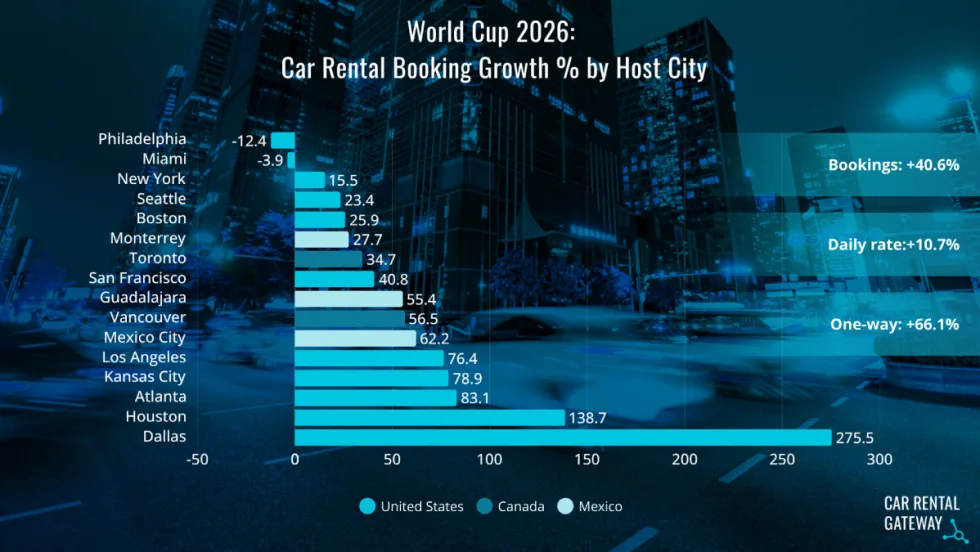
World Cup Travel Data Shows Longer Car Rentals and More One-Ways
A recent analysis of FIFA bookings found varied demand patterns that influenced rental car pricing.
Read More →
A Leveling Force: AI Morphs Into A Rental Car Profit-Seeker
Revenue managers can’t match the emerging AI tools gobbling lots of data that could counter the competitive race to the rate bottom.
Read More →
Rethink The Future To Avert A Race To The Bottom
Rental car operators heard a sobering industry message and a stern challenge at the close of the International Car Rental Show.
Read More →
DriveItAway, Free2move Plan Shared Fleet Program for Independent Rental Fleet Operators
Vehicles would be placed with participating rental operations to support car renter demand and provide additional fleet capacity.
Read More →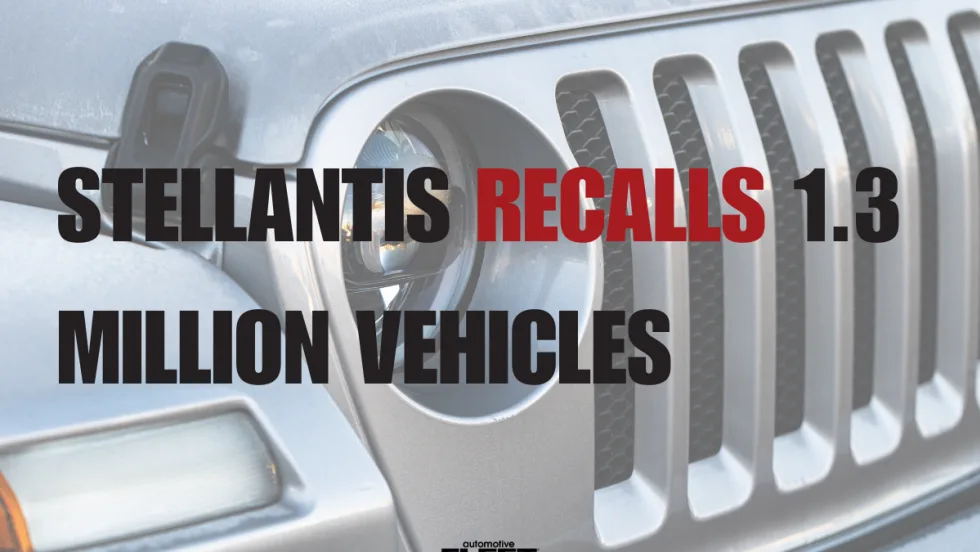
Stellantis Recalls 1.3 Million Jeep Vehicles Worldwide Over Fire Risk
Stellantis is recalling more than 1.3 million Jeep Wrangler and Gladiator models worldwide over a fire risk linked to power steering pump wiring.
Read More →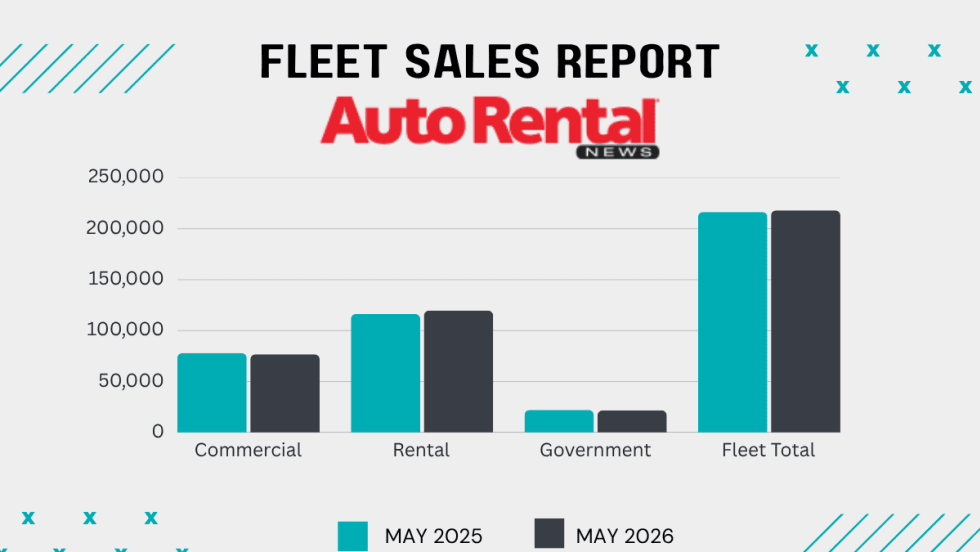
Rental Fleet Sales Skating Just Above 2025 Levels
The U.S. economy's continued growth and positive business investment are creating a favorable environment for fleet vehicle demand.
Read More →