





ICRS 2025:How to Max Car Rental Revenues
ACRA Takes Bold Strides On Capitol Hill
The American Car Rental Association’s annual legislative and lobbying event upped the face time with and access to members of Congress.
September 29, 2025

Brett Lippel, chief parternship officer and SVP of sales for SYCN Auto Logistics, reported the results of a roundtable during a workshop session at the American Car Rental Association's Policy and Performance Conference on Sept. 15 in Washington, D.C. The event brought together 100+ members of the rental car industry to discuss key issues facing rental fleet operations.
Photo: Martin Romjue / Auto Rental News
12 min to read
- The American Car Rental Association held its annual legislative and lobbying event. focused on increasing interaction and access between the association and members of Congress.
- This initiative aimed to strengthen the association's influence and representation on Capitol Hill.
*Summarized by AI
The American Car Rental Association renamed its annual conference this year to focus on two intertwined industry pursuits: Policies and performance.
Get the policies right, then car rental companies and operators stand a better chance of stronger performance.
The 2025 ACRA Policy and Performance Conference gathered one mile from the U.S. Capitol, Sept. 14-17, to coach participants on lobbying messages while educating them on running more financially solid businesses.
The conference hosted 101 registered attendees, with 73 of them splitting up into teams on Sept. 16 that shuttled among offices in three U.S. Senate buildings and three U.S. House of Representative buildings on the north and south sides of the Capitol.
Attendees collectively held 40 Senate and 32 House of Representatives meetings, divided among 36 Democrat offices and 36 Republican offices from 36 states. Eight of the meetings involved a member of Congress.
“Our 2025 conference was the largest DC gathering in ACRA’s history and a clear success for our members and our industry,” said Don Lefeve, president of ACRA, who organized his first event for the trade group since joining in February. “Over the course of the event, operators learned practical strategies to improve their businesses, engaged with industry experts on the challenges and opportunities ahead, and collaborated with peers on solutions. Capitol Hill Day reinforced our collective voice in Washington.”
According to ACRA, rental car companies help form the critical transportation infrastructure of the U.S. Rental companies purchase nearly 10% of all new vehicles sold in the U.S. each year, making them a major customer of automakers.
The sector contributes billions of dollars in tax revenue through state sales taxes, airport concession fees, and vehicle licensing fees. Every dollar spent on rental activity generates over four dollars in GDP impact.
Among key car rental industry stats:
2.28 million vehicles in service
160,000–170,000 direct jobs nationwide
$5–7 billion in annual federal, state & local taxes and airport fees.
$135+ billion in annual total output (direct + indirect + induced)
500,000–600,000 American jobs supported
$60–65 billion in GDP contribution
$7–10 billion in federal, state, and local tax revenues
“I know a lot of the work that we do isn't necessarily visible, but we are fighting so many wars on so many fronts, and we are so much more visible now,” said ACRA Chairman Sharky Laguana, while praising the efforts of Lefeve and former ACRA executive director Sharon Faulkner. “We’re learning how to be better operators, but we're also learning how to be better fighters.”

ACRA Chairman Sharky Laguana, ACRA board director Bill Wallschlaeger, and ACRA President and CEO Don Lefeve look on as Rep. Laurel Lee, R-15th District, Florida, speaks to an evening non-fundraising reception hosted by the ACRA PAC near Capitol Hill on Sept. 16, 2025.
Photo: Martin Romjue / Auto Rental News
The Big 3 Issues:
ACRA this year focused on three main priorities that it explained in a conference primer:
Keeping the Graves Amendment: Congress included the Graves Amendment in the Safe, Accountable, Flexible, Efficient Transportation Equity Act: A Legacy for Users (SAFETEALU), signed into law in 2005. Named after its sponsor, Representative Sam Graves (R-MO), federal law now preempts all state laws that impose vicarious liability on vehicle rental or leasing companies.
The Graves Amendment prohibits states from holding rental and leasing companies liable for harm caused by renters or lessees, provided the company itself was not negligent or engaged in criminal wrongdoing. The statute struck a critical balance: Preserving the right to hold companies accountable when they are at fault, while eliminating nofault liability based solely on ownership.
The amendment was milestone for the vehicle rental and leasing industry. By providing blanket federal protection, the law allows companies to operate across state lines without fear of unpredictable liability exposure.
It allowed smaller rental businesses to compete more in markets where previously only larger corporations could afford the legal risks. The law also reinforced a broader principle in civil justice: That liability should be based on fault, not on status or ownership alone.
Vehicle Recall Compliance: In 2015, Congress passed the Raechel and Jacqueline Houck Safe Rental Car Act (part of the FAST Act), requiring certain rental companies with fleets of 35 or more vehicles to ground and repair recalled vehicles before renting or selling them. While the law does not expressly mention peer-to-peer (P2P) car rental platforms, the fleet-size threshold means that hosts on such platforms with 35 or more vehicles are clearly covered.
However, P2P platforms handle millions of rentals annually without consistent oversight or recall verification. Unlike traditional rental companies, which generally maintain compliance departments and established procedures for grounding vehicles, P2P platforms are not obligated to ensure safety recalls are remedied before renting out vehicles.
Studies show privately owned vehicles are far more likely to have unresolved recalls than fleet-managed vehicles. Traditional car rental companies routinely have 2–5% of their fleets grounded due to recalls, sometimes sidelining hundreds of vehicles for months. By contrast, individual owners may not track recall notices or may lack the resources or incentive to act promptly.
Without platform involvement, three major risks remain:
Safety risks: Recalled vehicles may be unknowingly rented to consumers.
Compliance gap: Hosts with more than 35 vehicles may be unaware that they are subject to federal law.
Lack of enforcement

Attendees split up into lobbying teams on Sept. 16 that shuttled among offices in three U.S. Senate buildings and three U.S. House of Representative buildings. Pictured here (L to R) in the lobby of the Hart Senate Office Building: Craig Tuberville, VP of Viking Client Services; ACRA board director Bill Wallschlaeger and daughter Emily Wallschlaeger of Midwestern Wheels; Zubie CEO Chad Caswell; and Jeremiah Schwesenska of Midwestern Wheels.
Photo: Martin Romjue / Auto Rental News
Vehicle Data Access: Vehicles now generate, store, and transmit significant volumes of operational data, such as mileage, fuel levels, tire pressure, and location. This vehicle-generated data is critical to managing fleet safety, ensuring proper maintenance, and delivering reliable service to millions of consumers each year.
Historically, this data remained with the vehicle and was fully accessible to its owner. However, as vehicles have become more connected, original equipment manufacturers (OEMs) have assumed increasing control over this data and often limit vehicle owners’ access to it, including rental car operators, who own the vehicles and collectively are the largest procurers of vehicles in the United States. ACRA believes this is a growing concern that warrants congressional action.
ACRA is a founding member of the American Vehicle Owners Alliance (AVOA), a coalition dedicated to preserving vehicle owners’ rights to access and control their own vehicle-generated data. AVOA and its members believe strongly that data access must reside with the vehicle owner —not solely with the manufacturer or third-party intermediaries.
Leading cybersecurity experts have echoed this position, warning that centralized control of vehicle data undermines cybersecurity, stifles innovation, and limits competition. Enabling fleet owners and individual consumers to access their vehicle data directly is not only a matter of ownership rights but also essential to a secure and competitive mobility ecosystem.
ACRA supported the Auto Data Privacy and Autonomy Act (H.R.10473) and S.5579), last Congress introduced by Rep. Eric Burlison, R-Missouri, and Sen. Mike Lee, R-Utah. This legislation would ensure vehicle owners retain unrestricted access to the data generated by the vehicles they own or operate.
Financial and Fleet Performance Lead Sessions
Dedicating Sept. 15 as a day of performance, one of the overriding themes in educational sessions centered on long-term profitability for rental fleet operations. That requires careful planning, accurate cost analysis, and the discipline to sell vehicles at the right time, in the right condition, and through the right channels.
Mike DeLorenzo, president of NP Auto Group, owner of the Nextcar, Priceless, and Rent-A-Wreck brands, led a session about rental fleet performance metrics.
A veteran of over five decades in car rental, he shared a detailed analysis of fleet costs, depreciation, and usage. He explained the difference between tax depreciation, used for accounting, and operating depreciation, which reflects the true decline in vehicle value.

Mike DeLorenzo, president of NP Auto Group, owner of the Nextcar, Priceless, and Rent-A-Wreck brands, led a session about rental fleet performance metrics.
Photo: Martin Romjue / Auto Rental News
“I'm always amazed at how people don't understand depreciation,” DeLorenzo said. “Depreciation is the expected reduction in value of a vehicle, usually expressed in daily or monthly dollar amounts.”
Using a Toyota Camry as an example, he illustrated how monthly depreciation, interest, and insurance combine to produce high fixed costs. A vehicle costing $28,000 with 1.8% monthly depreciation yields $504 in depreciation expenses per month, with interest and insurance pushing total fixed costs to around $872 monthly, or $28.14 daily.
“If you have a business plan, you need to know what your costs are,” DeLorenzo said. “I'm always amazed that nobody takes time to figure out what their costs are and what their rental rates need to be.”
Operators must know their true costs to remain profitable, estimating that cars need to generate at least $1,300 per month at 70% usage, he said. Many markets are not achieving necessary daily rental rates given rising vehicle prices since 2019, he said.
“You're always trying to adjust your fleet size based on your seasonal flow. Every market is different. My general rule is, the warmer the temperature, the more business you have; the colder the temperature, the less business you have unless you are in a serious ski area. For the rest of us, cold temperatures mean fewer customers.”
Operators should focus on incremental sales, pointing out that much of the industry’s profit comes from selling used cars rather than from rentals. Typically, vehicles are sold after 10–18 months and between 18,000–48,000 miles, with shorter holding periods minimizing maintenance costs.
“When I'm teaching my franchisees, I tell them they’re not really a rental car business. Rental cars are just a cash flow game that we play to generate and then make them used cars by depreciating it for 10-, 12-, 24-months. Somewhere along that path would be everybody's business plan. Most of the money they will make in this business is selling used cars. That's where the real money is in this game. The car rental piece of it is just the cash flow to get to the end of the trade.”
Maintenance costs, such as oil changes and tire replacements, have risen dramatically since 2019, further pressuring profit margins, DeLorenzo said. Rental operators should run their cars for as long as they only require low maintenance, such as tire rotations and oil changes.

ACRA's Laguana joined Shawn Yadon, a senior advisor to Copart, for a session on rental vehicle depreciation and equity, and long-term risk management for a rental fleet.
Photo: Martin Romjue / Auto Rental News
Vehicle Depreciation & Profit Appreciation
Elaborating on DeLorenzo’s insights, Laguana joined Copart senior advisor Shawn Yadon for a session on depreciation, equity, and long-term risk management.
Drawing on his own fleet data, Laguana explained how vehicle value, loan balance, and equity interact over time.
The dreaded implosion occurs when a vehicle’s market value falls below the outstanding loan balance, forcing operators to sell at a loss and still owe lenders. Laguana noted that even experienced operators encounter this scenario during market shocks like the pandemic, when vehicle supply collapsed and values fluctuated unpredictably.
One way to avoid such outcomes is to apply bonus depreciation, detailed in Section 179 in the IRS Tax Code. It enables car rental operators to fully depreciate and expense rental vehicles and assets the year they place them into service. ACRA has advocated full bonus depreciation, most notably at last year’s ACRA legislative conference. Participants lobbied to restore the temporary version passed under the 2017 Tax Cuts and Jobs Act (TCJA) which scheduled full expensing/depreciation to start sunsetting in 2022 by phasing out in 20% annual increments until phased out entirely after Dec. 31, 2026.
Congress recently restored full expensing deduction and made it permanent, allowing businesses to fully expense these investments in the year they are placed in service. The measure passed as part of the One Big Beautiful Bill (OBBB), signed July 4.
“The nice thing about full expensing is if I happen to have $65,000 of taxable profit in that year, I get to fully expense $65,000 of depreciation [on a car],” Laguana said. “Now we have zero taxes. if you ever wonder how it is that billionaires can make all this money and pay so little in taxes, it's because they're doing some version of that. They're fully depreciating assets they're buying, and then they're using the depreciation to offset income.”
While this reduces taxable income in the short term and at times can eliminate tax bills altogether, it does not erase tax obligations. Instead, it defers them. When vehicles are sold, the IRS imposes depreciation recapture, often creating significant tax liabilities.
Operators who fail to plan for this may find themselves blindsided when retiring, selling their businesses, or facing downturns where they cannot replace vehicles sold quickly enough to offset taxes.
“You're not a smart operator if you're not always thinking about the ‘flag of death,’ because you never know when something will fundamentally change the equation,” Laguana said. “Maybe it's a pandemic, a war, a catastrophe, retirement, or a need to sell the business. You should be planning for accumulated depreciation as progress through your career.”
Laguana shared an app tool he developed, www.vehicle-depreciation.com, which models vehicle equity, loan balances, and depreciation rates, allowing companies to test scenarios by entering specific vehicle and financial metrics to identify the intervals where vehicles generate a consistent profit.
A heavy-use rental vehicle can remain underwater for months, forcing operators into risky positions. By contrast, strategic planning can align vehicle sales with the point where equity overtakes debt, generating more profits.
Focusing on auctions and resales, Yadon underscored calculating industry norms of 20%–30% annual depreciation in the first two years and a 12–24-month window sweet spot for reselling rental fleet vehicles. Copart sells 4.5 million vehicles a year on its live online auction platform that reaches buyers in 190 countries.
Seasonality also plays a key role, with February to May and September to November being peak times for stronger resale values, as dealers seek to restock inventory, Yadon said. Presenting vehicles in good condition with minimal maintenance yields higher bids, since international buyers prefer cars requiring little reconditioning.
Yadon cautioned that external factors such as tariffs, tax policies, and the adoption of electric vehicles are reshaping the resale landscape. Tariff uncertainty can disrupt pricing, while new tax deductions may incentivize operators to refresh fleets earlier than planned.
“Every time tariffs [emerge], it raises more questions than gives answers,” Yadon said. “You can look at the tariffs in place now, but how will play out for the OEMs that still have vehicles they imported before the tariffs? Are you seeing impacts on prices? On the new side? Maybe not so much, but we know they're coming. How will that affect how you handle new vehicle purchases, or how you will exit vehicles on the used side? Much remains to be seen.”
To navigate the fleet finances, rental car operators should balance out their fleet cycling and maintenance plans, aware that the steepest depreciation curve happens during the first several months of owning a new fleet vehicle, Yadon advised.
“Many people in the industry would benefit from being more sophisticated and intelligent about fleet maintenance structure. There are benefits to be found in managing that relationship, because if you can hold the vehicle for longer, your depreciation curve is flatter.”
On the other hand, rental fleet operators should maintain a fleet cycling flow that can provide liquidity, Yadon said. “If you have constant sales, you will have consistent relationships. When you order from manufacturers, they'll be more interested in taking your orders.”
In planning out time and mileage limits for fleet turnover, “it’s a philosophical question to ask yourself.,” Yadon said. “Whatever you answer, there should be a strategic thought process on it. You want to be this, so therefore you will do that. It doesn't make any sense for a two-star hotel to offer room service with a five-star meal. Figure out which one you want to be. You're either competing on value or on price, or you're competing on service, but find your zone and adjust accordingly.”
Subscribe to Our Newsletter
More Legal & Legislative
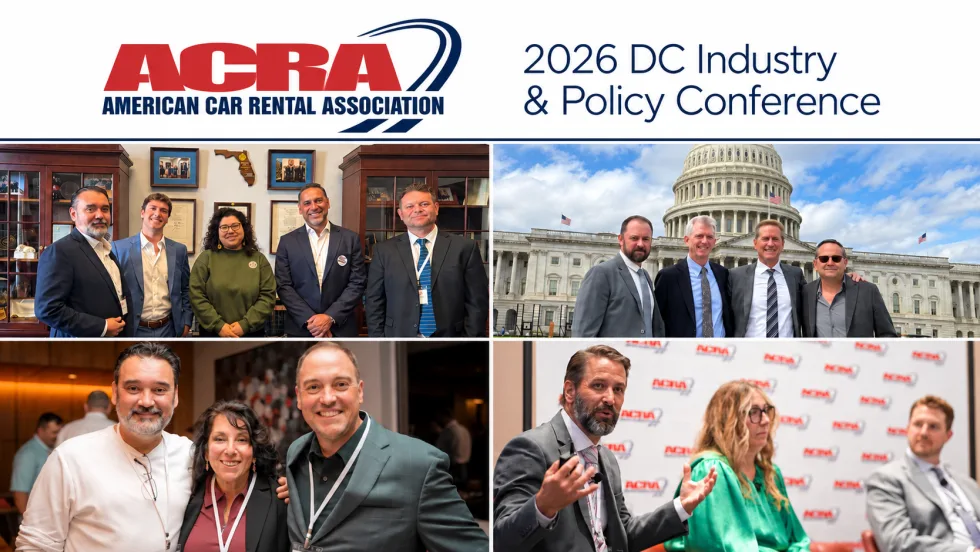
ACRA 2026 Annual DC Industry & Policy Conference in Photos
Car rental made its voice heard on Capitol Hill Sept. 22-25.
Read More →
Hertz Settlement Expands Hand-Control Rental Vehicle Availability
A court-approved ADA settlement requires Hertz to add dedicated hand-control minivans, expand reservation access, and, when necessary, offer the least expensive vehicle capable of accepting hand controls.
Read More →
Federal Appeals Court Upholds Colorado’s $3 Rental Car Fee
In a case brought by the American Car Rental Association on behalf of the rental industry, the 10th Circuit ruled that Colorado’s congestion impact fee falls on renters — not rental companies — and can remain in effect.
Read More →
ACRA Carrying Fuller Industry Load As AI and EVs Lurk In Future
The leading car rental professional business group details an active legislative, regulatory, and macro-trends agenda affecting car rental operators.
Read More →
Government Affairs Executive Wins Leading Rental Car Industry Award
Robert Muhs started in the car rental industry with Avis Budget Group two years before the first International Car Rental Show.
Read More →
Using AI To Find Rental Car Damage
Angry car renters are storming social media, the mainstream media, and online ratings platforms to complain about charges they claim are either unfounded or excessive.
Read More →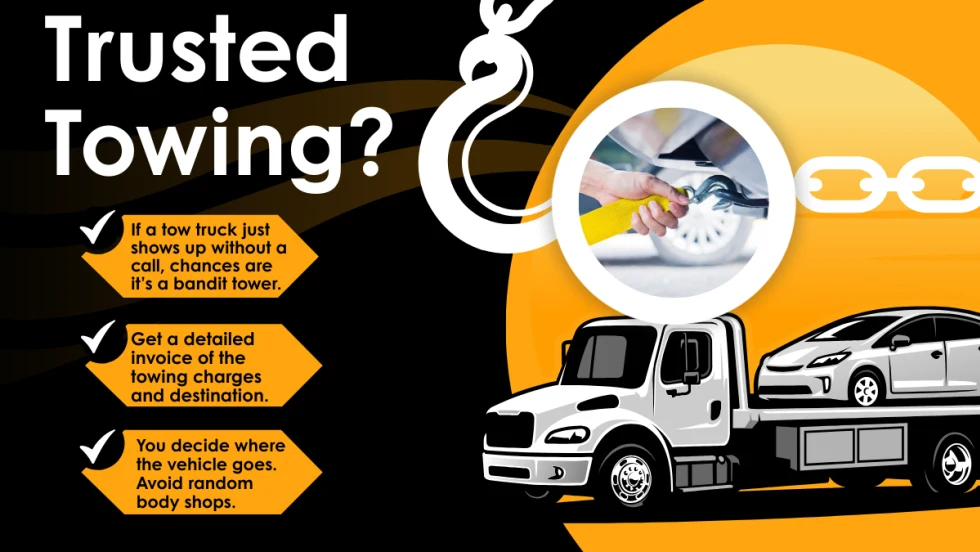
Bandit Towing A Tough Road For Car Rental Companies
Operators often must spend far too much time and resources trying to recoup rental cars towed away and held hostage to outrageously high fees.
Read More →
Bandit Towing A Tough Road For Car Rental Companies
Operators often must spend far too much time and resources trying to recoup rental cars towed away and held hostage to outrageously high fees.
Read More →
ACRA: Spurring Car Rental Industry Success
The American Car Rental Association scored more access and influence in 2025 as it grows its services for car rental operators.
Read More →
AVOA Partners with AALA and NLC
The American Vehicle Owners Alliance (AVOA) recently announced its partnership with the American Automotive Leasing Association (AALA) and the National League of Cities (NLC).
Read More →