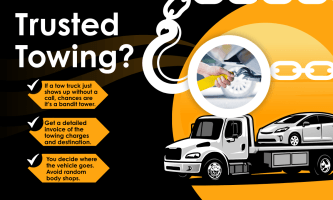
Bandit towing impacts everyone. Costs are passed down to consumers through higher insurance premiums and rental rates.
Credit:
Martin Romjue / Auto Rental News
10 min to read
Car rental companies face challenges in recovering vehicles that have been towed and impounded.
High impound fees exacerbate the difficulty in retrieving these rental cars, slowing down operations.
Operators invest a lot of time and resources in navigating these towing disputes and recouping vehicles.
*Summarized by AI
Car rental operations are increasingly losing money and time trying to find and retrieve rental cars that have been towed away from accidents or for other reasons.
Known as bandit towing, these organized illegal operations plague commercial, rental, and private vehicle owners alike.
Ad Loading...
The practice is considered rampant in Los Angeles and across California, with rental cars becoming easy targets. The practice has accelerated in the last decade as more rental companies have had to track and recoup cars. No official overall incident numbers are available other than those documented by individual companies.
Bandit towing impacts everyone involved. Costs are passed down to companies, owners, and consumers through higher insurance premiums and rental rates.
Bandit towing impacts everyone. Costs are passed down to consumers through higher insurance premiums and rental rates.
Caroline Kim, director of loss control for Midway Car Rental in Los Angeles, who handles such cases,
A car renter may rent a vehicle and get into a minor collision, such as a fender bender or a left-turn accident, and a tow truck will immediately show up at the scene. The tow operator tells the renter that the car notified them of the accident, and they have come to help.
Most consumers do not realize vehicles cannot automatically notify towing companies, so they believe the tow truck is legitimate.
The tow truck operator picks up the car and says they will return it to the rental agency, but the car never arrives. The renter is given a business card and later contacts the rental company with the information. The rental company then attempts to locate the vehicle and is told it is either at a body shop or an impound yard. By the second or third day, the bill often exceeds $3,600.
Registered vehicle owners are ultimately responsible for the cars, Kim said. Renters who are vacationing or unfamiliar with the area are especially vulnerable. Foreign renters often want to leave the country quickly and are more likely to believe the tow truck was dispatched by the rental agency or the vehicle manufacturer.
“Renters, especially those unfamiliar with the area, often believe them,” said Lt. Scott Moffitt, the Commanding Officer of the Commission Investigation Division, which is the regulatory arm of the Board of Police Commissioners that oversees the Los Angeles Police Department. “Once the renter authorizes the tow, the vehicle is effectively taken hostage.”
Towers And Body Shops In Cahoots
Bandit towers are almost entirely financially motivated, rather than stripping cars for parts.
“Often, tow operators work with auto repair shops that pay them referral fees,” Moffitt said. “Once the car is delivered, excessive towing and storage fees are charged. These fees are usually negotiable. The goal is to extract as much money as possible.”
Moffitt explained that rental companies are usually responsible as lien holders or custodians of the vehicle. Even when a bank owns the car, the rental company remains responsible for preventing mechanics’ liens or losses, he said. “At some point, the rental company has to stop the financial damage.”
Even if car rental companies locate vehicles and report the matter to authorities, it doesn’t always resolve the problem.
In one real case in downtown Los Angeles around midnight, a rental vehicle collided with two parked cars, Kim recalled. The renter was awakened by a neighbor and given a business card by a tow operator who claimed police instructed them to take the car.
The renter later came into the rental office and reported the collision, providing the business card. The rental company called repeatedly over several days before reaching anyone. After four to five business days, the bill had grown to $10,000. The company contacted the LAPD and DMV.
In this case, law enforcement identified an impound yard in East Los Angeles operating without a towing, impound, or business license. Law enforcement intervened and discovered more than 30 vehicles were missing from the lot. The operation was taking between $3,000 and $10,000 in cash per vehicle.
The tow operator refused to speak by phone and would only communicate by text message. They attempted to charge sales tax and demanded cash only, refusing credit cards or checks.
The rental company was advised not to pay anything, but the vehicle had to be reported stolen, creating a situation that amounted to extortion.
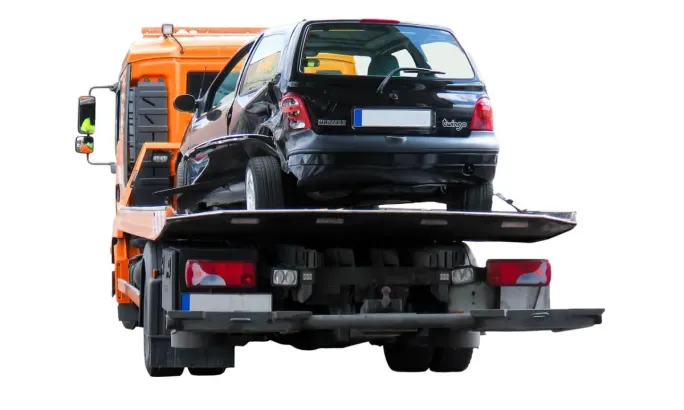
A bandit tow truck operator will pick up a wrecked car and say they will return it to the rental agency, but the car never arrives.
Credit:
garten-gg/ Pixabay
Tricks And Schemes Drive Bandit Towing
Spotters or cappers monitor crashes using scanners, apps, and government traffic data, said Capt. Jeff M. Loftin of the California Highway Patrol. Loftin serves as Commander of Special Services for CHP’s Southern Division and oversees investigative and commercial enforcement units focused on vehicle and commercial theft.
“They pose as witnesses to obtain phone numbers, which are then used to falsely claim insurance or that roadside assistance has dispatched a tow,” Loftin said. “If a tow truck appears without a request from the driver or law enforcement, it is likely a predatory tow.”
Towing companies and repair shops often collude, Moffitt added. “While legitimate towing and repair scenarios exist, bandit operations often involve inflated towing, storage, and repair fees. Charging daily storage fees is a common red flag.”
In yet another bandit towing scenario, rental cars are towed from parking lots or job sites under questionable authority, said Kevin Carter, CEO of Collateral Consultants, an asset recovery and nationwide skiptracing company based near Dallas, Texas. Once impounded, excessive fees and fabricated charges follow.
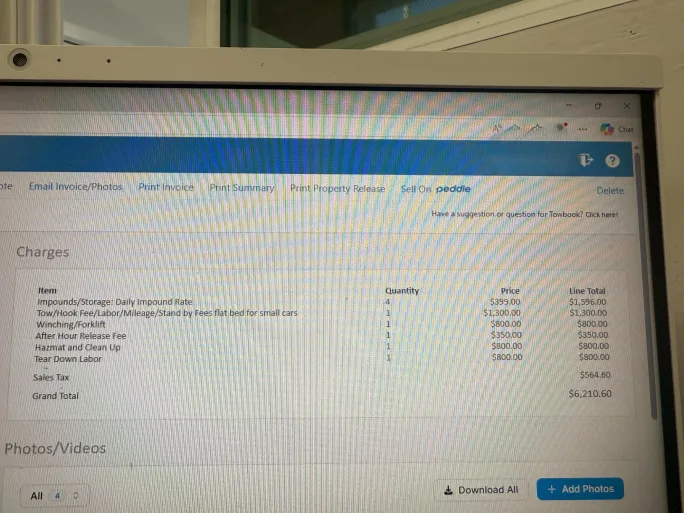
“We regularly see impound bills ranging from $8,000 to $12,000 for newer vehicles,” Carter said. “The goal is quick cash. Once these operators obtain paperwork, they attempt to sell the vehicle. Equipment rental companies are often hit even harder than car rental companies because their assets are more valuable. We recently encountered a situation where a tow yard posted a sign stating that calling the police would result in an additional $250 charge. These operators have no ethical boundaries.”
When operators see well-known rental or equipment company names, they believe they can demand higher fees, Carter said. Equipment rentals are especially vulnerable because individual assets may be worth $70,000 to $80,000 or more, he added.
If a vehicle remains unclaimed for 30 to 60 days, towing companies can apply for the title, even if the vehicle was deceptively taken, Carter said.
Adding to the deception, bandit towers can appear semi-legal and legitimate to mask their activities. “We often find that bandit tow operators are not properly regulated or permitted,” Moffitt said.
Tactical Challenges In Preventing Illegal Towing
Many bandit towners are set up under one LLC, operate briefly, and then shut down and reopen under another name, Carter said. In some cases, multiple towing companies operate side by side, all under the same ownership.
If one operation faces legal pressure, they simply shift activity to another entity. Clients are often forced to decide how much money they are willing to spend to recover a vehicle, Carter said.
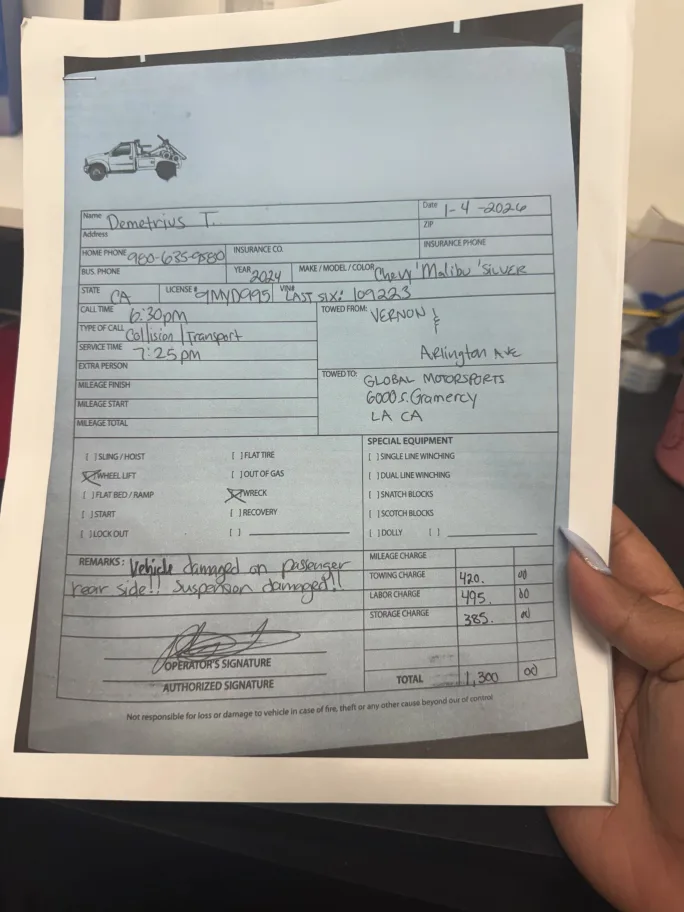
Bandit towing operations are notorious for overbilling all types of contrived fees and add-ons, shaking down vehicle owners for excessive amounts. (Towing company identity redacted from photo).
Credit:
Midway Car Rental
They often hope owners will abandon the vehicle, allowing the towing company to obtain the title and sell it, Carter said.
Poor and inconsistent regulation is another major factor.
In states like California, the high cost of doing business combined with weak enforcement creates an environment where abuse thrives, Carter said. When bandit towers see vehicles owned by large rental or equipment companies, they view them as open checkbooks, he said.
Another contributing macro-factor to bandit towing is the regulatory complexity and the difficulty of operating a legitimate business, Moffitt said. Legacy companies dominate the industry, which deters new competition.
Bandit towers frequently change documentation requirements, forcing recovery agents to make multiple trips, Carter said. These stall tactics allow fees to accumulate, he said.
While drivers can ask for permits, bandit towers often misrepresent themselves, Moffitt said. A state motor carrier permit is not the same as a city towing permit. Taking photos and documenting details is often more effective than relying solely on paperwork, he said.
The LAPD has multiple officers and investigators who can shift focus as needed to catch bandit towers, Moffitt said. Enforcement includes responding to collisions, investigating complaints, and issuing citations. However, many bandit towers consider fines as a cost of doing business.
Another growing trend involves auto-body shops and tow companies recruiting individuals from other countries to rent vehicles using passports, CHP’s Loftin said. These renters intentionally crash or damage the vehicles. A prearranged tow truck then takes the vehicle to a specific auto-body shop.
The shop holds the vehicle for one to two weeks before notifying the rental agency or initiating a lien sale. When the rental company attempts recovery, they are told they owe as much as $20,000 for towing, storage, and fabricated repair fees.
The California Vehicle Code allows certain towing fees but prohibits others, such as forklift, hazmat, and electrical disconnect fees. Despite this, towing operators routinely charge illegal fees, including excessive storage, even while repairs are underway. Cash payment is routinely demanded.
Rental car companies generally do not report incidents to the LAPD.
“We only see what gets reported, which is likely just the tip of the iceberg,” Moffitt said. “Many people retrieve their vehicles quickly and don’t file complaints, even if they were overcharged or towed illegally. The lack of reporting and public awareness is one of the biggest issues.”
Kim added that some operations are tied to organized crime. Vehicles are sometimes rented out again or loaned to other customers under fraudulent rental agreements. Fake contracts and invoices are created and submitted to insurance carriers, forcing insurers to pay claims.
Solutions Prove Elusive And Inconsistent
In pursuing proposed solutions to reduce bandit towing, success depends on securing sufficient resources, enacting legislation, enforcing laws, and raising awareness and education.
In Texas, authorities regularly see impound bills ranging from $8,000 to $12,000 for newer vehicles. (Towing company identity redacted from photo)
Credit:
Midway Car Rental
Public awareness and education are valuable tools, Moffitt said. Rental and insurance companies should consider providing step-by-step guidance through apps that walk drivers through accident procedures.
This would reduce confusion and prevent exploitation during stressful situations.
Car renters and drivers need apps that provide step-by-step, specific instructions, Moffitt said. The apps could connect car rental drivers immediately to 24/7 car rental customer service reps who could then direct the towing and handling of the vehicle, he added.
“When you get into a car accident, especially in a rental car, you have to think about a million things,” Moffitt said. “Is somebody hurt? Are the police coming? You could be blocking the freeway.”
An app can provide connections and instructions in the same way the back of an insurance card lists steps in the event of an accident.
Carter cautioned that while apps are a good idea in theory, in practice, they may not always work.
Car renters involved in accidents are often injured, distressed, or distracted, and unlikely to provide accurate or timely information through an app during a crisis, he added.
Legal Strategies Lacking In Some Areas
There are not many successful legal strategies to fight bandit towing practices.
“I have been in the auto recovery business for 35 years, and bandit towing has been a persistent problem since the beginning of my career,” Carter said. “Over the years, I have seen very few jurisdictions effectively address it.”
Trusted Towing Tips
Never sign documents without clear pricing.
Be cautious of unsolicited witnesses or towing offers.
Take photos of the tow truck, driver, and license plate. Legitimate operators will not object.
Avoid towers using deception or pressure tactics.
Never allow a tow operator to dictate the repair location.
Direct towers to take vehicles to a residence, a specific tow yard, or a location designated by the insurance or rental company.
In the event of an accident, immediately contact the car rental agency, the insurance company, and law enforcement.
He cited one notable example: the city of Dallas once capped daily storage fees at $20. That approach helped temporarily, but those controls are no longer in place, Carter said, and the problem has returned on a much larger scale.
“In rare cases, yes. I’ve seen clients in Texas file motions with the Motor Vehicle Division to freeze vehicle titles during disputes,” Carter said. “This stops the clock on storage fees and forces towing companies to justify their charges. However, in 35 years, I’ve only seen this work twice.”
In Texas, some bandit towers register with the Department of Licensing and Regulation (TDLR), which provides minimal oversight, Carter said. Registration often gives consumers a false sense of security. He said that the enforcement is slow, and complaints overwhelm regulatory agencies.
Bandit towing is considered a civil matter, not a criminal one in Texas, Carter said. Law enforcement generally does not get involved unless there is a criminal hold on the vehicle, he added.
One approach is digital impound notifications that allow faster responses and can save clients an average of $450 per vehicle, Carter said. Early action prevents fees from compounding and reduces leverage for price gouging.
Unfortunately, digital notification is not required by law and is therefore voluntary, he added. But many law enforcement agencies participate. This allows recovery teams to act quickly, often within a day of the towing incident, he said.
Loftin said cooperating agencies have created a Predatory Towing Task Force to impound tow trucks and pursue misdemeanor and infraction violations. The task force includes CHP, LAPD, sheriff departments, the Bureau of Automotive Repair, the Franchise Tax Board, and other agencies. Regular coordination occurs through the National Insurance Crime Bureau. Staffing varies depending on enforcement needs.
Legislation should treat bandit towing as a criminal matter, with charges including vehicle theft, insurance fraud, conspiracy, and grand theft.
The one plausible solution would be widespread state-level legislation tied to defined law enforcement approaches backed by sufficient resources, Carter said. “Without enforceable civil remedies, this problem will continue. At this point, bandit towing is an epidemic.”
Exotic rental agencies often rely on customers’ personal auto policies to protect six-figure vehicles. But policy language can dramatically change the coverage for vehicles over $100,000 MSRP.
In my return to writing about the day-to-day challenges of car rental, I have a few observations about shrinking vehicle mix, changing customer base, and the incessant hunt for new efficiencies.
A reservation captures demand. The operating test is whether the business can keep the customer, vehicle, commercial terms, and next action aligned until the rental is closed.
A recent precedent-setting court case points to the precautions and steps a rental fleet operation should take to minimize risk, reduce exposure, and avert legal consequences.
As a growing number of itineraries now feature segments with multiple transportation providers, car rental serves as a core mobility link in travel journeys.
This primer on how AI intersects with rental fleet pricing covers the technology, costs, and steps to ensure an accurate, 24/7 smart system that delivers more revenue to rental car providers.
Greater transparency, simplified digital access, and connected fleets will be the key factors in determining who comes out on top over the next 10 years.