



How AI Enhances Buying, Selling, and Trading Vehicles
AI has already evolved into a must-have tool for remarketers to work with greater clarity, make faster decisions, and run smarter digital marketplaces and business operations.


Christopher Schnese, director of product management at Cox Automotive, and Scott Levy, operational analytics director at Cox, explained how AI can improve the accuracy of all transactions among wholesale vehicle consignors, auctions, and dealers.
Photo: Ross Stewart / Stewart Digital Media
The vehicle remarketing industry can now answer a basic question about embracing AI: It’s not if, but when and how.
With AI emerging as more of a toolbox than a techno hell, remarketers are finding real, lasting ways of transforming their operations with speed and precision.
During the 2025 Conference of Automotive Remarketing on March 20, Christopher Schnese, director of product management at Cox Automotive, and Scott Levy, operational analytics director at Cox, led a session on how AI can upgrade and strengthen the entire chain of vehicle remarketing.
Breaking Down AI For Automotive Uses
Artificial intelligence broadly refers to systems that mimic human reasoning, problem-solving, and learning, Schnese said.
This includes capabilities such as understanding natural language, recognizing images, and making predictions from historical data.
AI contains subfields such as machine learning and deep learning. These technologies help identify vehicle types or conditions without manual identifiers and tagging.
While using the example of a car versus a truck, Schnese detailed how deep learning applies to remarketing.
“Deep learning is modeled after the way your brain works with all the interconnected neurons, but with this model, you have many interconnected neural networks that can churn through vast amounts of data, and it's particularly good at unstructured data,” he said. “What separates deep learning from machine learning is that machine learning has to pick out the features that make up the thing that you are trying to train your model on. With deep learning, no human intervention is needed. You don’t have to decide what means sedan, what means truck. All you do is say, 'Here are all my images of a sedan. Here are all my images of a truck. Go forth and do your thing,' and it will learn on its own.”
Generative AI can create new content such as summaries, images, and responses. Schnese illustrated this with how modern search engines generate unique answers instead of pulling text from specific pages — a defining function of generative AI.
“If you think back to doing a Google search not too long ago, it might summarize a web page you were going to visit with a block of text, and if you copied and pasted that text and then search for that text, you will find that paragraph completely intact in that article. Today, a lot of those AI summaries are fully generated. If you copy and select that text and do a search, that text doesn't exist in the paragraph on that page. Google's AI is generating its own summary.”
Why AI Is Emerging Now
Levy pointed out three critical enablers of AI's rise:
Public access to AI models: From OpenAI to Google, advanced AI systems are now widely available.
Low-cost computing: Powerful GPUs and cloud-based platforms enable accessible AI model training and deployment.
Data explosion: A massive influx of digital data from internet activity, vehicles, and consumer behavior fuels advanced AI capabilities.
This convergence is what makes AI practical for automotive remarketing, not just possible, Schnese said.
“The accessibility to computing and available data for everybody has made it super mainstream. It has been a big evolution to get us to where we are today with everyone talking about AI. It's not just people talking about science fiction or people with a lot of existential dread.”

During the CAR 2025 session in San Diego on March 20, Schnese detailed how AI deep learning applies to automotive remarketing.
Photo: Ross Stewart / Stewart Digital Media
The AI Value Pyramid
Schnese and Levy introduced an “AI pyramid” that represents increasing complexity and business value:
Data: High-quality, relevant input is foundational.
Insights: Understand what happened using historical data.
Predictions: Forecast what’s likely to occur.
Recommendations: Suggest next best actions.
Automation: AI executes decisions in real time.
A good example of this pyramid in action is in online car shopping. AI can pinpoint the likely characteristics or interests of specific buyers.
“This is because we know the patterns of every other shopper who has ever been to this site and has clicked on things like other customers have done or stayed on a site for similar periods of time,” Levy said. “We can use the AI to churn all that and now predict what a customer will do, maybe even before the customer knows.”
Furthermore, AI can recommend targeted marketing strategies and ads that automation tools can deliver across social channels without human involvement.
AI Connects Remarketing Processes

Scott Levy pointed out three critical enablers of AI's rise and how that convergence has practical effects on remarketing.
Photo: Ross Stewart / Stewart Digital Media
Schnese and Levy outline four key areas where AI can help sell cars with more confidence, consistency, and efficiency:
Vehicle valuation: Traditional valuation relies on year, make, model, mileage, and regional factors. AI brings VIN-specific configurations, micro-market trends, and even local demand variations. This leads to more confidence in pricing through faster, informed decisions; consistency by reducing human error or bias; and efficiency through faster vehicle turn times and better pricing strategies.
Condition assessment: Imaging tunnels can automate vehicle condition assessments. As cars pass through these camera-equipped lanes, AI captures and selects optimal “hero” shots while analyzing thousands of images for damage. With 70% of Manheim inventory now sold online — and 38% of dealers increasing digital sales — AI-generated uniform condition reports are vital. They ensure all listings offer comparable visuals and eliminate ambiguity, akin to removing misleading “dating profile” photos in online listings. “This isn't unique to Manheim but is happening across the industry. Make no mistake, the wholesale market is turning into a largely digital market,” Schnese said.
Assurance products: Assurance solutions are tools that simplify the process of reselling used vehicles to instill confidence and trust in buyers and sellers. Most notably, they include accurate vehicle evaluations and condition reporting. AI powers can analyze past transaction data, helping create a pricing floor that allows dealers to accept trades and pursue new inventory strategies. “With the AI, we can bring in and churn through more data while giving more precise risk modeling to see the risk of that buyer returning the vehicle and then be able to deliver a price more affordable to the buyer,” Levy said. “The more confident and willing buyers become, the less sellers will hold back. It has enabled more of a guaranteed minimum price.”
Logistics and transport pricing: AI is also transforming how vehicles are shipped. Traditional pricing was based on fixed lanes and historical averages. Today, AI factors in climate, fuel prices, geographic nuances, and carrier-specific variables to predict fair shipping rates. This creates transparency for both shippers and carriers, enabling quicker negotiation and reducing idle vehicle time. With fewer delays, vehicles move to market faster, speeding up inventory turnover. “Confidence extends to both sides: That a shipper is not overpaying or feel like they’re getting ripped off by the carrier; and the carrier can bid on a price that they deem appropriate for that move,” Levy said. “There’s still a nuance to multiple people bidding, and depending on how big their loads are, they may want to be up or down or the higher or lower end of that range. It’s about disclosing that range to both parties and maximizing the efficiency of the transaction."
Emerging AI Opportunities For Remarketing
The future of AI in remarketing holds promise in several areas:
Trackability and load sharing: AI can dynamically match vehicle shipments based on destination, load timing, and availability, reducing transportation costs.
Enhanced valuation models: Incorporating more diverse and granular data to pinpoint precise values.
Advanced damage detection: Vision models can assess location, severity, and type of damage in a standard format, reducing subjective evaluations.
“The truth is vehicle condition is in the eye of the beholder,” Schnese said. “If everybody in this room went out and wrote the condition of a single vehicle, there is zero chance all of you would write the exact same thing. I'd love to do that test. It'd be fun. But AI can help enhance this process and bring consistency from one vehicle to the next. We talk about apples-to-apples comparisons. If everything is written the same way, then it's just better for everybody.”
Schnese and Levy recommend a balanced perspective on AI. While hype is unavoidable, genuine AI innovation is already reshaping how remarketers do business.
“There's a lot of noise around AI, and much that may not come to fruition, but a lot that will. It’s the same with the internet and electric vehicles,” Levy said. “All of these [technologies] will continue to transform all our businesses and our industry. So, stay tuned.”
Originally posted on Automotive Fleet
More Remarketing
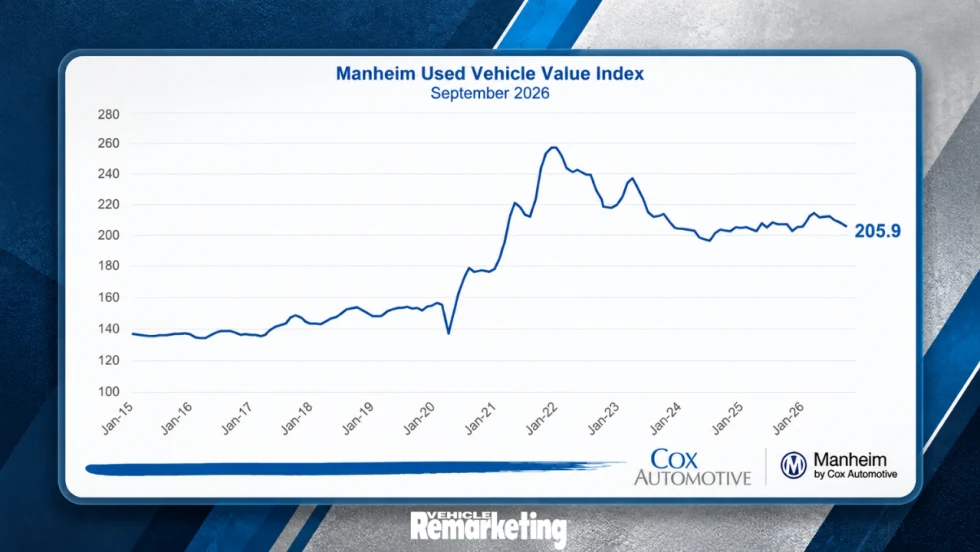
Wholesale Used-Vehicle Values Fall as Cox Automotive Cuts 2026 Forecast
Wholesale used-vehicle prices declined in September as depreciation accelerated, prompting Cox Automotive to lower its year-end forecast.
Read More →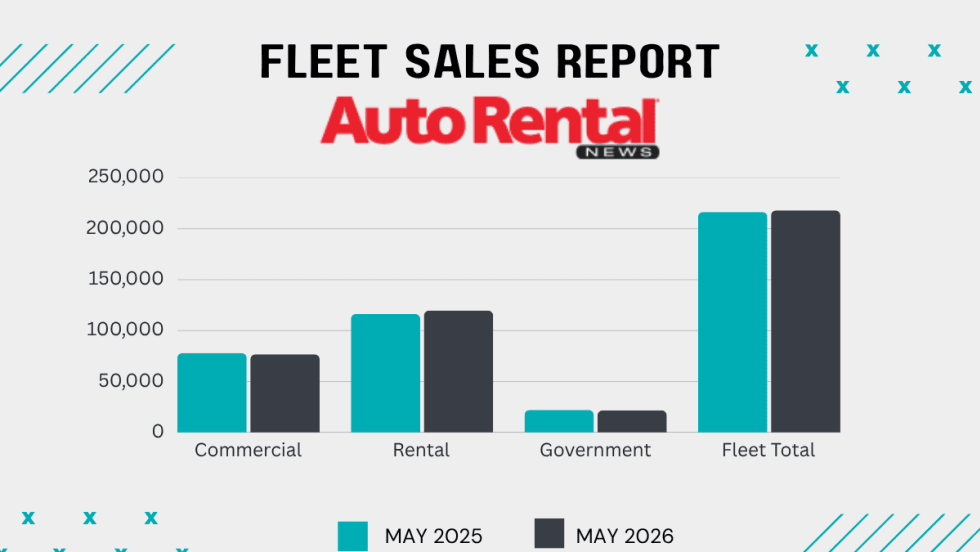
Rental Fleet Sales Skating Just Above 2025 Levels
The U.S. economy's continued growth and positive business investment are creating a favorable environment for fleet vehicle demand.
Read More →
Cross-Pressures, Evolving Trends Drive 2026 Rental Car Industry
A combination of cautious economic behavior, shifts in the rental vehicle market, and technological influences are shaping car rental operator decisions.
Read More →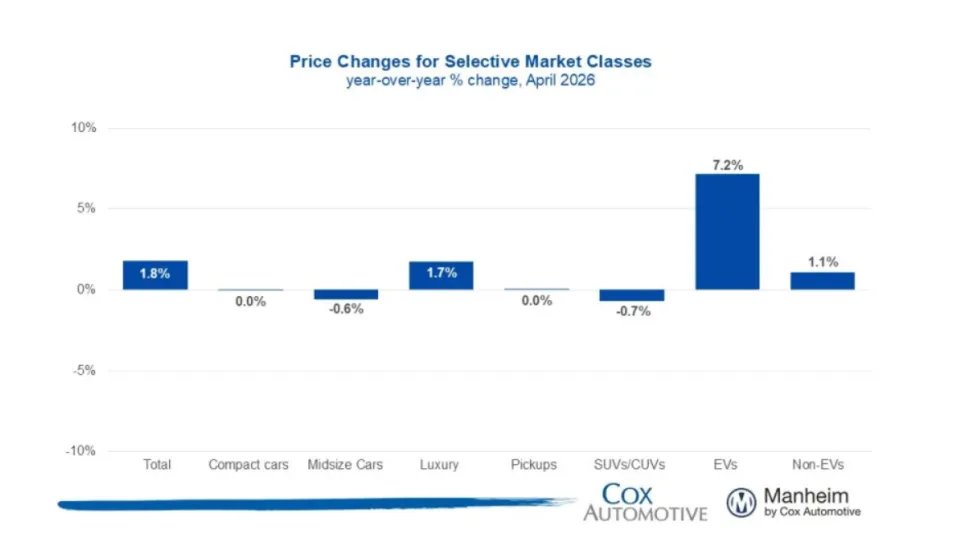
Wholesale Used Vehicle Prices Slightly Up In April
The Iranian conflict and rising gas prices inject much uncertainty into the future wholesale used vehicle markets, as higher gas prices soak up spendable income from vehicle buyers.
Read More →
Surprice Opens Two Rental Branches In Japan
The launch highlights the global car rental operation’s growing presence in Asia.
Read More →
Wholesale Used Vehicle Prices Up In February
Solid demand at Manheim auctions with higher sales conversion rates indicate an appetite from dealers to buy.
Read More →
Rental Fleet Sales Slow In February Ending A Strong Streak
Commercial fleets posted the most gains, sustaining increases in monthly and year-to-date fleet sales
Read More →
Avis Budget Group Reports Near $1 Billion Loss Tied To 2025 EV Fleet Write-Down
Following Hertz, the company is the second global car rental conglomerate to sustain sizable losses due to lower customer demand and usage of electric rental cars.
Read More →
2025 Rental Vehicle Remarketing Summary And Outlook
The year brought modest and flatter results across wholesale values, total off-rental supply, and rental risk units.
Read More →
Auctions Record Highest Vehicle Sales Since 2019
2025 figures show a steady recovery in wholesale vehicle activity this decade.
Read More →