



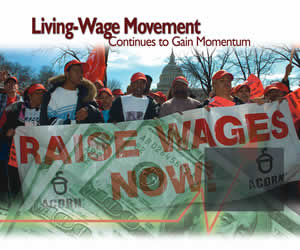
Living-Wage Movement Continues to Gain Momentum
More and more cities that control commercial airports are imposing employee salary minimums for contractors, including on-airport RACs. The latest to target RACs is San Jose, Calif.
City Council members in San Jose, Calif., in May decided to require rental car companies at the local airport to pay their “hikers” — employees who move fleet vehicles from one location to another — a “living wage” of either $10.72 an hour with health benefits, or $11.97 without benefits. The vote was 9-1, with Mayor Ron Gonzales casting the only no vote.
The new ordinance’s impact on the car rental companies at Norman Y. Mineta San Jose International Airport is an estimated $4 million to $5 million annually, according to city records. The RACs can either pay the salary raise in one lump sum by the end of 2005, or half by Sept. 1 and the remainder by March 1, 2006. City council members granted the extra time for compliance after some RACs complained that their existing 2005 budgets couldn’t accommodate the extra costs.
John F. Brown Co. (JFB), hired by the city as a consultant, calculated the estimated cost after obtaining financial information from San Jose RACs that represented about 33% of the market. These operators estimated that the annual impact on them would be $1.66 million. JFB multiplied this number by three to arrive at $4.98 million. JFB also acted as a consultant to airport administrators in San Francisco and Oakland when those airports first explored adopting living-wage ordinances.
In the past decade, the living-wage movement has steadily gained momentum. Cities, counties, school boards and other jurisdictions across the country have adopted policies mandating salary minimums for certain workers.
A living-wage ordinance requires specified employers — most often, government contractors — to pay salaries above federal or state minimum-wage levels. Typically, the living-wage salary is based on what a full-time employee would need to earn to support a family above the federal poverty line.
According to one of the movement’s most visible proponents, the Association of Community Organizations for Reform Now (ACORN), there were 123 living-wage laws in effect in 2004.
The living-wage movement has attracted support from various advocacy groups, labor unions and religious organizations seeking to raise the standard of living for the working poor. Low-wage earners are often forced to hold two or three jobs to make ends meet.
When the disparate goals of altruism and capitalism clash, that can set the stage for debate about the role of government. Also, there’s disagreement over whether this policy does, in fact, benefit low-skilled workers.
“This is an organized effort to force employers into what’s been referred to as a welfare mentality in the workplace,” says Jon Stoler, an attorney with New York-based Kelly Drye & Warren LLP. “That is, the goal is to set up pay rates according to economic need rather than based on the employee’s skills or experience.”
From an employer’s perspective, living-wage laws can have a number of negative consequences, Stoler says. Employers may be forced to pass along extra costs to consumers, for example, or to eliminate some jobs.
Also, Stoler notes, living-wage supporters sometimes don’t take into account the ripple effect that such laws can have on employee salaries for positions higher than those affected directly by the laws. Employees with more responsibilities and greater skills naturally expect to make higher salaries than the lowest-paid employees. If compliance with a living-wage law closes that pay gap, then the employer may be forced to raise the salaries for some higher job positions as well to maintain employee morale.
Moreover, Stoler says, living-wage laws can prompt employers to raise job position qualifications because the mandated salaries are competitive with those of positions requiring more skills. If the higher salaries attract higher skilled workers, then workers with limited skills are left with fewer job opportunities, Stoler says.
But advocates of living-wage ordinances have a much different perspective. According to the Economic Policy Institute, based in Washington D.C., living-wage ordinances provide much needed raises for low-income workers. Proponents also argue the laws help ensure that salaries for contractual workers don’t drop far below salaries earned by city workers.
A newly released study, “Examining the Evidence: The Impact of the Los Angeles Living Wage Ordinance on Workers and Businesses,” supports some of the arguments from both sides.
The study concludes that L.A.’s ordinance increased pay for an estimated 10,000 jobs, with minimal job losses. Employment reductions accounted for 1% of all affected jobs — an estimated 112 jobs.
According to the study, employers recovered some of the higher labor costs by reducing employee turnover and absenteeism. They dealt with the remaining costs in various ways, including cutting fringe benefits and overtime, hiring more highly trained workers, cutting profits and passing on costs to the city or public.
Funding for the report came from the Ford Foundation, Los Angeles World Airports and the University of California Institute for Industrial Relations. The authors are David Fairris, Department of Economics at the University of California Riverside; David Runsten, North American Integration and Development Center at UCLA; Carolina Briones of the Los Angeles Alliance for a New Economy; and Jessica Goodheart of the Los Angeles Alliance for a New Economy.The full report can be downloaded in PDF format at www.iir.ucla.edu/research/research.html.
More Rental Operations

Palm Beach Airport Code Change Creates Car Rental Distribution Gap
A test of rental searches under the old PBI and new DJT airport codes returned largely different sets of brands and vehicles, highlighting a potential distribution problem for rental operators.
Read More →
U-Save Continues Dominican Republic Expansion with Launch in Punta Cana
The new franchise location builds on U-Save’s existing Santo Domingo operation and will begin taking reservations for October 2026.
Read More →
When AI Books the Rental Car, Who Controls the Sale?
As AI moves from comparing rental rates to completing transactions, operators need to understand how travelers find, interpret, rank, and ultimately see their offers. (Part 2 of 2.)
Read More →
European Booked Car Rental Rates Fell 5%, Results Varied by Country
Ireland, Cyprus, and the United Kingdom saw steep declines, while booked rates rose in Poland and Hungary.
Read More →
Is It Time to Rethink Rental Categories?
As traditional economy and compact cars disappear from the market, longtime rental operator Mike DeLorenzo asks whether the industry’s familiar vehicle categories still make sense — and what operators need to rethink along with them.
Read More →
Who Owns the Rate? AI Is Creating a New Distribution Problem for Car Rental
Generative Engine Optimization asks whether AI can find a rental company, but operators also need to know whether the agent inspected enough of the market, compared equivalent offers, and presented a rate the traveler can actually book. (Part 1 of 2)
Read More →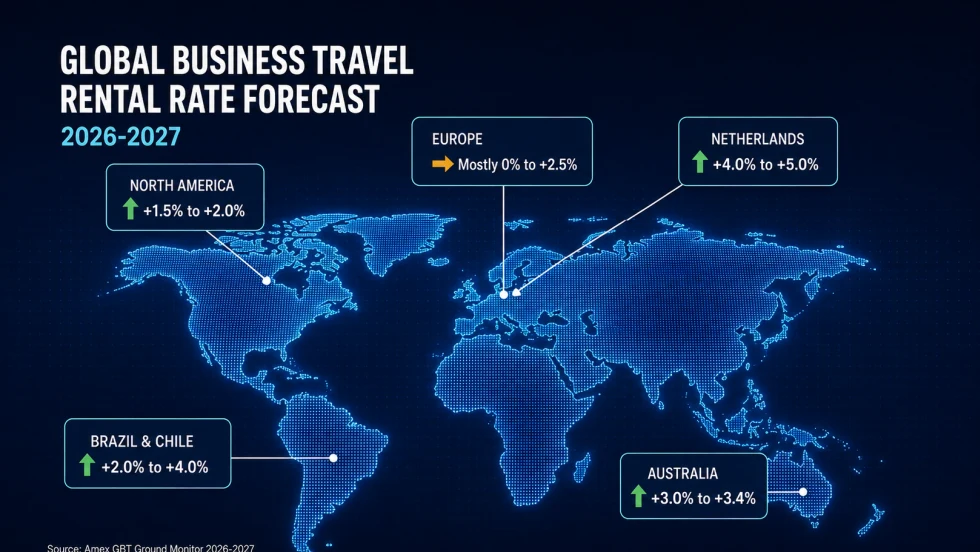
U.S. Business Travel Car Rental Rates Forecast to Rise Up to 2%
Improved fleet supply should limit pricing gains in 2026-27, while insurance, repair costs, and softer residual values continue to pressure rental operations, according to Amex GBT.
Read More →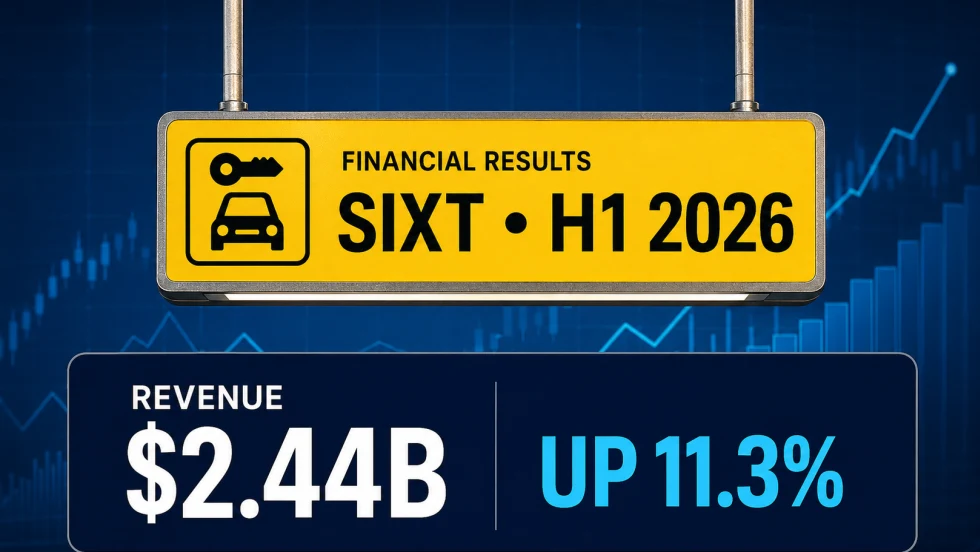
Sixt Revenue Tops $2.4 Billion in First Half of 2026
Sixt’s first-half revenue surpassed $2.4 billion for the first time as demand outpaced fleet growth, lifting utilization and earnings despite weaker consumer sentiment in North America.
Read More →
In Memoriam: Bobby Klyce, Avis Licensee Legend
The longtime Birmingham Avis operator and 2018 Auto Rental News Impact Award recipient was remembered as an advocate for independent licensees and the broader car rental industry.
Read More →
How to Build Custom Fleet Tools With AI and Vibe Coding [Webinar]
A new Automotive Fleet webinar explores how fleet managers are using AI and vibe coding to automate routine work and create simple operational tools without traditional programming skills.
Read More →