


The Desk Upsell Is Costing Operators More Than it Earns
Counter upsells generate revenue, but they can also slow transactions, erode trust, and cost repeat business. Fully inclusive pricing may offer operators a better path to long-term value.
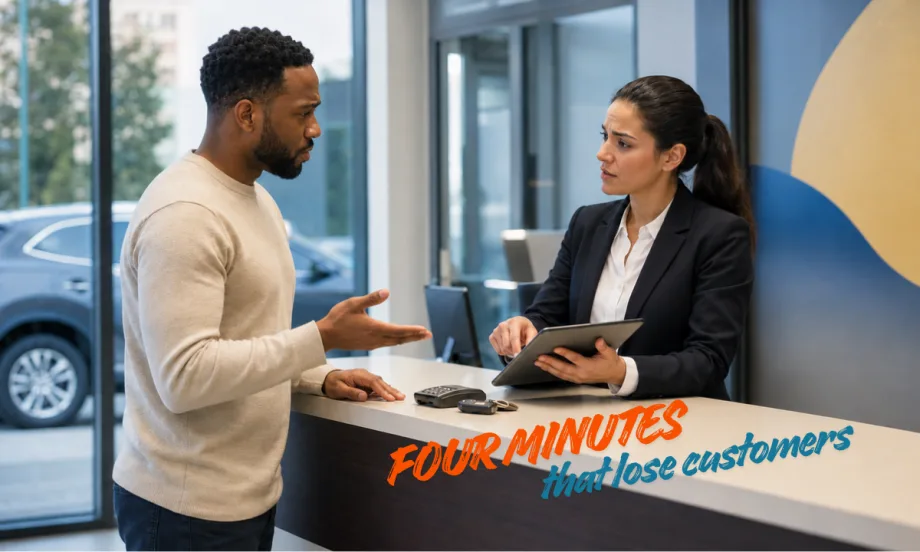
The revenue gained through a desk upsell must be weighed against longer transactions, customer frustration, and lost repeat business.
Image generated using AI. Refer to our Terms of Use.
The most expensive transaction in car rental never shows up on a P&L. It happens at the counter, it takes about four minutes, and it often ends with a customer who never comes back.
Industry analysts have been saying it for a while: the rental desk is the bottleneck, hidden fees erode trust, and all-inclusive pricing is the likely fix. What has been missing from that conversation is the view from behind the counter — why the upsell persists, and what actually happens when an operator removes it.
The Trust Problem Is Easy to See
Open the review page of almost any rental operator. The one-star reviews follow the same pattern. It is rarely the car. It is rarely the staff. It is rarely the brand. It is the moment at the desk. Some customers discover the cover they thought they had does not count. Others knew about the excess — they accepted it when they bought a reimbursement policy from a third-party insurer instead of cover from the supplier — but when the deposit is blocked on their card, the risk they took on suddenly feels real.
At a busy location in season, it does not take many disputed transactions to shape a rating. A handful a day adds up to hundreds of unhappy customers by the end of the summer.
The damage goes beyond the score. A customer who leaves the desk feeling burned does not complain and return next year. He books his next hire wherever he is promised it will not happen again.
A Tale of Two Customers
Two bookings at the same desk tell the whole story.
The first customer found the lowest rate on a comparison site. The price was low because the excess was high — and he knew it. He had bought a cheap reimbursement policy from a third-party insurer. His plan: if anything happened, pay the operator, keep the receipts, claim the money back later.
Then something happened — a scratch caused by another car while his was parked at the side of the road.
The operator blocked a four-figure excess on his card, opened a damage file, and managed a customer who was frustrated before the conversation started. The customer spent the last morning of his holiday at the desk, flew home out of pocket, and spent weeks sending photographs and forms to an insurer he had never spoken to.
Paid or not, the result was the same. He will never book that way again — and in his memory, the friction belongs to the operator, not the insurer. The operator followed its procedures correctly and still lost the customer.
The second customer paid more. His rate included zero-excess cover from the supplier, priced into the booking. He drove the car for the rest of his holiday, returned it as planned, and the same scratch meant a note on the condition report, a signature, and nothing more.
He came back the next year — at a higher booking value. A larger car, a longer hire, a fully inclusive rate. The first customer produced one discounted transaction and a damage file. The second became a repeat customer worth more each season. Any operator can pull its own repeat-booking data and see which of the two builds a business.
Why the Upsell Persists
Here is the part rarely written about honestly: nobody at the counter is doing anything wrong.
Counter staff sell waivers and extra coverages because their incentive plans pay them to sell. Franchise locations lean on ancillary revenue because it is written into the franchise P&L. At many locations, it is the margin that keeps the doors open.
The upsell is not a staff problem that training can fix. It is built into pay structures and location economics across the industry. Telling a counter team to sell more responsibly changes nothing when the compensation model rewards the opposite.
That is why the model cannot be reformed from within. It can only be replaced.
The Alternative, in Plain Terms
The replacement model is simple to describe. Collision damage waiver (CDW) cover is included by the supplier, at zero excess, priced into a fully inclusive rate. No third-party insurer. No claims process. The cover comes from the hire company itself, in the price the customer sees at booking. And because there is no excess to secure, the deposit shrinks with it — a small amount held to cover missing fuel or traffic and parking fines, not a four-figure block on a holiday credit card.
The base rate is higher, and it should be — it includes real cover, provided by the supplier, rather than leaving the customer to buy a separate reimbursement policy that pays out later, if at all. The customer is not paying more for the same product. He is paying once for a complete one.
The effects at the counter are immediate, and they grow with volume. With nothing to sell, throughput rises — a check-out that took eight minutes takes four. Across a full day of peak-season movements, that is a real staffing difference. With no excess to block, the card-decline and deposit-dispute workload disappears. Damage to the main body of the vehicle becomes a condition note, not a claim file.
And because the price booked is the price paid, the review profile starts to change within a season.
The demand is already proven. Several platforms — in continental Europe, in the UK, and in northern Europe — have built loyal customer bases on fully inclusive certainty. Travelers will seek out, and pay a fair rate for, a hire with no surprises in it.
What has been missing is the supplier-first version: a model built with operators rather than around them. That is what eCarBookers was built for, and this summer our supplier network expanded to more than thirty countries. The model scales — and suppliers themselves see the case for it.
What the Operator Gets in Return
The fair objection: the waiver revenue is real, and this model removes it. What replaces it?
The customer, first. Bookings arrive with the commission already settled and cover and vehicle class confirmed before arrival. The customer pays the balance at the desk and drives away. No negotiation, no dispute for staff to absorb.
The counter, second. A desk that is not selling is a desk that is processing. In August, a queue that moves at processing speed is worth more than most operators credit — in staff hours and in first impressions.
Control, third. The supplier keeps its fleet, its pricing, and its desk. This is distribution, not acquisition. The operator is not asked to change what it is.
And the reviews. When the desk holds nothing to resent, the reviews return to the car and the service — the things a well-run operation is actually good at.
Where the Model Goes Next
The insurance waiver was the right starting point because it causes the most friction per transaction. But the logic does not stop there.
What matters is not which products are offered. It is where and how they are sold. A product priced clearly into the booking, chosen in the comfort of home or the office with time to compare, builds trust. The same product sold across a counter to a tired traveler holding luggage erodes it.
Fuel is the obvious next step. A genuinely fair prepaid fuel option — priced at pump rates, unused fuel refunded, chosen at booking rather than presented at the desk — would remove the last routine friction point at the counter. The industry has not built that yet. The insurance model shows it can be done.
Now follow the logic to its end. Picture the airport arrivals hall a few years from now. The customer walks past the counter to a self-service unit, scans the license, signs on screen, and the machine prints the contract and releases the key. Fuel prepaid at pump rates. Zero-excess cover included by the supplier. Vehicle class confirmed weeks ago. Total time: a couple of minutes. Self-service kiosks already exist, and the industry agrees that digital, keyless pick-up is where rental is heading.
But here is what that future quietly requires: a machine cannot sell a waiver. It cannot talk a hesitant customer into a protection package, explain why a third-party policy is not recognized, or resolve a deposit dispute at midnight. Automation only works when there is nothing left at the desk to explain — when everything was chosen, priced, and covered at booking. The fully inclusive booking is not one option for the industry's digital future. It is the precondition for it.
The operators who move first will not be giving up a revenue line. They will be trading a shrinking one — shrinking because customers are learning to route around it — for something that compounds: being the company that never surprised anyone, and the company ready for the deskless arrivals hall when it comes.
The desk upsell had a long run. But those four minutes at the counter were never free. It is time the industry stopped paying for them.
Efstathios Katinas is the founder of eCarBookers.com, a car hire comparison platform offering supplier-included, zero-excess cover across Europe and the United States.
More Rental Operations
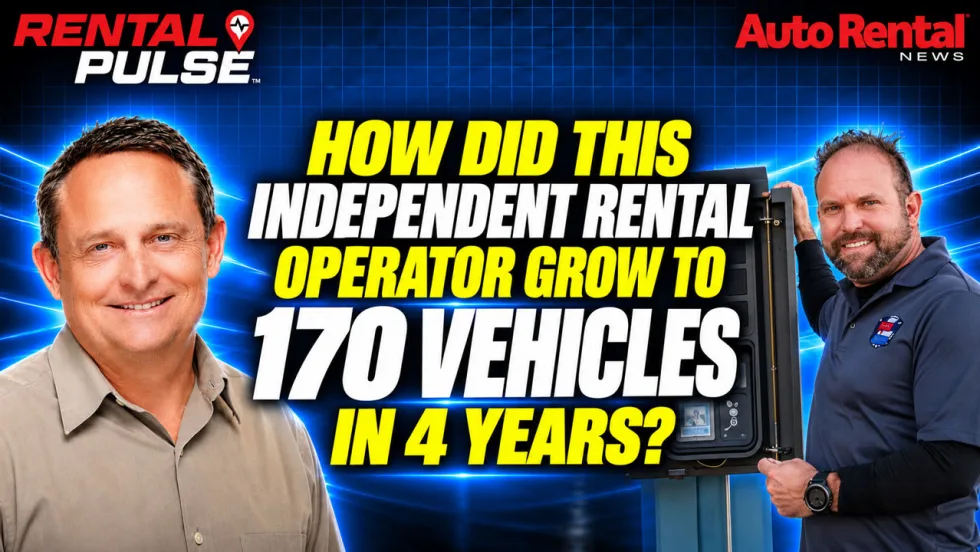
How Did This Independent Rental Operator Grow to 170 Vehicles in 4 Years?
With 170 vehicles across three Kentucky locations, Joel Price relies on an overseas team to handle reservations, payments, and after-hours customer service. It's one part of an unconventional approach to growing an independent rental operation.
Read More →
What Does It Take to Succeed in B2B Rentals?
The fundamentals may be familiar to daily car rental operators, but project-based truck rentals put different demands on the fleet and the business.
Read More →
NPR Builds on International Partnerships to Grow Rental Bookings
With Ana Laborde supporting broker development, NPR Auto Group is tailoring distribution strategies, rate packages, and partnerships to grow international reservations across its three brands.
Read More →
Advantage, Sixt Place Among Top Five in Annual Satisfaction Study
While Enterprise and National retain the top spots in JD Power’s 2026 rankings, the latest customer satisfaction results suggest renters can find competitive service beyond the biggest car rental names.
Read More →
The $100,000 Insurance Trap in Exotic Car Rentals
Exotic rental agencies often rely on customers’ personal auto policies to protect six-figure vehicles. But policy language can dramatically change the coverage for vehicles over $100,000 MSRP.
Read More →
The Booking Is Confirmed, But Is Your Customer Ready to Drive?
For international renters, a confirmed reservation doesn’t always mean they’re eligible to drive. Earlier checks can help operators catch documentation and payment issues before the customer reaches the counter.
Read More →
ICRS 2027 Opens Call for Papers
The International Car Rental Show seeks session proposals on the business, operational, and technology issues facing car rental operators. Submissions are due Jan. 15.
Read More →
Turo to Launch Vehicle Delivery Service
Turo Delivered will let travelers search for vehicles that hosts can deliver directly to hotels, homes, airports, train stations, and other locations.
Read More →
Palm Beach Airport Code Change Creates Car Rental Distribution Gap
A test of rental searches under the old PBI and new DJT airport codes returned largely different sets of brands and vehicles, highlighting a potential distribution problem for rental operators.
Read More →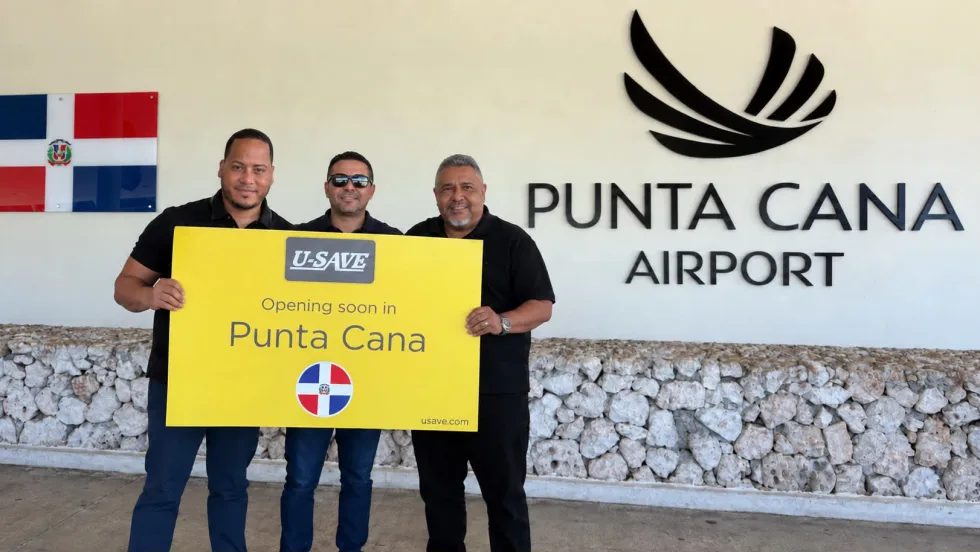
U-Save Continues Dominican Republic Expansion with Launch in Punta Cana
The new franchise location builds on U-Save’s existing Santo Domingo operation and will begin taking reservations for October 2026.
Read More →