




No Contact, Self Service Is the Future for Rabbit Rentals
This small van rental company in Utah just saw its best summer yet, and fall is looking even better. Owner Rich Guernsey is reaping the benefits from his self-created low-tech, contactless rentals procedure.

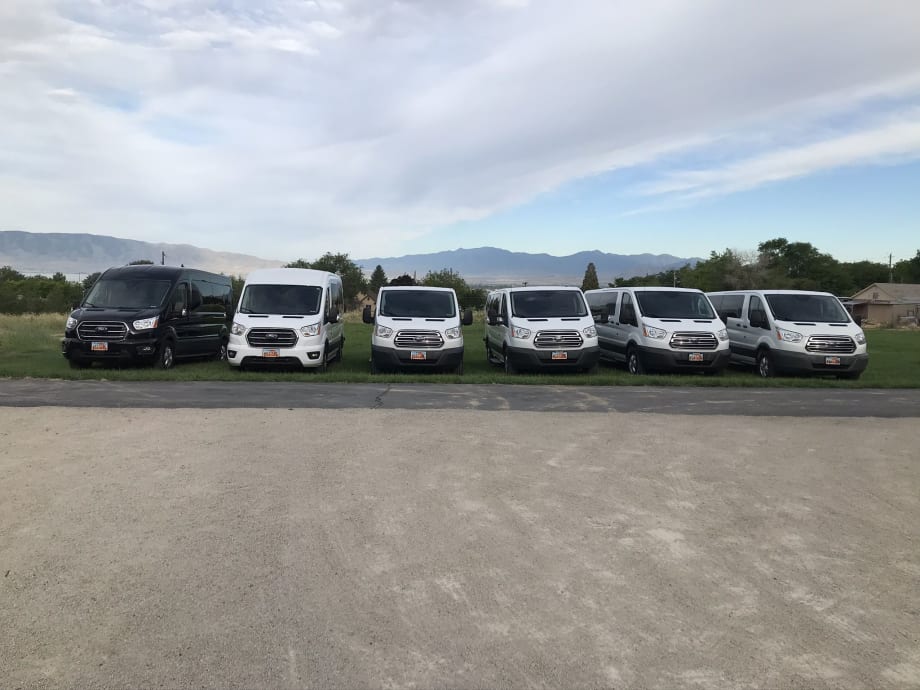
After a dismal Spring, Rabbit Rentals grew from 10 to 13 vans during the summer. Owner Rich Guernsey will de-fleet to seven or eight vans for the winter and built back up to 15 or 20 for Spring 2021.
Photo courtesy of Rabbit Rentals.
“To be totally transparent... I still have my doubts about surviving this crisis,” wrote Rich Guernsey owner of Rabbit Rentals, on May 21. The business, which at the time had a fleet of 10 vans, was less than three years old.
Guernsey’s company, Rabbit Rentals, a small passenger van rental company serving northern and central Utah, was coming off two months with only two rentals since the coronavirus pandemic had started — and those were freebies. On top of it all, Guernsey applied for the Paycheck Protection Program (PPP) but was turned down because his employees are family members, also owners of the business.
Do you remember those moments in life where you could’ve chosen the left fork in the road, or the right? The choice makes all the difference. Guernsey could’ve folded his tent and retired. Instead, he went to work in rethinking his business, attracting new customers, and wringing every efficiency out of his processes.
Guernsey sent this update last week:
“After a rough go with Covid-19 our business has rebounded dramatically. We had the best July we ever had, and halfway through August we had the best August ever. Same goes for September. I don't know what’s going on, but right now when we should be selling vans going into our slow period, business is still booming.
We have been sold out for the last three weekends straight! We are putting in our van orders now for next year and I am optimistic that next year we will have the best year ever.”
Low-Tech Contactless Rentals
Guernsey continues:
One interesting thing that we found as a result of Covid-19 is that no-contact, self-service rentals are not a temporary thing. Changing our procedures to go to no-contact, self-service as a result of Covid-19 has turned out to be a better way to operate and is now part of our normal routine.
All the paperwork is taken care of ahead of time by email or text. I leave a hard copy of the rental agreement in the front passenger seat in case customers want to get a look at the van before they sign the rental agreement. Then they merely take a picture of the signed document, text it to me and off they go.
The keyless entry pad on the driver’s door is a low-tech way that allows us to go to no-contact, self-service rentals. I know a lot of companies use cell phones and GPS to show where vehicles are located, unlock them, and start the rental. While those are great practices, and frankly it was the direction that we originally wanted to go, buying the hardware and the software to make those kinds of systems work is expensive. The maintenance on those systems and labor to keep them current is another factor to be considered.
We bypass all of that with the keyless entry pad. We text the customer the code for the keyless entry pad, take a picture of the van and tell them where it is located, and that works just fine for us. This is the way that we will conduct operations from here on out.
You may think that we lose the personal contact goodwill that comes with face-to-face interactions, but honestly, I have found that our customers really, really appreciate the simplicity and ease of use that has resulted from this shift in operations. Our reviews bear that out. We don't lose anything by not having that face-to-face contact that we had before. For us, it is the only way to go!
More Rental Operations

What Does It Take to Succeed in B2B Rentals?
The fundamentals may be familiar to daily car rental operators, but project-based truck rentals put different demands on the fleet and the business.
Read More →
NPR Builds on International Partnerships to Grow Rental Bookings
With Ana Laborde supporting broker development, NPR Auto Group is tailoring distribution strategies, rate packages, and partnerships to grow international reservations across its three brands.
Read More →
Advantage, Sixt Place Among Top Five in Annual Satisfaction Study
While Enterprise and National retain the top spots in JD Power’s 2026 rankings, the latest customer satisfaction results suggest renters can find competitive service beyond the biggest car rental names.
Read More →
The $100,000 Insurance Trap in Exotic Car Rentals
Exotic rental agencies often rely on customers’ personal auto policies to protect six-figure vehicles. But policy language can dramatically change the coverage for vehicles over $100,000 MSRP.
Read More →
The Booking Is Confirmed, But Is Your Customer Ready to Drive?
For international renters, a confirmed reservation doesn’t always mean they’re eligible to drive. Earlier checks can help operators catch documentation and payment issues before the customer reaches the counter.
Read More →
ICRS 2027 Opens Call for Papers
The International Car Rental Show seeks session proposals on the business, operational, and technology issues facing car rental operators. Submissions are due Jan. 15.
Read More →
Turo to Launch Vehicle Delivery Service
Turo Delivered will let travelers search for vehicles that hosts can deliver directly to hotels, homes, airports, train stations, and other locations.
Read More →
Palm Beach Airport Code Change Creates Car Rental Distribution Gap
A test of rental searches under the old PBI and new DJT airport codes returned largely different sets of brands and vehicles, highlighting a potential distribution problem for rental operators.
Read More →
U-Save Continues Dominican Republic Expansion with Launch in Punta Cana
The new franchise location builds on U-Save’s existing Santo Domingo operation and will begin taking reservations for October 2026.
Read More →
When AI Books the Rental Car, Who Controls the Sale?
As AI moves from comparing rental rates to completing transactions, operators need to understand how travelers find, interpret, rank, and ultimately see their offers. (Part 2 of 2.)
Read More →