



This article originally appeared in our inaugural Auto Rental News International digital edition, covering the European rental market. To access our current International edition covering Latin America, click here.
Soft Euro Promotes Travel and Tourism to Europe
A soft euro against the U.S. dollar means the Americans are coming. Car rental in Europe will be different in 2015. Operators should act now to seize the opportunities.
by Roland Keogh
December 21, 2015
4 min to read
The best laid plans…
Travel operators (airlines, hotels and car rental companies) set out last year planning, not unreasonably, for a constant U.S. dollar/euro exchange rate this year. Passenger capacity, demand levels and fleets all start out based on what is known at the time.
However, around February 2015, those plans needed to be revised as the dollar approached parity with the euro — reaching its closest one-to-one equivalence in a decade. Demand is now being driven by U.S. travelers going east rather than European traffic moving west.
The euro is down 12% against the dollar since the start of the year. Most economists agree that this trend will continue, and in practical terms may stabilize around parity.
The driver for this is familiar to the U.S. in the form of “quantitative easing,” which is seeing billions of euros being pushed into the European Central Bank in an effort to kick start stagnant economies around the eurozone. Quantitative easing is particularly helpful right now to tourist destinations.
Click here to view the 10-year currency rate history for the U.S. dollar against the euro.
Travel Impact
This impacts all travel. For example, flights based on the best arrival times into the U.S. now need adjusting to suit better departure times from U.S. cities. Typically, as the main target was business inbound to the U.S., pricing for outbound U.S. travel and packages had been more advantageous.
Hotels and car rental companies need to assess how such changes might affect check-in and checkout times and how to manage changes with already booked customers, as well as the influx of new business.
If flight schedules change, for example, tour operators may seek later checkout times or longer grace periods. Travelers with bookings already made may find their flights reorganized to suit this increase in eastbound demand.
Tour operators and travel companies (OTAs and traditional suppliers) will need to dig deep to find new and creative ways to secure European travelers to go to the U.S. This may also mean great deals for U.S. travelers who wish to holiday at home — bargains should start appearing soon.
Foreign Travel Rise
Of the European Union’s 28 countries, 19 use the euro (€) as their national currency. This makes traveling in Europe significantly easier and also makes traveling between these countries easier —there is no currency to change at borders, and travelers only need to remember a single exchange rate for a multi-country vacation.
European cities consistently rank high on the lists of favorite places by TripAdvisor and other trade surveys. Although not all of the cities on those lists are in the Eurozone today, expect to see those cities rise in the 2016 rankings.
Ireland saw a 9% rise in foreign visitor trips last year, while the hotel market in Dublin grew faster than other European cities, according to Savills, a global property adviser. Other tourism markets throughout the eurozone will benefit from U.S.-sourced business.
Although a strong dollar usually means higher fuel prices, the overall reduction in the price of oil has, in most European countries, balanced that effect. However, experts don’t expect prices at gas stations to reduce as much as they have in the U.S.
Taking Advantage
Travel suppliers need to offer great packages that will allow inbound tourists to travel far and wide within a particular country and farther afield.
Franchised and affiliated car rental companies may have an advantage here by offering packages across their network of locations in different countries. Using their parent company connections, they can usually offer more flexibility when it comes to one-way rentals and harmonizing insurance-type coverage products from one country to another.
One particular opportunity is multi-country travel. This is quite common in other parts of the world. It allows travelers to arrive in one country and then book a certain number of car rental days in that country and other days in another country. The overall package can be 30 days but is made up of, for example, five to 10 days in three to six countries.
Car rental companies, brokers, intermediaries and online travel agencies (OTAs) need to be smart in building packages. Such creativity allows inbound customers to benefit from extended time abroad while using different suppliers for ground transport.
Price Control
The challenge for the European travel industry is to not kill this golden goose! Traditionally, prices rise as inbound business to Europe increases.
Generally, however, austerity in Europe has meant overall prices have reduced. This means prices for both travel and subsistence items have gone down. Prices for key materials — be it food for restaurants, staff for hotels or vehicles for rental companies — have reduced.
It’s up to tourism organizations in the Eurozone countries to ensure these prices stay under control.
Social media plays it’s part in commenting on pricing — it really needs the tourism associations and other interested parties to make sure the new visitors are not only welcomed but are also not subjected to overpricing as bookings increase.
Subscribe to Our Newsletter
More Rental Operations

Palm Beach Airport Code Change Creates Car Rental Distribution Gap
A test of rental searches under the old PBI and new DJT airport codes returned largely different sets of brands and vehicles, highlighting a potential distribution problem for rental operators.
Read More →
U-Save Continues Dominican Republic Expansion with Launch in Punta Cana
The new franchise location builds on U-Save’s existing Santo Domingo operation and will begin taking reservations for October 2026.
Read More →
When AI Books the Rental Car, Who Controls the Sale?
As AI moves from comparing rental rates to completing transactions, operators need to understand how travelers find, interpret, rank, and ultimately see their offers. (Part 2 of 2.)
Read More →
European Booked Car Rental Rates Fell 5%, Results Varied by Country
Ireland, Cyprus, and the United Kingdom saw steep declines, while booked rates rose in Poland and Hungary.
Read More →
Is It Time to Rethink Rental Categories?
As traditional economy and compact cars disappear from the market, longtime rental operator Mike DeLorenzo asks whether the industry’s familiar vehicle categories still make sense — and what operators need to rethink along with them.
Read More →
Who Owns the Rate? AI Is Creating a New Distribution Problem for Car Rental
Generative Engine Optimization asks whether AI can find a rental company, but operators also need to know whether the agent inspected enough of the market, compared equivalent offers, and presented a rate the traveler can actually book. (Part 1 of 2)
Read More →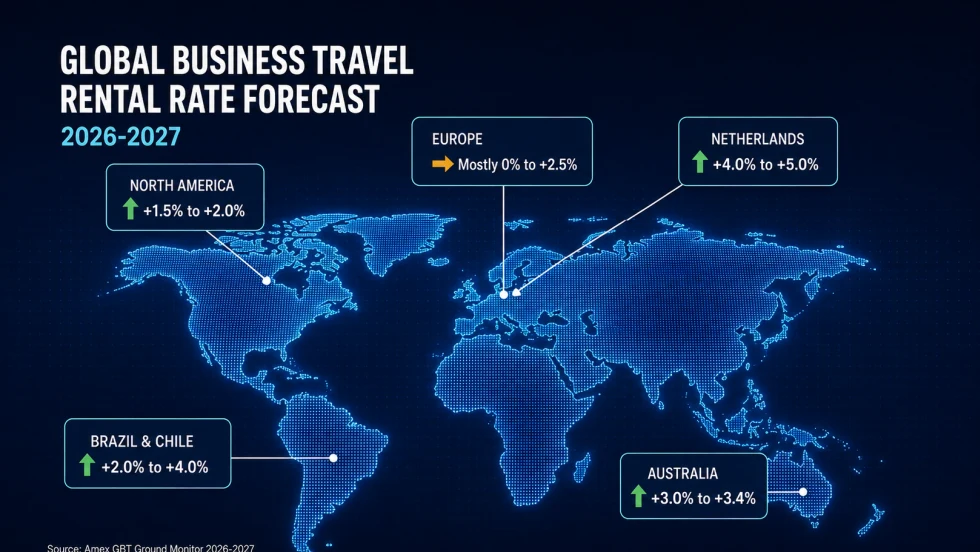
U.S. Business Travel Car Rental Rates Forecast to Rise Up to 2%
Improved fleet supply should limit pricing gains in 2026-27, while insurance, repair costs, and softer residual values continue to pressure rental operations, according to Amex GBT.
Read More →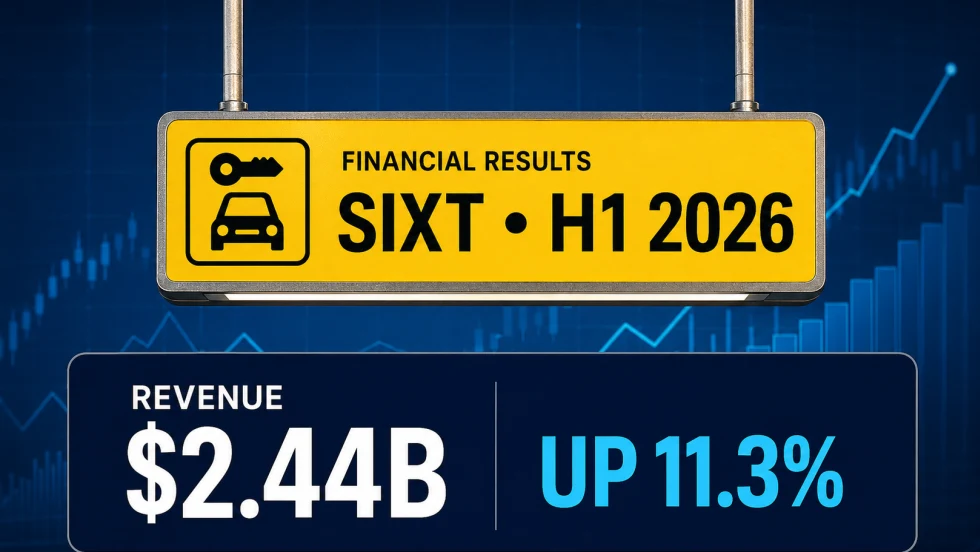
Sixt Revenue Tops $2.4 Billion in First Half of 2026
Sixt’s first-half revenue surpassed $2.4 billion for the first time as demand outpaced fleet growth, lifting utilization and earnings despite weaker consumer sentiment in North America.
Read More →
In Memoriam: Bobby Klyce, Avis Licensee Legend
The longtime Birmingham Avis operator and 2018 Auto Rental News Impact Award recipient was remembered as an advocate for independent licensees and the broader car rental industry.
Read More →
How to Build Custom Fleet Tools With AI and Vibe Coding [Webinar]
A new Automotive Fleet webinar explores how fleet managers are using AI and vibe coding to automate routine work and create simple operational tools without traditional programming skills.
Read More →