


Why Dealership Rental Operations Don't Work - And How They Could
With streamlined operations and lower cost structures, a dealer rental operation should be a powerful competitor to more traditional rental operators. Why aren’t they?
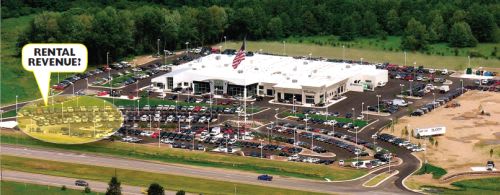
From time to time, new vehicle manufacturers have operated on the fringes of the rental market through their network of dealers. Their presence in the rental industry is “on the fringe” because the dealer rental operations haven’t gained much market share. In fact, most dealer rental operations don’t function very well at all.
In theory, dealer rental operations have many advantages that should make them powerful competitors to more traditional rental operators. What are those advantages, and why have they failed to deliver success to new car dealerships?
Advantages to a Dealer Rental Operation
Here are some of the theoretical advantages dealer rental operations have over the more traditional rental companies:
• Streamlined Operations Offer Better Customer Service
Rental operations are right where the demand for a replacement vehicle exists. There is no need to shuttle vehicles or customers to another location.
Dealership employees will be in charge of the experience from beginning to end. Existing staff, often an assistant service manager, can handle the rental process at the same time that they open the repair order for the customer’s car. There is no need to turn the dealership’s customer over to another service provider.
The charge for the rental vehicle can be billed to the customer through the repair order, and can be paid with a single payment from the customer. Of course, it’s very easy for the dealer to pass those billings through to the factory through a warranty claim. And payments to dealers are expedited—much more quickly than payments to other rental companies.
Dealers often have an established relationship with the customer through previous car sales, routine vehicle service and community events. In smaller towns, dealers are well-known from vehicle purchases, from routine maintenance of their vehicles and through the sponsorship of youth sports teams and local events. That type of name and face familiarity doesn’t develop for traditional rental operations, which might not see a customer for four or five years at a time.
• Rentals Used as a Sales Tool
The rental operation can be an effective sales tool, and vice-versa. The new and used car departments should generate demand for rentals, and the rental department should routinely generate sales for those departments, creating synergies that are unavailable to traditional rental companies.
• Lower Cost Structure
The dealer should be able to offer competitive pricing because he can use an existing facility to house the rental operation, with little or no added overhead expense. Most operating expenses, including rent, utilities, Internet access, telephones, security systems, copy machines, credit card machines, etc., are already available in support of dealer operations.
[PAGEBREAK] The dealer’s operation can use other employees, such as sales staff, lot attendants, entry level technicians and the service manager to support the rental operation during peak demand periods. Traditional rental operators don’t have that kind of flexibility in staffing.
Dealers should be able to maintain their fleets at a lower cost than traditional car rental competitors, with less downtime while rental vehicles are being serviced.
Dealers aren’t faced with high rental taxes like most airport operations. This gives them a large competitive advantage over some competitors.
So Why Aren’t They Successful?
Despite these advantages, dealer-based rental operations haven’t translated into a meaningful market share for any of the manufacturers, and most dealers either choose not to operate a rental fleet at all, or operate one in name only.
A typical fleet might involve a handful of vehicles, no dedicated staff and no advertising. In a typical metro market, fewer than one in 10 dealers has a rental program of any type. With all of these advantages, why aren’t more dealership rental operations successful—and what are the pitfalls that prevent dealers from enjoying success?
• The Free Loaner Mindset
Dealers that would never consider routinely giving away products or services in the new car, used car or parts departments don’t hesitate to give away services in the rental department. As a result, many dealership rental fleets serve as little more than a source of free—but expensive—loaner vehicles for other departments. Dealers don’t understand that all rentals should be paid for—even if they are paid for by another dealership department.
This may require a major cultural change for dealerships that have traditionally provided free loaners. One large dealership on the East Coast was recently trying to develop a rental operation, starting with a dozen vehicles, although it still had more than 20 loaner vehicles that were available for free. It was having difficulty in switching its customers to the idea that they should pay for something that had always been available for free. That operation is destined for failure. Cultural changes must be implemented, and the “free loaner” programs that are common, particularly in small towns, must go away.
• Little Understanding, No Commitment
Most dealerships aren’t committed to the idea of running a profitable rental operation, and it shows. The typical dealer knows little about his rental operation, and doesn’t have the skills to supervise one. Dealership management reports may not even effectively track the profitability of the fleet. And because the rental business isn’t understood, human and capital resources aren’t made available.
Rental fleets are often kept so small that customers can’t depend on the dealership to have cars when they are needed. Traditional rental operators understand that the fleet must operate as a profit center, and they invest accordingly in advertising, training and the right size fleet. And traditional operators have a system to manage and track the results of their rental operations. Dealerships must learn, through education, to view a rental operation as a profit center and track the results, while holding the manager accountable for profitability.
• Used Car Manager Should Not Control Fleet
Rental operations are often viewed as little more than a source of quality used cars for the used car department. At many dealerships, the used car manager orders the fleet vehicles, choosing models and option packages that he wants on the used car lot, even if they don’t make for the best rental cars. Later, when the used car manager needs a particular vehicle for a customer, the vehicle will immediately be transferred to the used car department at a price set by the used car manager, even if the vehicle is still needed for continuing rental operations.
Typically, the gross profit on the sale will be reported only by the used car department. The rental manager should be in charge of ordering fleet vehicles, not the used car manager. If another buyer will pay more for a vehicle that is being removed from the fleet, the rental manager should be able to sell the vehicle to that buyer. No vehicle should be removed from the fleet for retail sale until the rental manager agrees that it is appropriate. [PAGEBREAK]
• Rentals for More than Just Service
Many dealer-based rental managers are only allowed to rent vehicles to customers while the customer’s vehicle is being serviced at the dealership. The rental manager may be forbidden from renting vehicles to non-service department customers. There are many reasons why your customers may choose to rent a vehicle. Family visiting from out of town? Taking a long trip? Hauling the soccer team to an out-of-town game? Dealers must train their staff to ask for all of a customer’s rental business.
• Base Pay on Profitability
Frequently, no one’s pay is based on the profitability of the rental fleet, with obvious implications for the profitability of the rental operation. Pay should be based on the profitability of the rental operation. Dealers with a larger fleet opportunity should consider hiring a full-time, trained professional.
• Adjust Rates to the Market
Dealerships don’t attempt to adjust their prices to market conditions and to availability, choosing instead to hold prices level all day long, and all year round. The effective model for maximizing rental income requires market awareness and frequent price changes.
• Changes to Manufacturers’ Programs Needed
All of the above factors are within a dealer’s control, and there is no reason that a dealer cannot design his business plan for maximum profitability. A few factors are inherent in the design of the plans that are offered by the manufacturer or the regional distributor.
- Manufacturer programs aren’t designed to favor the dealer. Often, vehicles aren’t available to dealers when they are needed. Dealers are frustrated when, during peak periods of demand for vans for summer vacations, availability drops to zero, as distributors focus on retail sales volumes.
- Strict limits exist on how long vehicles can remain in the fleet. With minimum and maximum time in fleet set by the program, dealers can’t respond to market requirements for rentals, nor can they take advantage of demand from buyers—including their own used car departments.
- Dealers often pay above-market rates for substandard insurance policies. One manufacturer’s program is designed to penalize dealers for accidents, even when the dealer’s rental customer is not at fault, and the entire claim is subrogated to another insurance company.
- Dealers often pay more for the vehicles that they put in their rental fleet than the national rental companies. As little as $800 to $1,000 in price difference can make a huge difference in the rental rates that can be offered.
- Distributors assign poorly trained staff to advise dealers on how to run their rental operation. Most advisers have never stood behind the counter and rented a car to a customer. Some are barely familiar with the design of their own rental program. And, after a few years, those representatives will be transferred to another position. The dealer will be assigned another representative—who is generally just as unfamiliar with the program as his predecessor.
- Virtually all programs require that only the manufacturer’s brand of vehicles can be rented through the programs, leaving dealers unable to meet the needs of many of their customers. That means that most dealers won’t be able to offer 10- or 12-passenger vans, trailers, or moving trucks, effectively shutting them out of areas of high demand.
Of course, there are a few profitable, effective dealer-based rental car programs. Even the ones that do work, however, could work much better. Distributors and manufacturers need to agree on modifications to program design, and dealers need to view their rental operations as a source of significant profits, and to manage them accordingly.
Until those changes happen, most dealerships won’t develop a rental fleet. That’s bad for them, but perhaps good for you.
Jon Dahlquist has been active in dealership management for 25 years. He managed a fleet of 40 vehicles under a national dealer program, but has since chosen another rental provider to meet his dealership’s rental needs.
More Rental Operations

Palm Beach Airport Code Change Creates Car Rental Distribution Gap
A test of rental searches under the old PBI and new DJT airport codes returned largely different sets of brands and vehicles, highlighting a potential distribution problem for rental operators.
Read More →
U-Save Continues Dominican Republic Expansion with Launch in Punta Cana
The new franchise location builds on U-Save’s existing Santo Domingo operation and will begin taking reservations for October 2026.
Read More →
When AI Books the Rental Car, Who Controls the Sale?
As AI moves from comparing rental rates to completing transactions, operators need to understand how travelers find, interpret, rank, and ultimately see their offers. (Part 2 of 2.)
Read More →
European Booked Car Rental Rates Fell 5%, Results Varied by Country
Ireland, Cyprus, and the United Kingdom saw steep declines, while booked rates rose in Poland and Hungary.
Read More →
Is It Time to Rethink Rental Categories?
As traditional economy and compact cars disappear from the market, longtime rental operator Mike DeLorenzo asks whether the industry’s familiar vehicle categories still make sense — and what operators need to rethink along with them.
Read More →
Who Owns the Rate? AI Is Creating a New Distribution Problem for Car Rental
Generative Engine Optimization asks whether AI can find a rental company, but operators also need to know whether the agent inspected enough of the market, compared equivalent offers, and presented a rate the traveler can actually book. (Part 1 of 2)
Read More →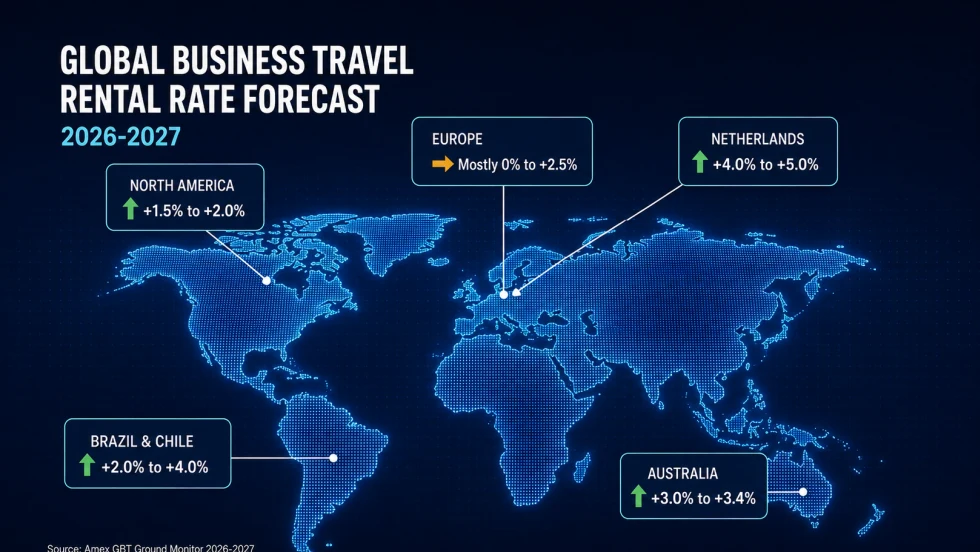
U.S. Business Travel Car Rental Rates Forecast to Rise Up to 2%
Improved fleet supply should limit pricing gains in 2026-27, while insurance, repair costs, and softer residual values continue to pressure rental operations, according to Amex GBT.
Read More →
Sixt Revenue Tops $2.4 Billion in First Half of 2026
Sixt’s first-half revenue surpassed $2.4 billion for the first time as demand outpaced fleet growth, lifting utilization and earnings despite weaker consumer sentiment in North America.
Read More →
In Memoriam: Bobby Klyce, Avis Licensee Legend
The longtime Birmingham Avis operator and 2018 Auto Rental News Impact Award recipient was remembered as an advocate for independent licensees and the broader car rental industry.
Read More →
How to Build Custom Fleet Tools With AI and Vibe Coding [Webinar]
A new Automotive Fleet webinar explores how fleet managers are using AI and vibe coding to automate routine work and create simple operational tools without traditional programming skills.
Read More →