



ACRA Addresses Funding in Letter to Congress
The American Car Rental Association asks that funds be loaned to financially qualified car rental companies under reasonable conditions set by the financing arms, similar to what existed as recently as last year.
Respected members of Congress:
Last week, it was announced that General Motors is going to idle 15 plants for 9 weeks. The shutdown is aimed at cutting costs and shrinking a glut of unsold vehicles at dealers. This week, Chrysler declared bankruptcy. In December, we sent a letter to you asking that our voice be heard on the federal bailouts of the Detroit Big 3 as collectively our industry represents the largest single customer of General Motors, Ford and Chrysler.
The federal government has provided billions in aid to both GM and Chrysler. Cars remain unsold because consumers, rental car companies, leasing companies and others simply do not have the ability to borrow money in order to purchase cars.
We represent not only some of the largest brands in car rental, but also the local dealer than rents fives cars in the local suburban town. ALL of us feel the pain of this financial situation. We are hopeful that provisions in the TALF program will supply the financing we speak of, but with a AAA rating requirement it is difficult for even the largest companies to qualify.
The manufacturers need a long term solution, and the ACRA can be a part of that if the government acts to free up the credit markets. To put this in perspective, one of the largest car rental operators in the country stated in February 2009 that it had slightly more than 7,000 cars on order for the summer season, as compared to more than 75,000 for the corresponding period in 2008. Our industry wants to buy cars but we need the mechanism to do so.
The following could be an effective and efficient solution to the problem at hand. It will also guarantee that the money from the government is only utilized for - the production and sale of U.S.-based manufactured product sold to the American businessman.
The financing arms of ANY of the U.S. based manufacturers are given credit funded by the Government to provide fleet financing for qualified borrowers.
The funds will be loaned to car rental companies, leasing companies, and fleet purchasers who financially qualify under reasonable conditions set by the financing arms, similar to what existed as recently as last year.
The money can only be used to finance vehicles that are being built on U.S. soil, helping the manufacturers create American jobs.
The re-payment of the loans by the borrowers creates a direct repayment to the government. The government and the vehicle manufacturers financing arm share in the interest payments.
New funding is only made available based upon the successful repayment of the initial obligations.
Funding is available to ANY customer who financially qualifies with the financing arm of the manufacturer; it is not based upon the size of the organization, or the number of vehicles they intend to purchase. It is equally available to all.
This industry is ready to acquire the products manufacturers can produce and in doing so, create jobs and help revitalize the economy. We simply need the financing conduits to facilitate what we have collectively done as an industry since its inception almost 100 years ago.
The government has asked the Big 3 to come back to Washington and “state their case for viability. What better message can be delivered than to say the car rental industry would purchase up to 500,000 cars this year if the financing was made available?
These loans to car rental operators could be made at an interest rate, allowing for the financing arm to earn fees for possessing and managing the loan portfolio, and provide for the federal government to make a return on their money. In other words, what we are suggesting is that this credit facility/stimulus package would actually have no cost to the government, would stimulate the economy, help the Big 3, and create jobs.
The automobile industry is in a state of emergency. The manufacturers are calling all of us and offering good product and attractive pricing, and we simply do not have the ability to acquire fleet from them. Our industry is being paralyzed by the current situation.
Every car rental company has experienced a reduction in force. Our suppliers, many of which rely on the car rental industry for survival are suffering as well and some have already gone out of business. This trickledown effect we are experiencing devastates not only the value of the publicly held companies, but also the survival of the independent operator or the small business owner who is a franchisee or affiliate of one of the major brands.
We recognize the task before Congress is monumental. We encourage you to find a way to preserve our American manufacturing industry. We want to help Congress and our employees, vendors and customers as well. To do so, as part of any rescue plan that is ultimately put in place, we need your help in making sure the credit facilities to purchase the products of these manufacturers exist or the vehicles of the big 3cannot be ultimately sold.
Respectfully submitted,
Robert M. Barton, President
American Car Rental Association
More Rental Operations

ICRS 2027 Opens Call for Papers
The International Car Rental Show seeks session proposals on the business, operational, and technology issues facing car rental operators. Submissions are due Jan. 15.
Read More →
Turo to Launch Vehicle Delivery Service
Turo Delivered will let travelers search for vehicles that hosts can deliver directly to hotels, homes, airports, train stations, and other locations.
Read More →
Palm Beach Airport Code Change Creates Car Rental Distribution Gap
A test of rental searches under the old PBI and new DJT airport codes returned largely different sets of brands and vehicles, highlighting a potential distribution problem for rental operators.
Read More →
U-Save Continues Dominican Republic Expansion with Launch in Punta Cana
The new franchise location builds on U-Save’s existing Santo Domingo operation and will begin taking reservations for October 2026.
Read More →
When AI Books the Rental Car, Who Controls the Sale?
As AI moves from comparing rental rates to completing transactions, operators need to understand how travelers find, interpret, rank, and ultimately see their offers. (Part 2 of 2.)
Read More →
European Booked Car Rental Rates Fell 5%, Results Varied by Country
Ireland, Cyprus, and the United Kingdom saw steep declines, while booked rates rose in Poland and Hungary.
Read More →
Is It Time to Rethink Rental Categories?
As traditional economy and compact cars disappear from the market, longtime rental operator Mike DeLorenzo asks whether the industry’s familiar vehicle categories still make sense — and what operators need to rethink along with them.
Read More →
Who Owns the Rate? AI Is Creating a New Distribution Problem for Car Rental
Generative Engine Optimization asks whether AI can find a rental company, but operators also need to know whether the agent inspected enough of the market, compared equivalent offers, and presented a rate the traveler can actually book. (Part 1 of 2)
Read More →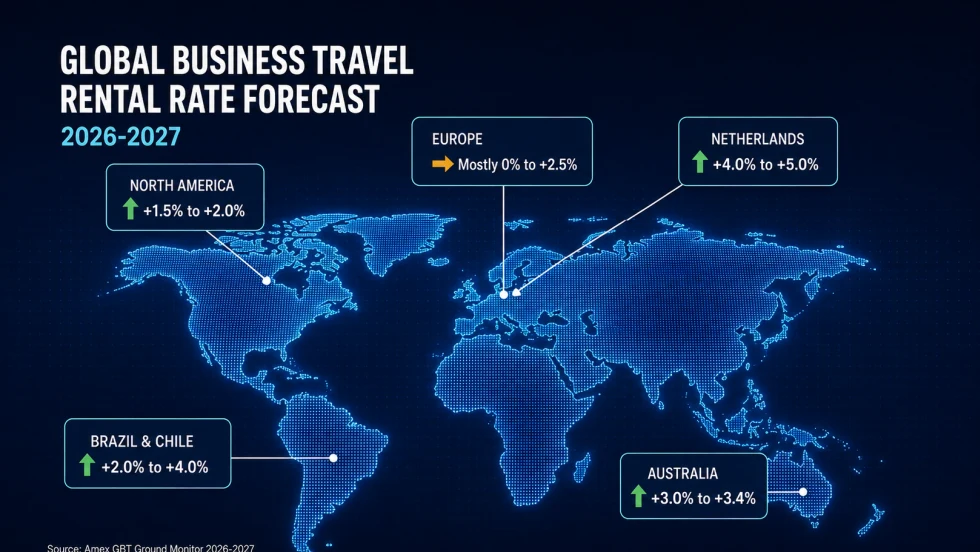
U.S. Business Travel Car Rental Rates Forecast to Rise Up to 2%
Improved fleet supply should limit pricing gains in 2026-27, while insurance, repair costs, and softer residual values continue to pressure rental operations, according to Amex GBT.
Read More →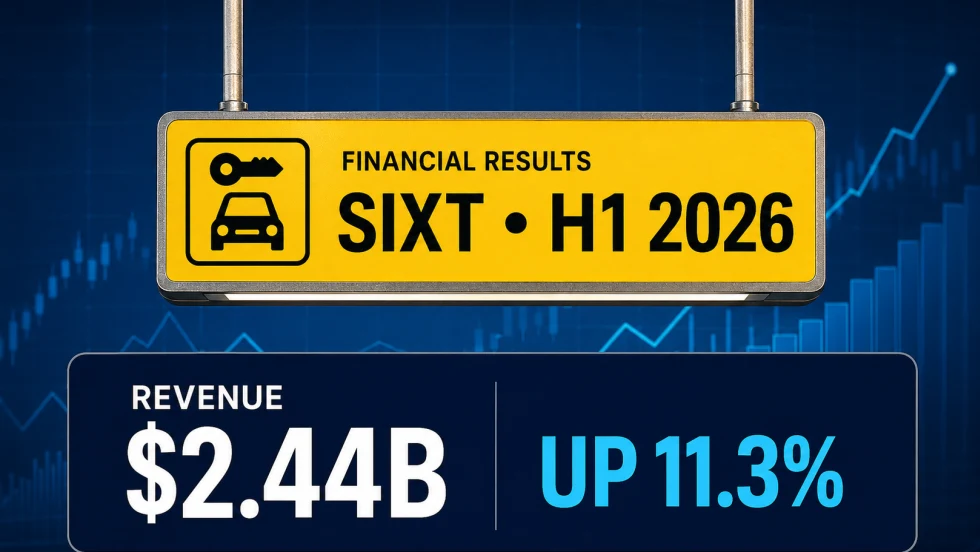
Sixt Revenue Tops $2.4 Billion in First Half of 2026
Sixt’s first-half revenue surpassed $2.4 billion for the first time as demand outpaced fleet growth, lifting utilization and earnings despite weaker consumer sentiment in North America.
Read More →