




Related: ACRA Asks Congress for More Relief, Vehicle Buyback Program
ACRA Outlines CARES Act 2.0 Priorities
The American Car Rental Association is working on a program to reduce debt or fleet sizes, encourage MAG relief at airports, liability protection, and a tax credit for travel purchases.
May 1, 2020
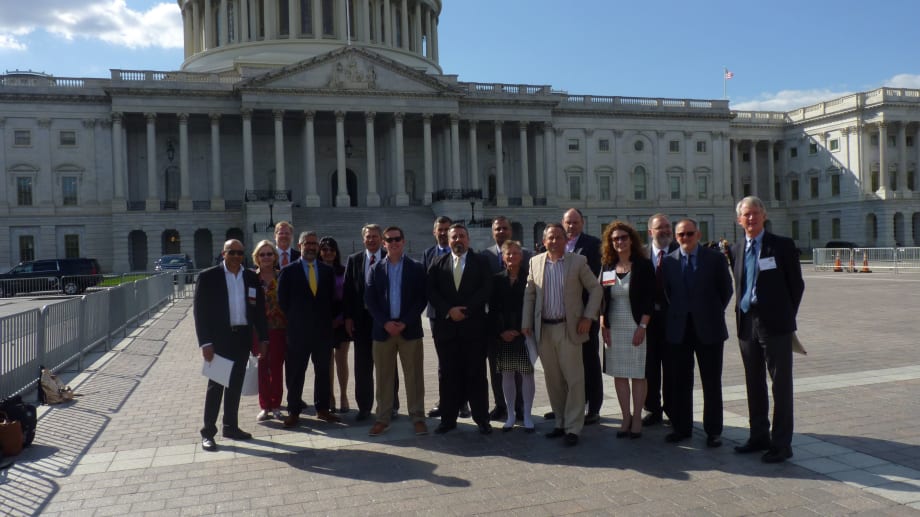
ACRA delegates convene for a photo in front of the U.S. Capitol on Sept. 25 for the association’s sixth annual Day on the Hill.
Photo by Chris Brown.
3 min to read
The American Car Rental Association (ACRA) outlines its approach to the next round of federal stimulus:
The focus in D.C. has now shifted to whether – or perhaps when – there will be a fourth pandemic relief/economic stimulus package considered and enacted – variously called Stimulus 4.0 or CARES 2.0.
While Congress is not scheduled to be in formal session in early May, House and Senate leaders and the chairs of various key congressional committee are already in discussions about what a 4.0 package should look like.
House Speaker Pelosi continues to press for funds for state and local governments, which face massive layoffs and potential bond defaults due to reduced tax income from reduced economic activity. Senate Majority Leader McConnell stated that he would like to see liability protections for businesses operating during the pandemic.
ACRA’s Board, the COVID-19 Task Force, and Legal and Legislative Committee have been working on establishing ACRA’s priorities for the next stimulus bill. ACRA’s 4.0 priorities are:
Restoring Liquidity – adoption of a program to assist car rental companies to reduce their debt or fleet sizes, or perhaps to shore up the used car market, until the car rental business picks up again;
Airport Issues – working on two fronts: (1) working with government agencies to encourage airports to provide relief from MAGs, rent abatement and CONRAC fees; and, (2) seek federal grants to airports to make up for reduced MAG payments from all concessionaires, including car rentals;
Liability Protection – As essential businesses that must keep operating during the pandemic, car rental companies should not be open to lawsuits if a renter or passenger suspect he or she has contracted the virus while in a rental car if the company has taken reasonable steps to sanitize the vehicle; and,
Travel Tax Credit – provide tax credits for businesses and individuals for airline ticket purchases, car rentals, hotel stays, etc. to jumpstart corporate and leisure travel once the public health emergency is over.
Regarding state and local developments:
New York City — ACRA sent the attached letter to the New York City Council opposing a proposal to mandate supplemental compensation for workers in essential businesses, including car rentals, during the pandemic.
ACRA also joined with other New York City business operators in the attached letter opposing additional Council proposals to prohibit layoffs without just cause or classified a person that works for a business for 80 hours a year as an employee.
Other States — In addition to business interruption insurance getting attention in DC, several states such as NY, OH, NJ, MA, PA and LA are considering similar legislation. There are also states that are looking to extend workers’ comp coverage to cover COVID-19 for certain workers, which ACRA is tracking.
ACRA reports that it will provide a more complete state summary of activity in an upcoming issue.
More Rental Operations

What Does It Take to Succeed in B2B Rentals?
The fundamentals may be familiar to daily car rental operators, but project-based truck rentals put different demands on the fleet and the business.
Read More →
NPR Builds on International Partnerships to Grow Rental Bookings
With Ana Laborde supporting broker development, NPR Auto Group is tailoring distribution strategies, rate packages, and partnerships to grow international reservations across its three brands.
Read More →
Advantage, Sixt Place Among Top Five in Annual Satisfaction Study
While Enterprise and National retain the top spots in JD Power’s 2026 rankings, the latest customer satisfaction results suggest renters can find competitive service beyond the biggest car rental names.
Read More →
The $100,000 Insurance Trap in Exotic Car Rentals
Exotic rental agencies often rely on customers’ personal auto policies to protect six-figure vehicles. But policy language can dramatically change the coverage for vehicles over $100,000 MSRP.
Read More →
The Booking Is Confirmed, But Is Your Customer Ready to Drive?
For international renters, a confirmed reservation doesn’t always mean they’re eligible to drive. Earlier checks can help operators catch documentation and payment issues before the customer reaches the counter.
Read More →
ICRS 2027 Opens Call for Papers
The International Car Rental Show seeks session proposals on the business, operational, and technology issues facing car rental operators. Submissions are due Jan. 15.
Read More →
Turo to Launch Vehicle Delivery Service
Turo Delivered will let travelers search for vehicles that hosts can deliver directly to hotels, homes, airports, train stations, and other locations.
Read More →
Palm Beach Airport Code Change Creates Car Rental Distribution Gap
A test of rental searches under the old PBI and new DJT airport codes returned largely different sets of brands and vehicles, highlighting a potential distribution problem for rental operators.
Read More →
U-Save Continues Dominican Republic Expansion with Launch in Punta Cana
The new franchise location builds on U-Save’s existing Santo Domingo operation and will begin taking reservations for October 2026.
Read More →
When AI Books the Rental Car, Who Controls the Sale?
As AI moves from comparing rental rates to completing transactions, operators need to understand how travelers find, interpret, rank, and ultimately see their offers. (Part 2 of 2.)
Read More →