



Brazilian Rental Market Grows Revenue, Fleet
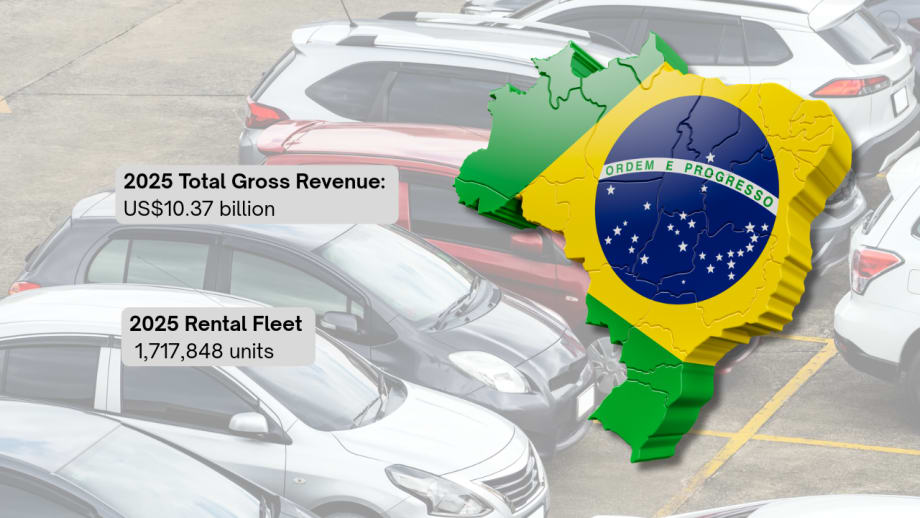
Data from ABLA’s annual yearbook show that Brazil’s vehicle rental industry generated US$10.37 billion in gross revenue in 2025, up 16.6% from 2024, while the country’s fleet grew 6.2%.
More than daily rentals: Fleet management and outsourcing accounted for 54% of the sector’s fleet in 2025, while the car rental sector accounted for 46%.
Auto Rental News
- Brazil’s vehicle rental industry reported a revenue of US$10.37 billion in 2025.
- The industry saw a 16.6% increase in gross revenue compared to 2024.
- The country’s vehicle rental fleet expanded by 6.2% over the year.
*Summarized by AI
Brazil’s vehicle rental industry generated R$61.7 billion (US$10.37 billion) in gross revenue in 2025, an increase of 16.6% from 2024, according to the Brazilian Vehicle Rental Sector Yearbook 2026, published by ABLA, Brazil’s vehicle rental association. The country’s fleet of passenger cars and light commercial vehicles reached 1,717,848 units, up 6.2%.
The figures below describe 2025, rather than a forecast for 2026. They also cover several business models.
The Fleet Serves More Than Daily Rentals
ABLA estimates that fleet management and outsourcing accounted for 54% of the sector’s fleet in 2025, while the car rental sector accounted for 46%. Its definitions include vehicle subscriptions in the first category and vehicles supplied to app-based (ride-hail) drivers in the second. The split is based on a survey of association members combined with information from listed companies.
It would be misleading to read those percentages as a division between corporate contracts and airport leisure rentals. A vehicle serving a ride-hailing driver has a different usage pattern from one rented for a weekend, even when both appear within the same broad category.
Growth requires a larger commitment of capital
The yearbook reports R$79.3 billion ($13.33 billion) invested in new passenger cars and light commercial vehicles in 2025, against R$68.8 billion in 2024.
Average investment per vehicle (average vehicle acquisition cost) rose from R$105,936.79 to R$126,050.61 (US$21,200), an increase of 19%. These are sector averages, not a price forecast for an individual operator’s next purchase.
Active Rental Companies in Brazil
ABLA’s yearbook records 37,047 active companies across the selected vehicle-rental activity classifications in 2025. That total includes 21,217 companies renting vehicles without drivers (self-drive rentals), 6,306 with drivers (chauffeur services, corporate transportation with a driver, and contracted passenger transportation), and 9,524 in other means of transportation.
It is not a count of 37,047 conventional self-drive car rental operators or rental locations. The underlying company-registration source is SERPRO.
Truck, Motorcycle Rentals
The industry is also extending beyond passenger cars. ABLA reports 263,330 motorcycles in rental fleets in 2025, up 81.6%, and 56,267 trucks, up 10.5%.
These categories sit outside the passenger-car and light-commercial fleet figure cited at the start of this article.
Turn the Market Data Into Operating Decisions
Revenue growth and fleet growth are different measures. Their relative movement does not, by itself, establish higher daily rates, better margins or improved returns on capital. Contract mix, fleet composition and other factors must be examined before drawing those conclusions.
For an international reader, Brazil offers a useful case of rental activity spanning several customer and asset categories. The management task is to identify which part of that market is relevant to the company, then connect commercial demand with the capital and operating capability needed to serve it.
That connection also shaped my work coordinating the 2026/2027 edition of Guia Definitivo das Locadoras de Veículos, a Portuguese-language management handbook bringing together 49 specialists. It is a practitioner reference covering the Rental business, distinct from ABLA’s statistical yearbook. The market figures in this article are attributed to ABLA and its underlying sources.
More Fleet Acquisition
Rental Fleet Sales Turn Positive Through October 2026
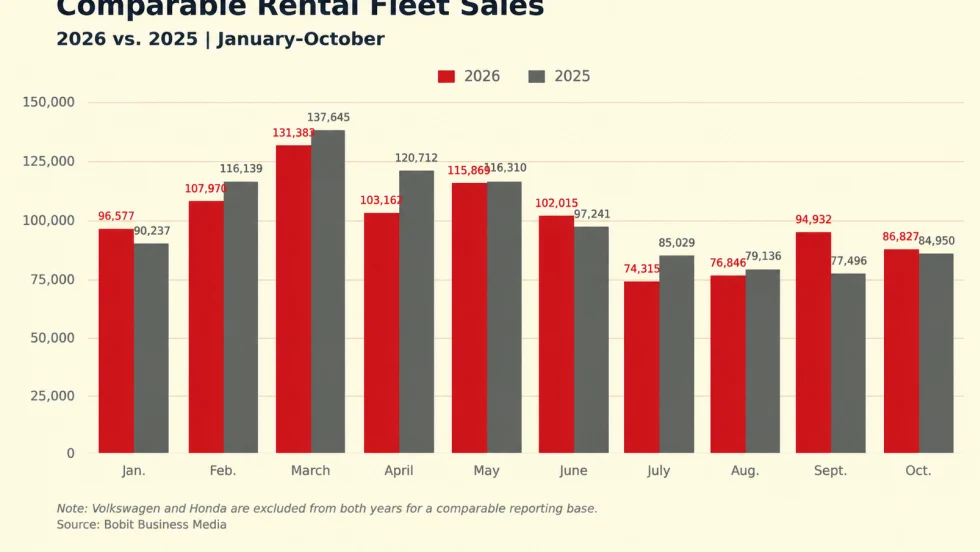
October rental fleet sales rose 2.2% year over year, bringing year-to-date volume slightly ahead of 2025 for the first time since early in the year.

Rental Vehicle Orders Remain Steady Amid Supply Concerns
With Hyundai’s South Korean strike creating uncertainty for 2027-model-year deliveries, Mike Muehlenfeld of Walser Automotive Group says rental operators are maintaining normal purchasing levels and generating strong returns at disposal.

Global Carsharing Fleet Projected to Reach 768,000 Vehicles By 2030
A new Berg Insight forecast outlines several business models driving the projected growth in public carsharing worldwide through 2029.
Rental Car Fleet Sales Show Mid-Year Strength
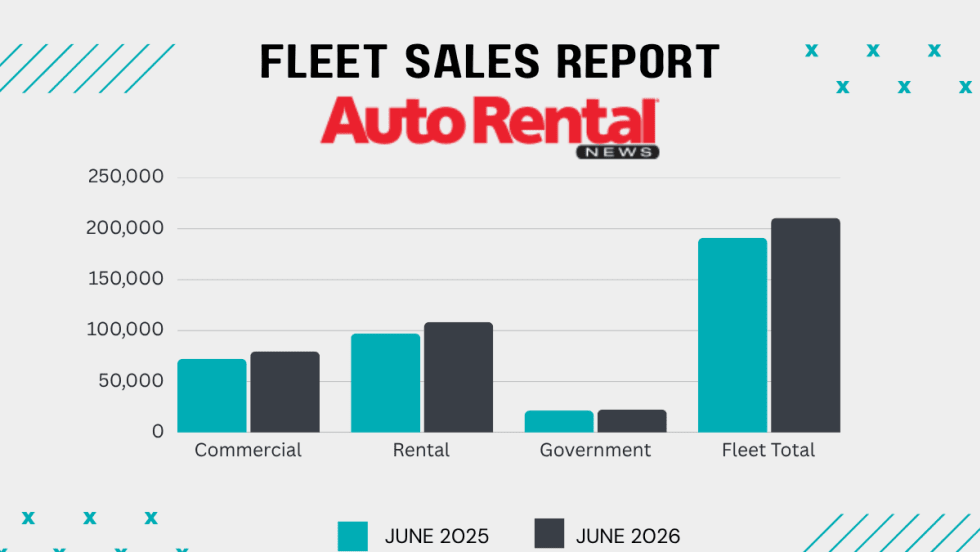
June gains ensured rental fleets closed out the first half of 2026 in positive territory.
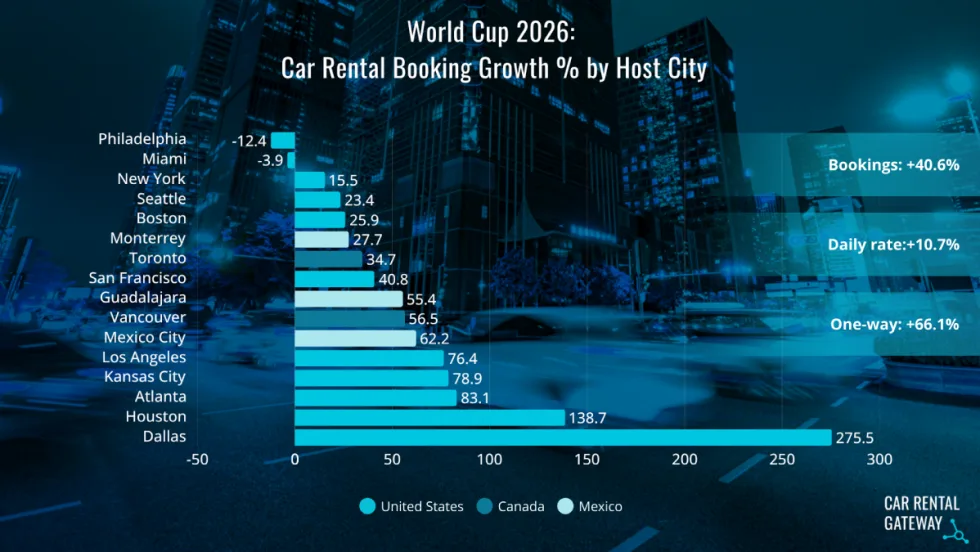
World Cup Travel Data Shows Longer Car Rentals and More One-Ways
A recent analysis of FIFA bookings found varied demand patterns that influenced rental car pricing.

A Leveling Force: AI Morphs Into A Rental Car Profit-Seeker
Revenue managers can’t match the emerging AI tools gobbling lots of data that could counter the competitive race to the rate bottom.

Rethink The Future To Avert A Race To The Bottom
Rental car operators heard a sobering industry message and a stern challenge at the close of the International Car Rental Show.

DriveItAway, Free2move Plan Shared Fleet Program for Independent Rental Fleet Operators
Vehicles would be placed with participating rental operations to support car renter demand and provide additional fleet capacity.

Stellantis Recalls 1.3 Million Jeep Vehicles Worldwide Over Fire Risk
Stellantis is recalling more than 1.3 million Jeep Wrangler and Gladiator models worldwide over a fire risk linked to power steering pump wiring.
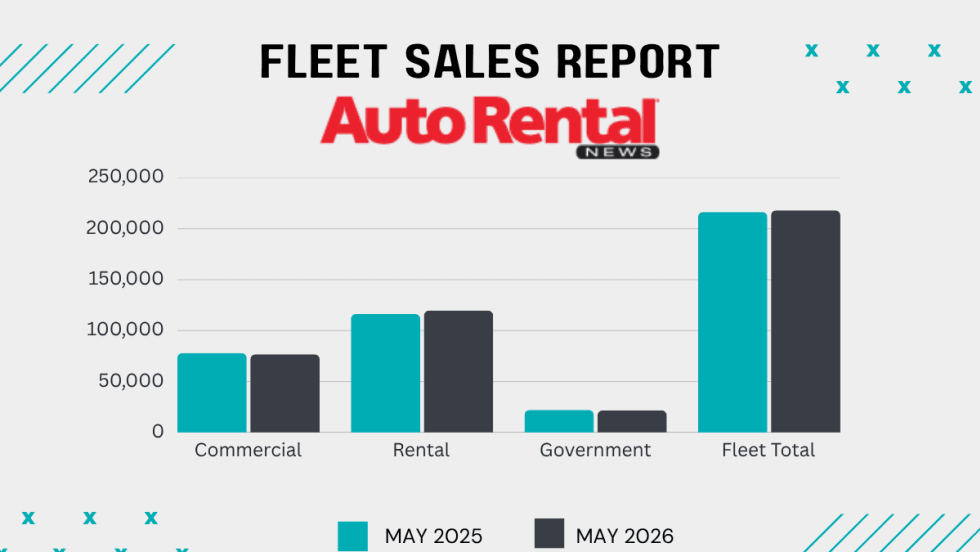
Rental Fleet Sales Skating Just Above 2025 Levels
The U.S. economy's continued growth and positive business investment are creating a favorable environment for fleet vehicle demand.