




Fitch Affirms Arizona Sports and Tourism Authority Rev Bonds
Preliminary fiscal 2011 results suggest lodging excise tax and car rental surcharge revenues up 1.5% and total pledged revenues up roughly 6% due primarily to another one-time adjustment for prior years' sales tax revenues.
Fitch Ratings has taken the following rating action on the Arizona Sports and Tourism Authority (the authority) during the course of routine surveillance:
--$270.3 million senior lien revenue bonds, series 2003A, 2007A and 2008 affirmed at 'A';
--$20.6 million subordinate lien tax revenue bonds, series 2003 affirmed at 'BBB+'.
The Rating Outlook is Stable.
SECURITY
The bonds are secured by the pledged revenues, which consist of tourism related taxes, facility related taxes and revenues, and certain facility-related income tax revenues.
KEY RATING DRIVERS
Revenues Have Stabilized: Despite recessionary weaknesses in the two largest pledged revenue sources, projected debt service coverage levels remain sound; fiscal 2010 and preliminary fiscal 2011 results suggest improvement in several of the pledged revenue components.
Economically Sensitive Pledged Revenues: The susceptibility of the primary revenue sources -- a car rental tax and hotel occupancy tax -- to fluctuations in economic conditions remains a concern.
Funding Flexibility Maintained: The authority retains flexibility regarding the amounts transferred annually for other statutorily required projects (e.g. tourism promotion, spring training baseball, youth sports), and reductions in these transfers are expected to continue for the near term.
Economic Prospects Positive: Despite the severe economic downturn in the Phoenix area over the past several years, Fitch believes the long-term prospects of the metropolitan area remain positive.
CREDIT PROFILE
The revenue sources pledged for bond repayment, including the lodging excise tax, car rental surcharge, and a state income tax allotment from the Arizona Cardinals operations, currently provide coverage of more than 2.0 times (x) on senior bond debt service, which receives the first distribution of pledged revenues. Coverage on the subordinate bonds, which are also secured by the same pledged revenues after payment of the senior bonds and required tourism promotion contributions, is adequate. Prior senior lien financings were used to finance the construction, furnishing, and completion of a multipurpose stadium facility (University of Phoenix Stadium, or the facility) in Maricopa County, completed in August 2006, which is the home to the Arizona Cardinals of the National Football League and to the Fiesta Bowl.
The severe economic downturn reduced tourism-related revenues in Maricopa County over the past several years. After registering flat revenues in fiscal 2008, the pledged lodging excise tax and car rental surcharge recorded a combined drop of 12% in fiscal 2009; the decline in fiscal 2010 was more modest at less than 2% -- due reportedly to higher car rental fees. Total pledged revenues for fiscal 2010 were up more than 10% to $36.9 million thanks to several one-time revenues and the better than expected car rental surcharge revenues. Preliminary fiscal 2011 results suggest lodging excise tax and car rental surcharge revenues up 1.5% and total pledged revenues up roughly 6% due primarily to another one-time adjustment for prior years' sales tax revenues.
The pledged revenues include the tourism tax revenues, which are a car rental surcharge of 3.25% imposed on each non-exempt car rental transaction and a 1% tax imposed on the cost of each lodging transaction within the county. From the 3.25% car rental surcharge, the first $2.50 of revenue goes to the Maricopa County Stadium District (another agency involved with spring training baseball facilities in the county). These two sources of revenues provide around 60% of total projected pledged revenues, although this revenue stream will be available only through April 2031. The third major revenue source -- certain state income tax revenue from Cardinals' operations, is available as long as debt remains outstanding and ensures sufficient money for debt service through final maturity in 2036; annual debt service drops from $24.2 million in 2031 to roughly $5.3 million from 2032 to 2036.
Other pledged sources include facility-related revenues, including transaction privilege (sales) taxes on retail, restaurant and event activities; payments from conventions and meetings; leasing or renting; admissions and concessions; facility use fees; and from use agreements with the Cardinals and Fiesta Bowl. Senior lien bond debt service coverage for fiscal 2011, using fiscal 2010 pledged revenues, is 2.34x and subordinate lien bond coverage is 1.47x. While these coverage levels have declined from prior years, they remain consistent with the rating categories. While further revenue erosion would drive subordinate lien coverage closer to the 1.0x level, the authority retains some flexibility regarding annual distributions for other programs, including tourism-related functions (the payment for which occurs prior to subordinate lien debt service in the flow of funds).
The enabling legislation also requires pledged revenue distributions (after debt service) for Cactus League (spring baseball training) purposes and youth and amateur sports; remaining revenues after these applications are used for the operational expenses of the facility. Pressure is expected to continue on facility operations, which the authority has addressed with staffing reductions and other cost-cutting measures and the recent hiring of a new concessions and facility management company.
The use agreement with the Cardinals requires their use of the facility for 30 years, with a provision requiring payment of remaining debt service should the team move out. The Cardinals also contributed $148 million towards the facility, including providing for the cost of the land. The authority reports no future borrowings, planning instead to contribute to area spring training baseball capital projects on a pay-as-you-go basis. The authority presently has several funding commitments in place with area cities, with a total of $137 million due over time; repayment on the largest commitments to Goodyear ($37 million) and Glendale ($60 million) is not expected to begin until 2021.
Additional information is available at www.fitchratings.com
More Rental Operations

Palm Beach Airport Code Change Creates Car Rental Distribution Gap
A test of rental searches under the old PBI and new DJT airport codes returned largely different sets of brands and vehicles, highlighting a potential distribution problem for rental operators.
Read More →
U-Save Continues Dominican Republic Expansion with Launch in Punta Cana
The new franchise location builds on U-Save’s existing Santo Domingo operation and will begin taking reservations for October 2026.
Read More →
When AI Books the Rental Car, Who Controls the Sale?
As AI moves from comparing rental rates to completing transactions, operators need to understand how travelers find, interpret, rank, and ultimately see their offers. (Part 2 of 2.)
Read More →
European Booked Car Rental Rates Fell 5%, Results Varied by Country
Ireland, Cyprus, and the United Kingdom saw steep declines, while booked rates rose in Poland and Hungary.
Read More →
Is It Time to Rethink Rental Categories?
As traditional economy and compact cars disappear from the market, longtime rental operator Mike DeLorenzo asks whether the industry’s familiar vehicle categories still make sense — and what operators need to rethink along with them.
Read More →
Who Owns the Rate? AI Is Creating a New Distribution Problem for Car Rental
Generative Engine Optimization asks whether AI can find a rental company, but operators also need to know whether the agent inspected enough of the market, compared equivalent offers, and presented a rate the traveler can actually book. (Part 1 of 2)
Read More →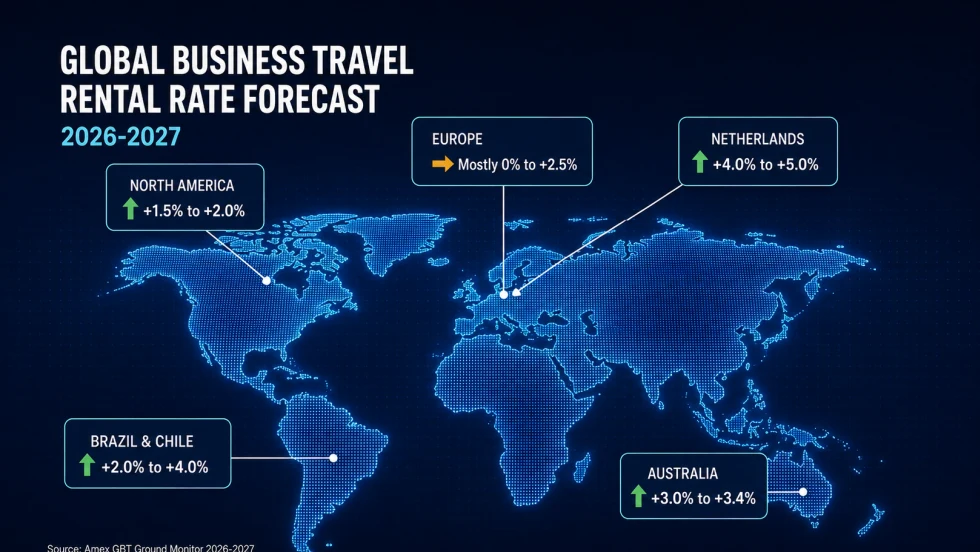
U.S. Business Travel Car Rental Rates Forecast to Rise Up to 2%
Improved fleet supply should limit pricing gains in 2026-27, while insurance, repair costs, and softer residual values continue to pressure rental operations, according to Amex GBT.
Read More →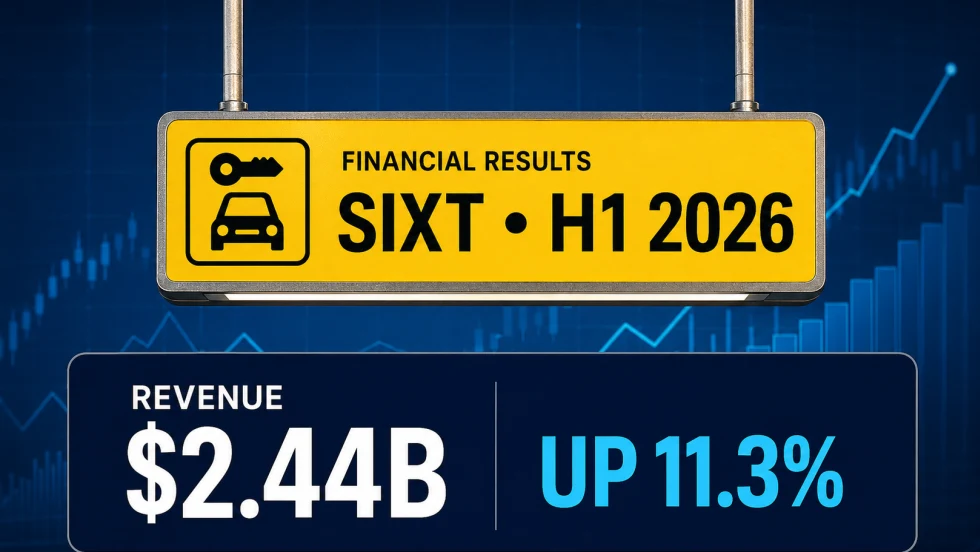
Sixt Revenue Tops $2.4 Billion in First Half of 2026
Sixt’s first-half revenue surpassed $2.4 billion for the first time as demand outpaced fleet growth, lifting utilization and earnings despite weaker consumer sentiment in North America.
Read More →
In Memoriam: Bobby Klyce, Avis Licensee Legend
The longtime Birmingham Avis operator and 2018 Auto Rental News Impact Award recipient was remembered as an advocate for independent licensees and the broader car rental industry.
Read More →
How to Build Custom Fleet Tools With AI and Vibe Coding [Webinar]
A new Automotive Fleet webinar explores how fleet managers are using AI and vibe coding to automate routine work and create simple operational tools without traditional programming skills.
Read More →