




FTC Announces Expanded Business Education Campaign on 'Red Flags' Rule
The three-month extension is an effort to assist small businesses and other entities in anti-fraud regulation.
To assist small businesses and other entities, the Federal Trade Commission staff will redouble its efforts to educate them about compliance with the “Red Flags” Rule and ease compliance by providing additional resources and guidance to clarify whether businesses are covered by the Rule and what they must do to comply. To give creditors and financial institutions more time to review this guidance and develop and implement written Identity Theft Prevention Programs, the FTC will further delay enforcement of the Rule until Nov. 1, 2009.
The Red Flags Rule is an anti-fraud regulation, requiring “creditors” and “financial institutions” with covered accounts to implement programs to identify, detect, and respond to the warning signs, or “red flags,” that could indicate identity theft. The financial regulatory agencies, including the FTC, developed the Rule, which was mandated by the Fair and Accurate Credit Transactions Act of 2003 (FACTA). FACTA’s definition of “creditor” includes any entity that regularly extends or renews credit—or arranges for others to do so—and includes all entities that regularly permit deferred payments for goods or services. Accepting credit cards as a form of payment does not, by itself, make an entity a creditor. “Financial institutions” include entities that offer accounts that enable consumers to write checks or make payments to third parties through other means, such as other negotiable instruments or telephone transfers.
The FTC’s Red Flags Web site, offers resources to help entities determine if they are covered and, if they are, how to comply with the Rule. It includes an online compliance template that enables companies to design their own Identity Theft Prevention Program through an easy-to-do form, as well as articles directed to specific businesses and industries, guidance manuals, and Frequently Asked Questions to help companies navigate the Rule.
Although many covered entities have already developed and implemented appropriate, risk-based programs, some—particularly small businesses and entities with a low risk of identity theft—remain uncertain about their obligations. The additional compliance guidance that the Commission will make available shortly is designed to help them. Among other things, Commission staff will create a special link for small and low-risk entities on the Red Flags Rule Web site with materials that provide guidance and direction regarding the Rule. The Commission has already posted FAQs that address how the FTC intends to enforce the Rule and other topics—www.ftc.gov/bcp/edu/microsites/redflagsrule/faqs.shtm. The enforcement FAQ states that Commission staff would be unlikely to recommend bringing a law enforcement action if entities know their customers or clients individually, or if they perform services in or around their customers’ homes, or if they operate in sectors where identity theft is rare and they have not themselves been the target of identity theft.
The three-month extension, coupled with this new guidance, should enable businesses to gain a better understanding of the Rule and any obligations that they may have under it. These steps are consistent with the House Appropriations Committee’s recent request that the Commission defer enforcement in conjunction with additional efforts to minimize the burdens of the Rule on health care providers and small businesses with a low risk of identity theft problems. Today’s announcement that the Commission will delay enforcement of the Rule until Nov. 1, 2009, does not affect other federal agencies’ enforcement of the original Nov. 1, 2008, compliance deadline for institutions subject to their oversight.
The Federal Trade Commission works for consumers to prevent fraudulent, deceptive, and unfair business practices and to provide information to help spot, stop, and avoid them. To file a complaint in English or Spanish, visit the FTC’s online Complaint Assistant or call 1-877-FTC-HELP (1-877-382-4357). The FTC enters complaints into Consumer Sentinel, a secure, online database available to more than 1,500 civil and criminal law enforcement agencies in the U.S. and abroad. The FTC’s Web site provides free information on a variety of consumer topics.
More Rental Operations

Palm Beach Airport Code Change Creates Car Rental Distribution Gap
A test of rental searches under the old PBI and new DJT airport codes returned largely different sets of brands and vehicles, highlighting a potential distribution problem for rental operators.
Read More →
U-Save Continues Dominican Republic Expansion with Launch in Punta Cana
The new franchise location builds on U-Save’s existing Santo Domingo operation and will begin taking reservations for October 2026.
Read More →
When AI Books the Rental Car, Who Controls the Sale?
As AI moves from comparing rental rates to completing transactions, operators need to understand how travelers find, interpret, rank, and ultimately see their offers. (Part 2 of 2.)
Read More →
European Booked Car Rental Rates Fell 5%, Results Varied by Country
Ireland, Cyprus, and the United Kingdom saw steep declines, while booked rates rose in Poland and Hungary.
Read More →
Is It Time to Rethink Rental Categories?
As traditional economy and compact cars disappear from the market, longtime rental operator Mike DeLorenzo asks whether the industry’s familiar vehicle categories still make sense — and what operators need to rethink along with them.
Read More →
Who Owns the Rate? AI Is Creating a New Distribution Problem for Car Rental
Generative Engine Optimization asks whether AI can find a rental company, but operators also need to know whether the agent inspected enough of the market, compared equivalent offers, and presented a rate the traveler can actually book. (Part 1 of 2)
Read More →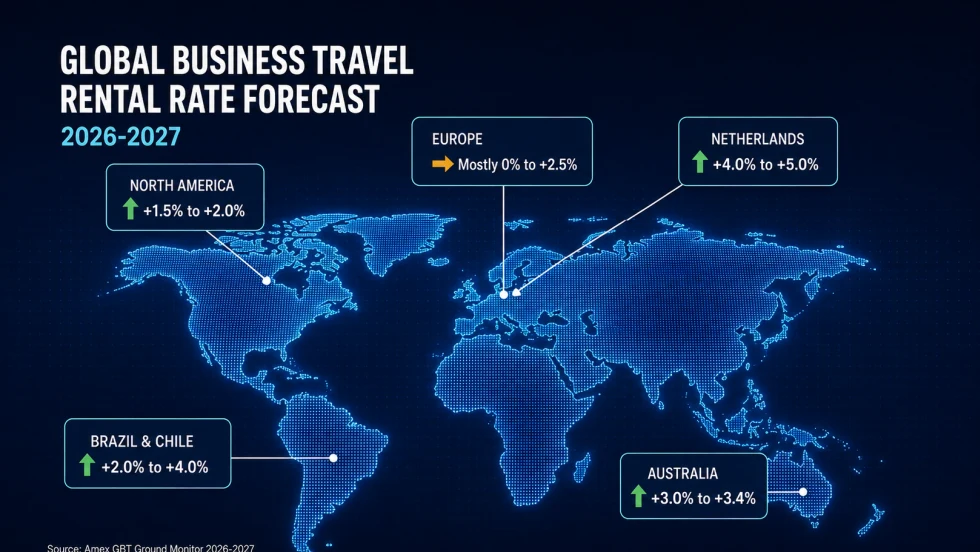
U.S. Business Travel Car Rental Rates Forecast to Rise Up to 2%
Improved fleet supply should limit pricing gains in 2026-27, while insurance, repair costs, and softer residual values continue to pressure rental operations, according to Amex GBT.
Read More →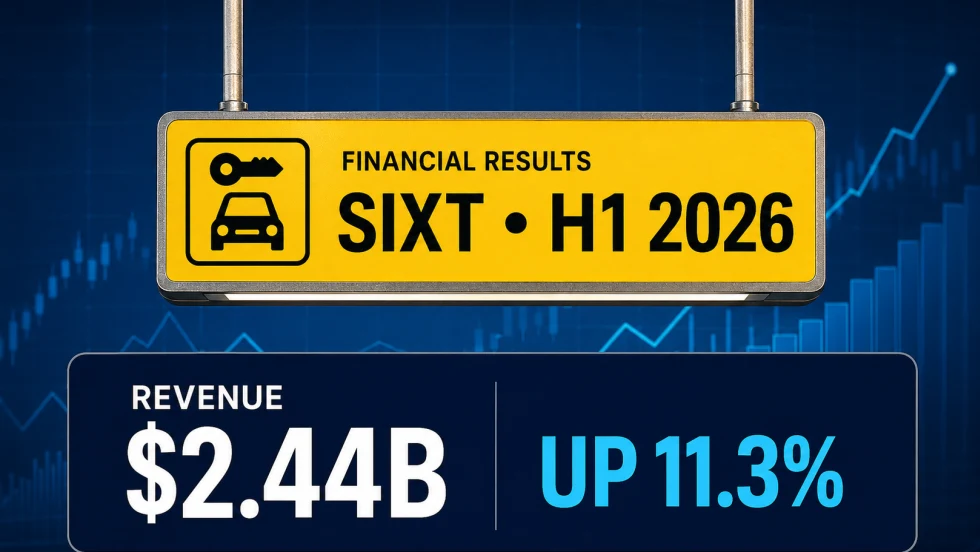
Sixt Revenue Tops $2.4 Billion in First Half of 2026
Sixt’s first-half revenue surpassed $2.4 billion for the first time as demand outpaced fleet growth, lifting utilization and earnings despite weaker consumer sentiment in North America.
Read More →
In Memoriam: Bobby Klyce, Avis Licensee Legend
The longtime Birmingham Avis operator and 2018 Auto Rental News Impact Award recipient was remembered as an advocate for independent licensees and the broader car rental industry.
Read More →
How to Build Custom Fleet Tools With AI and Vibe Coding [Webinar]
A new Automotive Fleet webinar explores how fleet managers are using AI and vibe coding to automate routine work and create simple operational tools without traditional programming skills.
Read More →