



Hertz Reports Strong Q3 Results
The company's total revenue for the quarter is $2.2 billion, up 19% from Q2 2021.


After a string of recent announcements, deals, and leadership changes, Hertz's finanial results are also showing the company's upward trajectory.
Image via Hertz
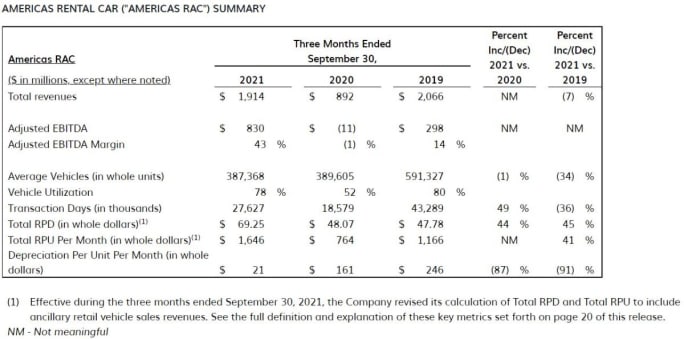
Hertz Global Holdings announced its financial results for the third quarter of 2021, which include total revenues of $2.2 billion.
Hertz's announcement on Oct. 28 says the results reflect the continued rebound in leisure travel and tight fleet inventory.
Volume was lower compared to 2019 levels. Adjusted corporate EBITDA saw a record $860 million, as well as a record 39% margin for the third quarter after restructuring. Importantly, top- and bottom-line results were not meaningfully impacted in an incremental manner by the Delta variant, the announcement notes.
Courtesy of Hertz
"Hertz delivered another solid quarter, which puts us in a position of strength as we create the new Hertz and lead the future of mobility and travel," said Mark Fields, Hertz's interim CEO. "We see the opportunity for profitable growth by building on our iconic brand and global fleet management expertise, and combining it with new technology and new investments in electrification, shared mobility, and a digital, customer-first experience."
Results for Hertz's Americas group for the third quarter 2021 reflect upward pricing trends, positive momentum in domestic travel, and industry-wide fleet constraints.
Internationally, global travel constraints affected rental car results. International RAC adjusted EBITDA was $78 million, nearly closing the gap to the third quarter 2019 level.
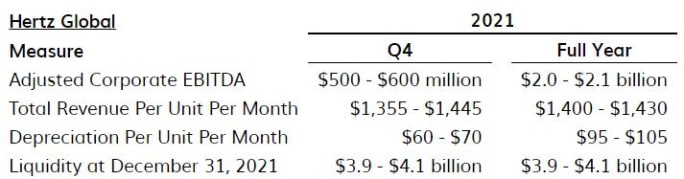
Hertz forecasts the following for Q4:
Courtesy of Hertz
More Rental Operations

What Does It Take to Succeed in B2B Rentals?
The fundamentals may be familiar to daily car rental operators, but project-based truck rentals put different demands on the fleet and the business.
Read More →
NPR Builds on International Partnerships to Grow Rental Bookings
With Ana Laborde supporting broker development, NPR Auto Group is tailoring distribution strategies, rate packages, and partnerships to grow international reservations across its three brands.
Read More →
Advantage, Sixt Place Among Top Five in Annual Satisfaction Study
While Enterprise and National retain the top spots in JD Power’s 2026 rankings, the latest customer satisfaction results suggest renters can find competitive service beyond the biggest car rental names.
Read More →
The $100,000 Insurance Trap in Exotic Car Rentals
Exotic rental agencies often rely on customers’ personal auto policies to protect six-figure vehicles. But policy language can dramatically change the coverage for vehicles over $100,000 MSRP.
Read More →
The Booking Is Confirmed, But Is Your Customer Ready to Drive?
For international renters, a confirmed reservation doesn’t always mean they’re eligible to drive. Earlier checks can help operators catch documentation and payment issues before the customer reaches the counter.
Read More →
ICRS 2027 Opens Call for Papers
The International Car Rental Show seeks session proposals on the business, operational, and technology issues facing car rental operators. Submissions are due Jan. 15.
Read More →
Turo to Launch Vehicle Delivery Service
Turo Delivered will let travelers search for vehicles that hosts can deliver directly to hotels, homes, airports, train stations, and other locations.
Read More →
Palm Beach Airport Code Change Creates Car Rental Distribution Gap
A test of rental searches under the old PBI and new DJT airport codes returned largely different sets of brands and vehicles, highlighting a potential distribution problem for rental operators.
Read More →
U-Save Continues Dominican Republic Expansion with Launch in Punta Cana
The new franchise location builds on U-Save’s existing Santo Domingo operation and will begin taking reservations for October 2026.
Read More →
When AI Books the Rental Car, Who Controls the Sale?
As AI moves from comparing rental rates to completing transactions, operators need to understand how travelers find, interpret, rank, and ultimately see their offers. (Part 2 of 2.)
Read More →