




Matt Darrah: Car Rental Industry Needs to Earn Public Trust with Fairness, Honesty and Transparency
In his keynote address at the 2009 Car Rental Show in Las Vegas, Darrah warned attendees that: “energy recovery fees have no place in our world.”
Matthew Darrah, senior vice president of North American Operations for Enterprise Rent-A-Car, National Car Rental and Alamo Rent A Car, warned attendees at the 2009 Car Rental Show at the Las Vegas Hilton March 30 to avoid short-sighted policies that undermine consumer trust.
In particular, he pointed to so-called “energy recovery fees” as a prime example of industry decisions that focus on short-term financial gain at the expense of customer relationships.
“Energy recovery fees became popular as gasoline prices soared above $4 a gallon,” Darrah said in his keynote address. “For whatever reason, several car rental companies saw the increase in gasoline prices as an opportunity to create a new fee, even though – in our opinion – energy expenses are a standard cost of doing business and should be bundled into the rental rate.
“The energy recovery fee became an opportunity for companies to disguise a legitimate operating expense. They position it as something akin to a tax or another charge forced upon our companies, when in fact it is a pure revenue enhancement,” said Darrah. “To make matters worse, as gasoline prices began to drop dramatically – down from a national average of $4.11 a gallon in July of 2008 to less than $2 in February of this year – energy recovery fees did not go away, or even come down in price.”
Enterprise, National and Alamo chose not to impose an energy recovery fee because, in Darrah’s words, “Fees like this have no place in our world. They are essentially disingenuous and intentionally worded in such a way as to mislead customers.”
The National Business Travel Association (NBTA) expressed similar concerns in a recent letter, noting that such fees are unfair and contradict the consumer-friendly concept of bundling. The NBTA wrote: “To protect the integrity of the industry, separate line-item fees should be properly calculated, disclosed in advance and should not serve as a profit center.”
Misleading line-items like the energy recovery fee not only outrage customers and consumer advocates, but they also hurt the industry’s overall credibility as it tries to fight against discriminatory and arbitrary car rental excise taxes on behalf of customers.
“Since 1976, more than 100 car rental excise taxes have been enacted across 43 states, with dozens more under discussion,” Darrah said. “And the pace increases each and every year. Since 1990, car renters have paid more than $7.5 billion in car rental excise taxes at the state, county or municipal level.”
Darrah argued that, unlike energy recovery fees, excise and sales taxes should be itemized separately – if for no other reason than to make people fully aware of the unfair and extremely heavy tax burden placed on car rental customers.
“These excise taxes pay for sports stadiums, arenas, infrastructure and a wide variety of other civic projects,” Darrah said. “Our customers are easy targets for these taxes. They are forced to carry a hugely disproportionate share of the funding burden for these projects – despite the fact that they often have no vote in the matter, and they derive no special benefit from them.
“What we object to is the excessive and undue burden of excise taxes placed on our customers. A well-designed tax system shouldn’t single out customers of just one industry. And it is our responsibility, both as industry leaders and local operators, to continue to communicate the unfair, unreliable, regressive and discriminatory nature of these excise taxes – not only to our customers, but to our legislators and civic leaders as well.”
Darrah told the audience that the industry’s ability to stand up for consumers on the excise tax issue is compromised when car rental companies indulge in a misleading practice like energy recovery fees.
He concluded by reiterating that these difficult times require thoughtful leadership and responsible actions from every member of the car industry at every level. “We are a bellwether industry,” Darrah said. “What we do, individually and collectively, impacts the health and well-being of our entire economy.”
More Rental Operations
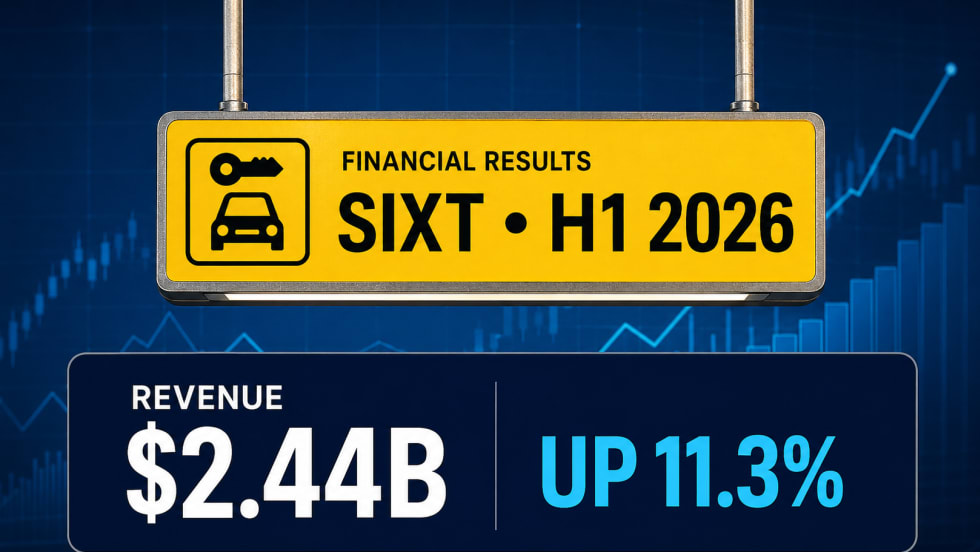
Sixt Revenue Tops $2.4 Billion in First Half of 2026
Sixt’s first-half revenue surpassed $2.4 billion for the first time as demand outpaced fleet growth, lifting utilization and earnings despite weaker consumer sentiment in North America.
Read More →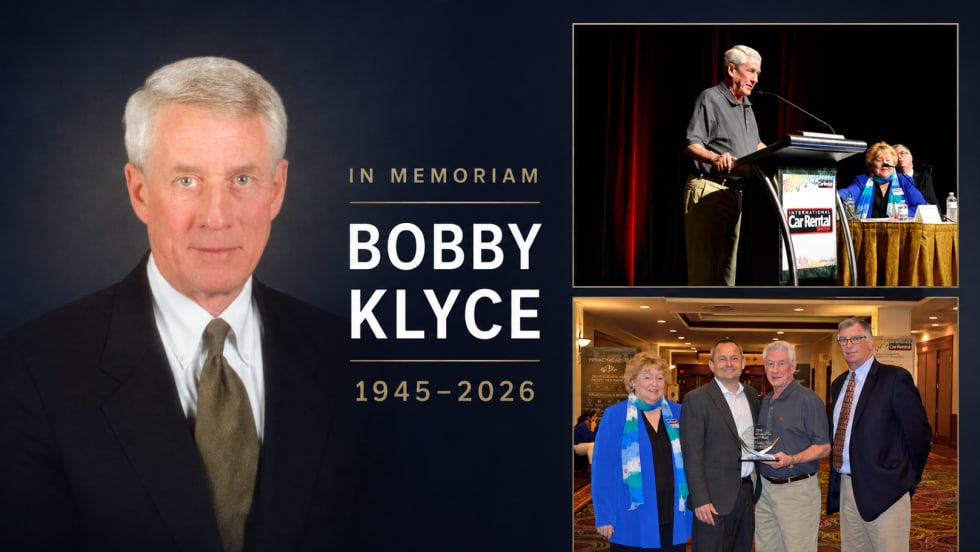
In Memoriam: Bobby Klyce, Avis Licensee Legend
The longtime Birmingham Avis operator and 2018 Auto Rental News Impact Award recipient was remembered as an advocate for independent licensees and the broader car rental industry.
Read More →
How to Build Custom Fleet Tools With AI and Vibe Coding [Webinar]
A new Automotive Fleet webinar explores how fleet managers are using AI and vibe coding to automate routine work and create simple operational tools without traditional programming skills.
Read More →
Car Rental Rates Forecast to Rise 3.6% in 2026 Before Easing in 2027
Car rental rates are projected to rise less than airfares and hotel rates in 2026, then become the only major travel category forecast to decline in 2027, according to projections from GBTA and ALTOUR.
Read More →
Avis Cuts Fleet as Summer Demand Trails Expectations
Avis Budget Group increased second-quarter earnings despite lower Americas revenue and softer-than-expected summer demand. The company also expanded Avis First and advanced its autonomous fleet operations with Waymo.
Read More →
Why Bookings Are Only the Start of the Rental Day
A reservation captures demand. The operating test is whether the business can keep the customer, vehicle, commercial terms, and next action aligned until the rental is closed.
Read More →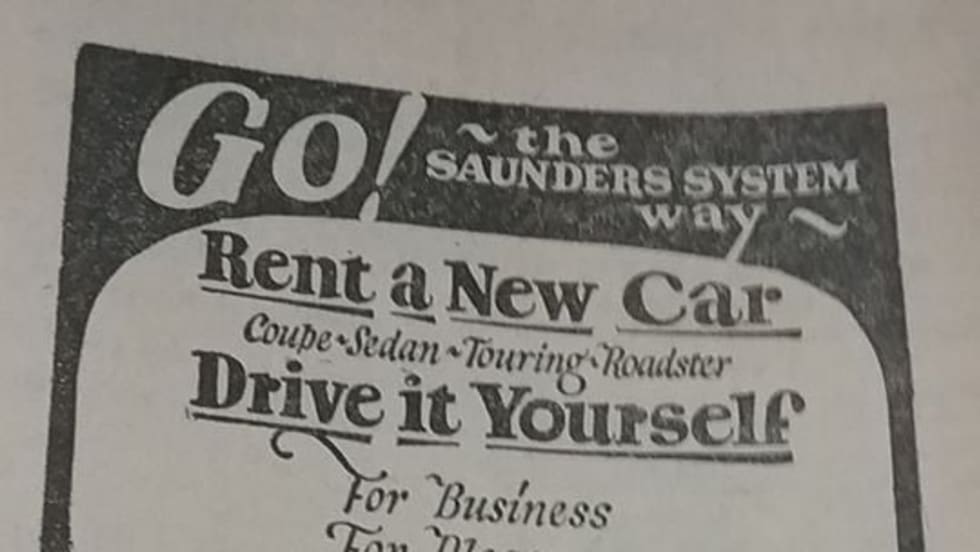
This Is the Oldest Car Rental Advertisement You’ll Ever See
This ad for Saunders Drive it Yourself, believed to be the first car rental company in the U.S., was found in an Omaha phone book from 1926.
Read More →
The Desk Upsell Is Costing Operators More Than it Earns
Counter upsells generate revenue, but they can also slow transactions, erode trust, and cost repeat business. Fully inclusive pricing may offer operators a better path to long-term value.
Read More →
U-Save Expands Indian Ocean Presence with New Master Franchise for Mauritius
The franchise has been acquired by Mauritian travel entrepreneur Umarfarooq Omarjee, an established figure in the island's tourism and mobility sector.
Read More →
Global Carsharing Fleet Projected to Reach 768,000 Vehicles By 2030
A new Berg Insight forecast outlines several business models driving the projected growth in public carsharing worldwide through 2029.
Read More →