




New Fuel Storage Rules in Effect
States keep changing rules governing storing and dispensing gasoline. What was good enough a year ago may no longer be good enough. Are you compliant? By Tom Mounteer
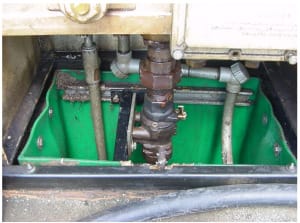
Within just the past few months, a spate of new state regulations governing fuel storage and dispensing systems has become effective. Rental car companies that operate fuel systems are subject to these new requirements.
Earlier this year, Auto Rental News published an article detailing the risks of government fines of not complying with these rules (see “Fuel Storage Rules: Comply or Pay the Fine”).
Keeping up with rules governing such things as secondary containment, air emissions control, and operator training can be daunting. Rental car companies operating in many states face the greatest challenge, as the requirements differ from state-to-state.
It may be more daunting still to face a government enforcement action for failing to comply with the new rules.
Secondary Containment
Over the past few years, several states have imposed more stringent requirements for secondary containment: the sumps in which lines connect on the top of tanks, the spill buckets around fill ports, and under dispenser pans. As it does in many areas of environmental protection, California started this trend, requiring, among other things, triennial testing. Every three years, rental car companies have to test their under dispenser pans to show they are “leak proof.” That is, they have to contain a release of product from the lines running into the dispenser.
A few years later, Florida did California one better by requiring removal of all remaining single-walled underground storage tanks and lines in the state.
Most recently, Texas has taken a hybrid approach to addressing the same concern. Texas now requires that new installations be equipped with state-of-the-art secondary containment (for example, under dispenser pans with alarms that indicate if liquids have collected).
For existing systems in Texas, facility personnel have to make visual inspections, record their findings, and retain records of their inspections. So rental car companies operating in Texas now need to record whether there are any visible leaks in the sides, bottoms, and penetration points of their under dispenser pans; whether the spill buckets around their fill ports have any debris that would prevent the drain from working; or whether the sump atop the tank has filled with water.
Michigan has taken it yet a step further. For all new underground tanks, the only acceptable form of monthly leak detection is interstitial monitoring. Interstitial monitoring refers to having a probe in the space between the walls of a double-walled tank. Sometimes, the space between the walls is filled with liquid, and the probe monitors rises or drops in that liquid. Sometimes the space is empty, and the probe detects when liquids have entered the space.
Michigan is the only state to limit leak detection for new underground tanks to interstitial monitoring.
As this is an area of increasing state interest, rental car facility operators would do well to check state regulations that govern secondary containment devices and their integrity.
Air Emissions
In the presence of sunlight, vapor emissions from gas storage and dispensing mix with other chemicals in the air to form smog. Traditionally, regulators have required installation of control devices on fuel storage and dispensing systems in areas where smog is a problem. Controls must be installed both on those parts of the system that receive fuel and on dispensers.
Recently, Florida expanded the need for control devices for fuel delivery. Former rules applied only in certain counties. Now all facilities in the State that receive and dispense more than 10,000 gallons of gas in a calendar month must be controlled.
On the other hand, in certain Florida counties where controls on dispensing equipment had been required, such controls are no longer needed. Southeast Florida does not have the kind of smog problems these controls were designed to avoid. For a number of years, regulators in Southeast Florida nevertheless kept the control requirements on the books. Now they have withdrawn them.
As a result of the new policy, rental car companies have a choice. They can continue to train their employees in the use of the previously installed equipment, inspect it, maintain it, and routinely test its integrity. Or, they can remove the equipment. It is a decision that could be made based on cost.
On the other side of the country, an entirely different change has taken place. While much of the focus on controlling vapor emissions has to do underground tanks, California recently imposed vapor control rules on aboveground storage tanks.
New California rules effective in April require that aboveground tanks be certified by state regulators and have certified pressure relief valves. These rules also get triggered when you move an existing tank from one facility to another.
The new California rules also require that, by 2013, all existing tanks that are not state-certified or that do not have the required valve be retrofitted with such valves and painted with state-certified paint designed to keep the stored petroleum from vaporizing.
Rental car companies are cautioned to be familiar with the local rules governing control of vapor emissions from their equipment.
Training
Rental car companies operating fuel systems in Colorado face a deadline of January 1, 2010 to assure their employees that pump gas receive state-mandated training. Gas jockeys need to know, for example, how to maintain equipment and how to respond to inadvertent spills.
In 2005, Congress required U.S. EPA to issue guidelines governing state-mandated training programs. The deadline approaching in Colorado is a result of Congress’ directive.
Once again, California was way ahead of the pack – requiring certified “designated operators” even before Congress told the EPA to create mandatory guidelines that states could follow.
Over the next three or four years, rental car companies should expect to see mandatory operating training requirements sprout up in many more states.
As daunting as it may be to keep up with changing state laws governing the operation of fuel systems, the alternative may be worse. The alternative may be running afoul of a state agency inspection and being on the receiving end of an enforcement action.
The rules governing secondary containment, air emissions control, and operator training can differ from state-to-state. So rental car companies operating in more than one state will have to be sure their practices are up to snuff in each state in which they operate.
Tom Mounteer is a partner in the Washington office of law firm Paul Hastings, where he co-chairs the firm’s environmental practice. He routinely counsels rental car companies in connection with their fuel system compliance obligations. He can be reached at tommounteer@paulhastings.com.
More Rental Operations

Palm Beach Airport Code Change Creates Car Rental Distribution Gap
A test of rental searches under the old PBI and new DJT airport codes returned largely different sets of brands and vehicles, highlighting a potential distribution problem for rental operators.
Read More →
U-Save Continues Dominican Republic Expansion with Launch in Punta Cana
The new franchise location builds on U-Save’s existing Santo Domingo operation and will begin taking reservations for October 2026.
Read More →
When AI Books the Rental Car, Who Controls the Sale?
As AI moves from comparing rental rates to completing transactions, operators need to understand how travelers find, interpret, rank, and ultimately see their offers. (Part 2 of 2.)
Read More →
European Booked Car Rental Rates Fell 5%, Results Varied by Country
Ireland, Cyprus, and the United Kingdom saw steep declines, while booked rates rose in Poland and Hungary.
Read More →
Is It Time to Rethink Rental Categories?
As traditional economy and compact cars disappear from the market, longtime rental operator Mike DeLorenzo asks whether the industry’s familiar vehicle categories still make sense — and what operators need to rethink along with them.
Read More →
Who Owns the Rate? AI Is Creating a New Distribution Problem for Car Rental
Generative Engine Optimization asks whether AI can find a rental company, but operators also need to know whether the agent inspected enough of the market, compared equivalent offers, and presented a rate the traveler can actually book. (Part 1 of 2)
Read More →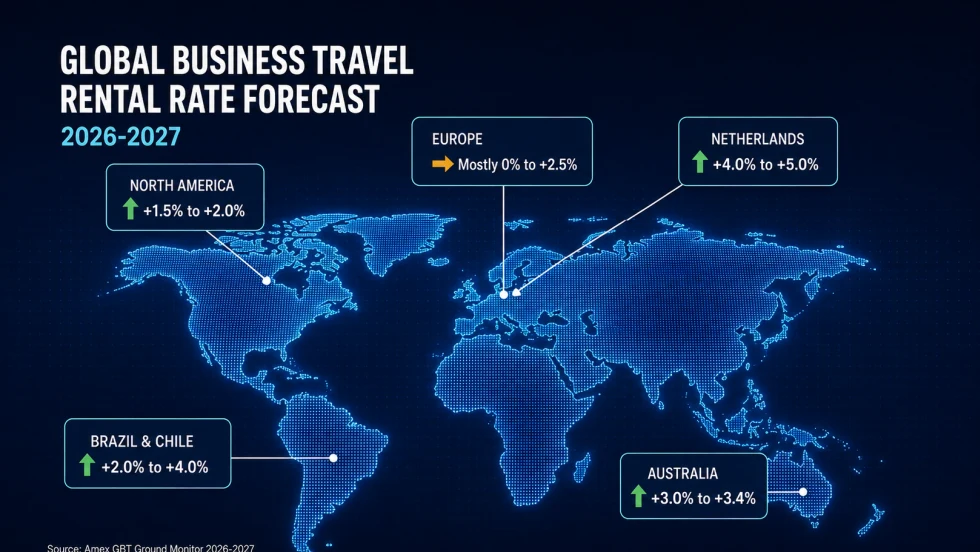
U.S. Business Travel Car Rental Rates Forecast to Rise Up to 2%
Improved fleet supply should limit pricing gains in 2026-27, while insurance, repair costs, and softer residual values continue to pressure rental operations, according to Amex GBT.
Read More →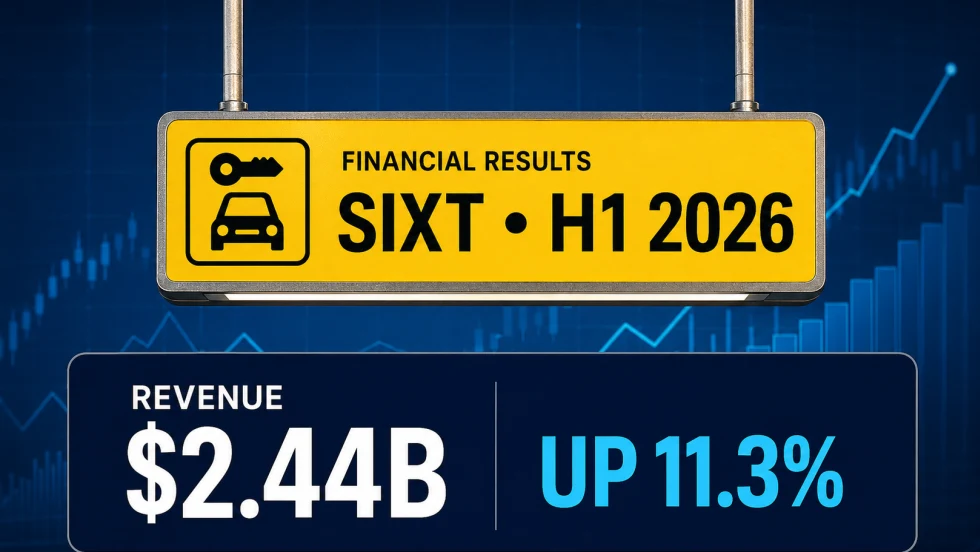
Sixt Revenue Tops $2.4 Billion in First Half of 2026
Sixt’s first-half revenue surpassed $2.4 billion for the first time as demand outpaced fleet growth, lifting utilization and earnings despite weaker consumer sentiment in North America.
Read More →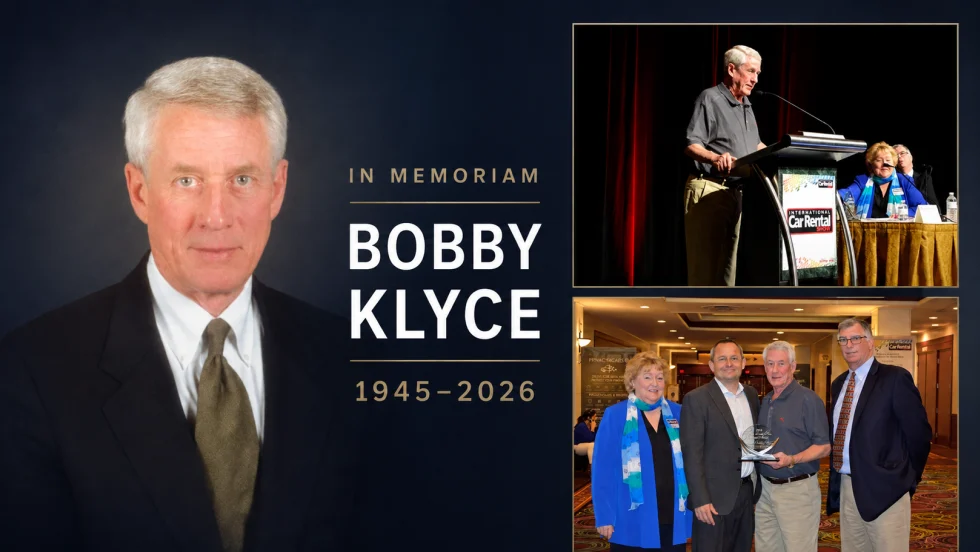
In Memoriam: Bobby Klyce, Avis Licensee Legend
The longtime Birmingham Avis operator and 2018 Auto Rental News Impact Award recipient was remembered as an advocate for independent licensees and the broader car rental industry.
Read More →
How to Build Custom Fleet Tools With AI and Vibe Coding [Webinar]
A new Automotive Fleet webinar explores how fleet managers are using AI and vibe coding to automate routine work and create simple operational tools without traditional programming skills.
Read More →