





More News: April Fleet Sales Stay Up on Strength of Rental Market
New Vehicle Buyers Paying Below MSRP
For the second month in a row, average transaction prices undercut manufacturer's suggested retail prices, reversing a prior 20-month trend.
May 9, 2023
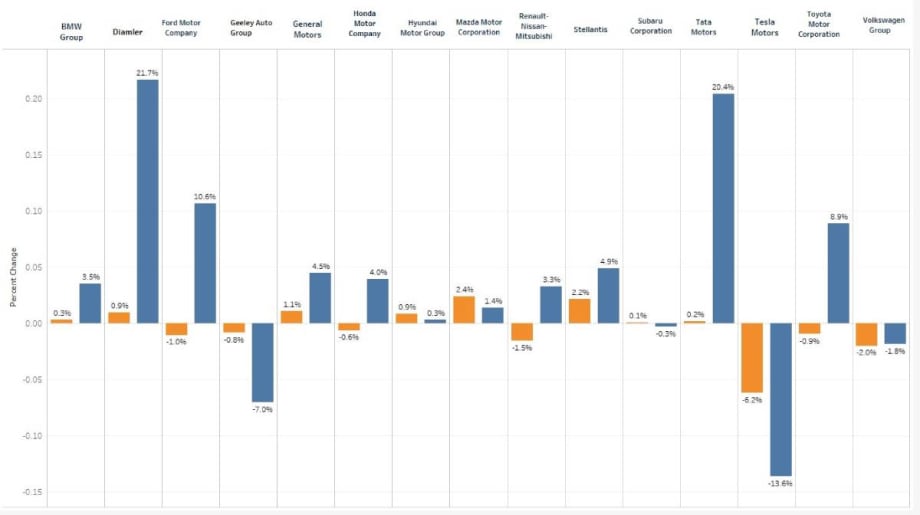
Price change percent by automaker. Several non-luxury brands – including Chrysler, Ford, Honda, Nissan, Toyota and Volkswagen – saw ATP declines between 0.2% to 3.5% month over month in April, while Kia and Honda showed the most price strength in the non-luxury market, transacting between 3% and 4% over sticker price in April, respectively.
Graphic: Cox Automotive
4 min to read
The average price Americans paid for a new vehicle in April remained below the manufacturer’s suggested retail price (MSRP) for the second consecutive month, according to data released May 9 by Kelley Blue Book, a Cox Automotive company.
The average transaction price (ATP) of a new vehicle in the U.S. remained relatively flat in April 2023 at $48,275, a month-over-month decrease of 0.03% ($14) from an upwardly revised March reading of $48,289.
New-vehicle transaction prices in April were up 3.7% ($1,744) compared to year-ago levels. Meanwhile, auto manufacturers’ incentive spend rose to the highest level in the last year at 3.6% of the ATP in April, averaging $1,714.
After 20 months of new-vehicle ATPs holding above average MSRP, or sticker price, transaction prices are now trending downward. In April 2023, the average price consumers paid fell to $378 below sticker price. For comparison, a year ago, the average ATP was $600 above MSRP. Sales volumes were down month over month by 1.5% but up 9% year over year (YOY) in April, higher than most forecasts and fed by higher inventory levels and a healthy dose of fleet deliveries.
“New-vehicle transaction prices are trending downward in 2023, which should feel like a breath of fresh air to buyers following the last few years of low supply and rapidly rising prices,” said Rebecca Rydzewski, research manager of Economic and Industry Insights for Cox Automotive, in a news release. “Now that inventory levels are starting to climb and manufacturers are increasing incentives, the market will respond accordingly. High auto loan interest rates are still a major issue for many buyers, but inventory and price trends are a positive in the market right now.”
Average Prices for Non-Luxury Vehicles Rise in April
The average price paid for a new non-luxury vehicle in April was $44,750, an increase of $461 compared to March 2023. Year-over-year, non-luxury prices increased by 5.2%. Even as the average non-luxury sticker price rose above $45,000 in April, buyers still paid below MSRP by $381.
Several non-luxury brands – including Chrysler, Ford, Honda, Nissan, Toyota and Volkswagen – saw ATP declines between 0.2% to 3.5% month over month in April. Kia and Honda showed the most price strength in the non-luxury market, transacting between 3% and 4% over sticker price in April, respectively. Both companies continue to have inventory levels well below the industry average.
Average Prices for Luxury Vehicles Fall Below $65,000
The average luxury buyer paid $64,144 for a new vehicle in April 2023, down $1,605 from March, and the first time transaction prices for luxury fell below $65,000 in 11 months. Transaction price estimates for Tesla, the luxury brand leader in the U.S., continue to show the results of price cuts across the company’s four vehicles.
Across key segments, luxury vehicle ATPs were a mixed bag in April, with entry-level luxury cars, high-end luxury cars, luxury compact SUVs, luxury mid-size SUVs and luxury subcompact SUVs all showing price declines between 0.5% and 1.4%. Luxury cars and luxury full-size SUVs saw price increases between 0.8% and 1.6%.
Strong luxury vehicle sales have been a primary reason for overall elevated new-vehicle prices. This trend continued in April, with the luxury vehicle share at 18.2% of total sales. However, luxury share is trending down after hitting a high of 19.5% in February.
April New Electric Vehicle Prices Down $10,000+ YOY
Initial estimates for the average price paid for a new electric vehicle (EV) in April decreased from March by $4,464 (down 7.5%) to reach $55,089. The ATP for EVs in April 2023 is down a noteworthy $10,096 compared to one year ago. The average new EV sold for an upwardly revised $59,553 in March, according to Kelley Blue Book estimates, which still is well above the industry average. New EV pricing peaked in June 2022 and has fallen steeply so far in 2023.
“April’s downward movement of EV average transaction prices reflects EV automakers, particularly Ford and Tesla, seeking a balance between pricing and profitability,” said Michelle Krebs, executive analyst at Cox Automotive. “With average EV prices trending lower, we are seeing EV sales increase. For example, EV sales estimates in April were up by 26% year over year.”
OEMs Auto Incentives Rise as Supply Increases
Incentives averaged $1,714 in April to reach the highest point in a year, increasing to 3.6% of the average transaction price compared to 3.2% in March. While April incentives increased by $170 month over month, they remain at a historically low level. For comparison, Kelley Blue Book estimates incentives averaged 7.8% of ATP in April 2021 and 9% in April 2019. The luxury car segment had the highest incentives in April 2023 at 7.7% of ATP. Meanwhile, vans had the lowest incentives at only 0.3% of ATP.
“Incentives are one of the ways automakers can ensure new-vehicle inventory levels are kept in check,” Rydzewski said. “Buyers can benefit significantly from manufacturers increasing incentives, including special low APR financing to help keep new auto loan rates attractive. As supply continues to increase, industry average incentives are likely to go up as well.”
Originally posted on Automotive Fleet
More Remarketing
Rental Fleet Sales Skating Just Above 2025 Levels
The U.S. economy's continued growth and positive business investment are creating a favorable environment for fleet vehicle demand.
Read More →
Cross-Pressures, Evolving Trends Drive 2026 Rental Car Industry
A combination of cautious economic behavior, shifts in the rental vehicle market, and technological influences are shaping car rental operator decisions.
Read More →
Wholesale Used Vehicle Prices Slightly Up In April
The Iranian conflict and rising gas prices inject much uncertainty into the future wholesale used vehicle markets, as higher gas prices soak up spendable income from vehicle buyers.
Read More →
Surprice Opens Two Rental Branches In Japan
The launch highlights the global car rental operation’s growing presence in Asia.
Read More →
Wholesale Used Vehicle Prices Up In February
Solid demand at Manheim auctions with higher sales conversion rates indicate an appetite from dealers to buy.
Read More →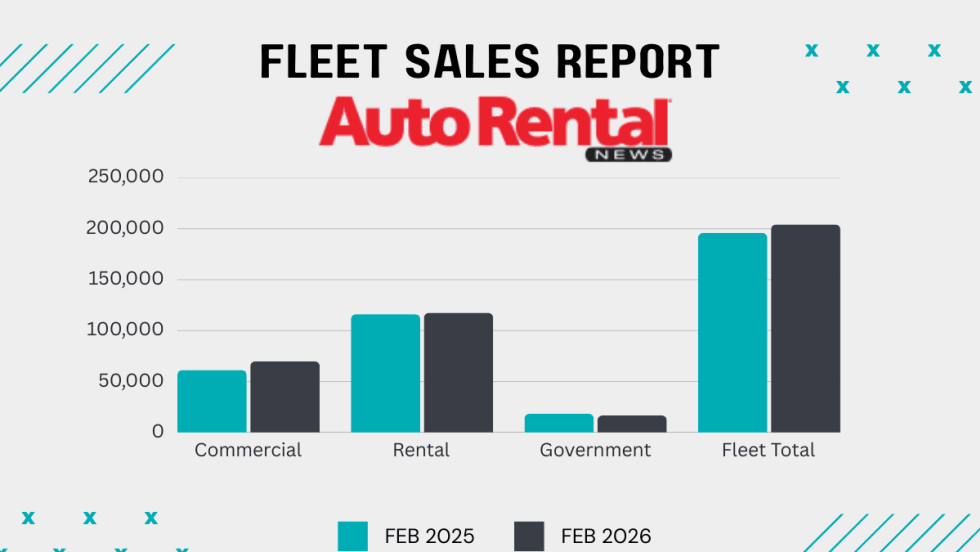
Rental Fleet Sales Slow In February Ending A Strong Streak
Commercial fleets posted the most gains, sustaining increases in monthly and year-to-date fleet sales
Read More →
Avis Budget Group Reports Near $1 Billion Loss Tied To 2025 EV Fleet Write-Down
Following Hertz, the company is the second global car rental conglomerate to sustain sizable losses due to lower customer demand and usage of electric rental cars.
Read More →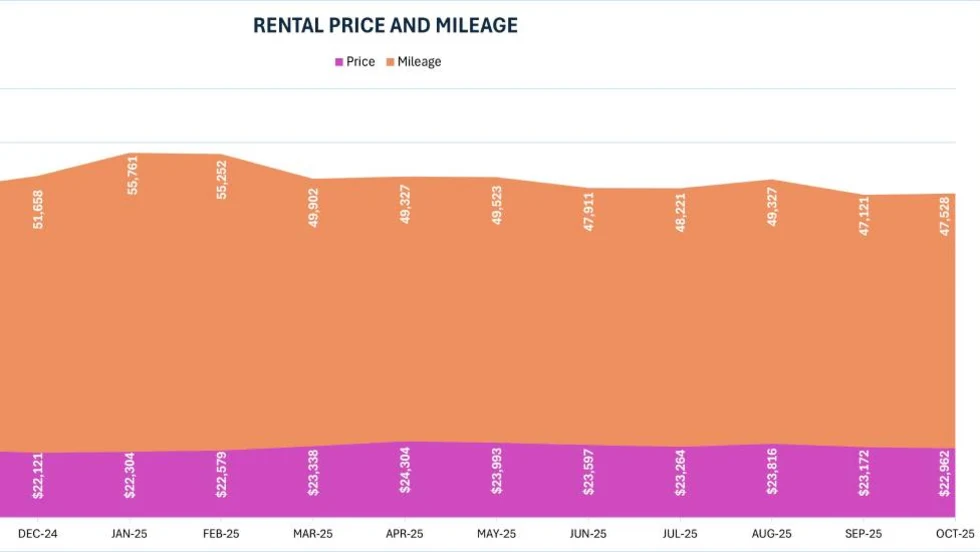
2025 Rental Vehicle Remarketing Summary And Outlook
The year brought modest and flatter results across wholesale values, total off-rental supply, and rental risk units.
Read More →
Auctions Record Highest Vehicle Sales Since 2019
2025 figures show a steady recovery in wholesale vehicle activity this decade.
Read More →
DriveItAway Holdings, Free2move Launch Operations In Nine Cities
The co-branded program with Stellantis’ mobility division scales up leasing and financing options nationwide with more cities to come online in 2026.
Read More →