




Turo Expands Platform to Include Independent Rental Companies
Turo, a peer-to-peer carsharing marketplace, has expanded its services to include independent car rental companies. Rental companies can use their own commercial insurance policy.
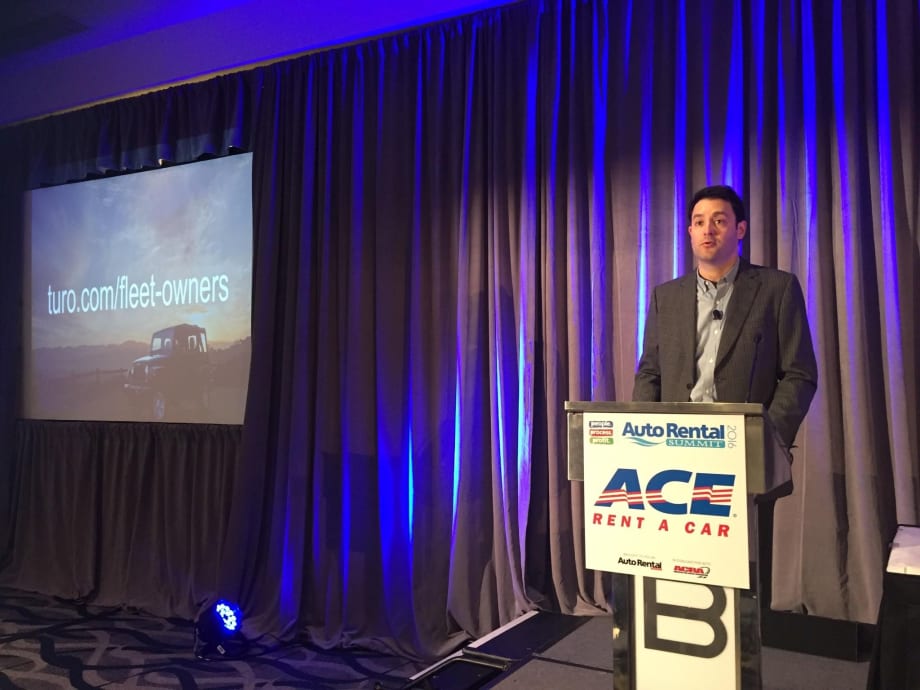
David Stewart, chief business officer of Turo, makes the announcement at the 2016 Auto Rental Summit.
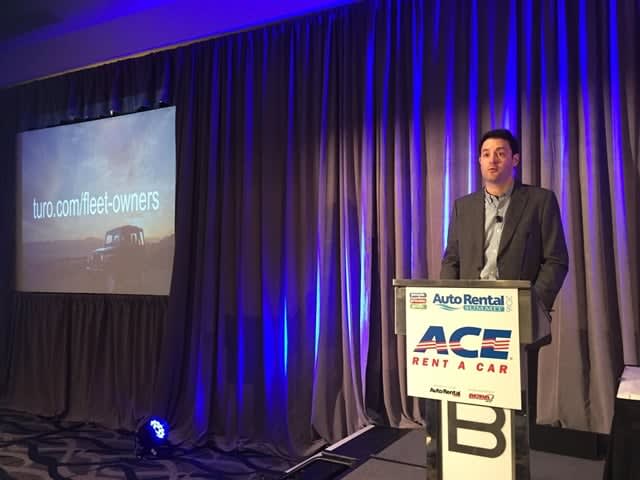
David Stewart, chief business officer of Turo, makes the announcement at the 2016 Auto Rental Summit.
Turo, a peer-to-peer carsharing marketplace, has opened up its platform to independent car rental agencies.
Since 2010, private and professional car owners have been renting their personal vehicles on the Turo marketplace. Turo’s peer-to-peer carsharing marketplace offers a collection of 876 unique models for rent in over 4,000 cities across North America and Canada.
This expansion of Turo’s marketplace represents an opportunity for small- to medium-sized rental companies to grow their businesses with minimal overhead. Turo has eliminated its insurance fees for car owners who provide their own commercial insurance policy, meaning that professionals renting on the marketplace keep 90% of their earnings, according to the company.
By listing on Turo, rental fleets show up in hundreds of searches and reach thousands of potential customers each day.
“Apps like Turo put the power of mobility into the hands of travelers,” said David Stewart, Turo’s chief business officer. “Travelers can rent all kinds of cars with confidence, including classics, Teslas, and luxury vehicles, knowing that everyone on Turo’s marketplace is prescreened.”
Independent rental companies also gain access to a marketing and engagement channel. Appearing in travelers’ searches through an app, rental companies get access to the mobile market and a platform that comes without the hefty price tags of traditional online travel agencies, according to Stewart.
“Turo gives smaller players the tools to compete with bigger fish on a national scale,” said Stewart.
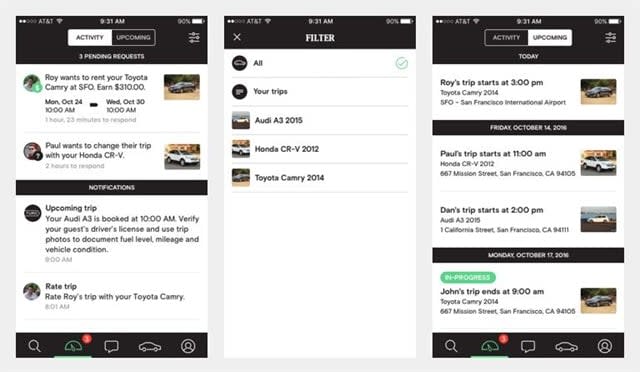
A screenshot of the dashboard on Turo's app. Photo courtesy of Turo.
To get started, a rental fleet needs to sign up on Turo's website and create an account. Each rental company needs to get approved, since all owners and travelers in Turo’s marketplace must be screened.
The next step is to create your listing. Upload some photos, add a description outlining the features of each vehicle, and set each vehicle’s pricing and availability.
“You can also choose to use the automatic pricing algorithm to price your cars, according to seasonality and demand patterns, and maximize your earning potential,” said Stewart.
Via the Turo app, rental companies can coordinate each vehicle’s pickup and return schedules and answer customers’ questions.
Turo takes care of payment processing and driver screening, and the rental company handles insurance with its existing commercial rental policy.
“Turo is thrilled to open up the marketplace to small businesses around the country,” said Stewart. “The company vision is that wherever you are, you can rent the perfect vehicle for your next adventure from a trusted Turo host. Opening up its marketplace to small fleet owners both helps Turo fulfill this vision by offering a broader network of cars at competitive prices to travelers across the nation and empowers small rental agencies to compete with big corporate players.”
More Rental Operations

What Does It Take to Succeed in B2B Rentals?
The fundamentals may be familiar to daily car rental operators, but project-based truck rentals put different demands on the fleet and the business.
Read More →
NPR Builds on International Partnerships to Grow Rental Bookings
With Ana Laborde supporting broker development, NPR Auto Group is tailoring distribution strategies, rate packages, and partnerships to grow international reservations across its three brands.
Read More →
Advantage, Sixt Place Among Top Five in Annual Satisfaction Study
While Enterprise and National retain the top spots in JD Power’s 2026 rankings, the latest customer satisfaction results suggest renters can find competitive service beyond the biggest car rental names.
Read More →
The $100,000 Insurance Trap in Exotic Car Rentals
Exotic rental agencies often rely on customers’ personal auto policies to protect six-figure vehicles. But policy language can dramatically change the coverage for vehicles over $100,000 MSRP.
Read More →
The Booking Is Confirmed, But Is Your Customer Ready to Drive?
For international renters, a confirmed reservation doesn’t always mean they’re eligible to drive. Earlier checks can help operators catch documentation and payment issues before the customer reaches the counter.
Read More →
ICRS 2027 Opens Call for Papers
The International Car Rental Show seeks session proposals on the business, operational, and technology issues facing car rental operators. Submissions are due Jan. 15.
Read More →
Turo to Launch Vehicle Delivery Service
Turo Delivered will let travelers search for vehicles that hosts can deliver directly to hotels, homes, airports, train stations, and other locations.
Read More →
Palm Beach Airport Code Change Creates Car Rental Distribution Gap
A test of rental searches under the old PBI and new DJT airport codes returned largely different sets of brands and vehicles, highlighting a potential distribution problem for rental operators.
Read More →
U-Save Continues Dominican Republic Expansion with Launch in Punta Cana
The new franchise location builds on U-Save’s existing Santo Domingo operation and will begin taking reservations for October 2026.
Read More →
When AI Books the Rental Car, Who Controls the Sale?
As AI moves from comparing rental rates to completing transactions, operators need to understand how travelers find, interpret, rank, and ultimately see their offers. (Part 2 of 2.)
Read More →