




Zipcar Announces First Comprehensive Global Car-Sharing Study
According to the study, cities with the highest potential for car-sharing, including New York City and San Francisco, exhibit similar qualities such as high population density, extensive public transit systems and a relatively high burden of car ownership.
Zipcar Inc., a leading car-sharing service, announced the results of a global car-sharing study that offers a first-time comprehensive analysis of the potential for car-sharing programs in urban areas and universities around the world. The Zipcar study, derived from an in-depth benchmarking model of 75 global cities, reveals a potential global car-sharing market of more than 37 million members and annual revenues that could top 10 billion dollars.
According to the study, cities with the highest potential for car-sharing, including Hong Kong, London, New York City, Paris and San Francisco, exhibit similar qualities such as high population density, extensive public transit systems and a relatively high burden of car ownership. Cities with less expensive parking, lower education attainment levels and higher vehicle ownership rates offer a less conducive business environment for car-sharing.
“This study confirms that car-sharing is a mainstream service, and underscores the global economic and environmental impact of the industry,” said Scott Griffith, Chairman and CEO of Zipcar. “As Zipcar expands our network of vehicles around the globe and invest in new technologies, car-sharing will continue to become even more convenient and cost effective than owning a car. Based on ten years of experience, knowledge and analysis, we are fully aware that the cities investing in the car-sharing model and the residents therein will reap economical and ecological rewards.”
Applying the total estimated members to Zipcar’s own historical data, the sizable economic and environmental benefits from car-sharing include:
Cost reduction: With an average savings of over 7,000 dollars per year compared to owning a car, there is potential to return 260 billion dollars back into local economies around the globe.
Congestion Reduction: With an average 40 percent reduction in vehicle miles traveled (VMT), there is potential for 92 billion fewer miles traveled (annually). With an average of 60 percent of members avoiding purchasing or selling a vehicle, there’s potential to remove 22 million cars from dense urban areas, government fleets, and university campuses.
Emissions reduction: Fewer vehicles and reduced VMTs could prevent 40 million tons of CO2 emissions (annually).
More Rental Operations

Palm Beach Airport Code Change Creates Car Rental Distribution Gap
A test of rental searches under the old PBI and new DJT airport codes returned largely different sets of brands and vehicles, highlighting a potential distribution problem for rental operators.
Read More →
U-Save Continues Dominican Republic Expansion with Launch in Punta Cana
The new franchise location builds on U-Save’s existing Santo Domingo operation and will begin taking reservations for October 2026.
Read More →
When AI Books the Rental Car, Who Controls the Sale?
As AI moves from comparing rental rates to completing transactions, operators need to understand how travelers find, interpret, rank, and ultimately see their offers. (Part 2 of 2.)
Read More →
European Booked Car Rental Rates Fell 5%, Results Varied by Country
Ireland, Cyprus, and the United Kingdom saw steep declines, while booked rates rose in Poland and Hungary.
Read More →
Is It Time to Rethink Rental Categories?
As traditional economy and compact cars disappear from the market, longtime rental operator Mike DeLorenzo asks whether the industry’s familiar vehicle categories still make sense — and what operators need to rethink along with them.
Read More →
Who Owns the Rate? AI Is Creating a New Distribution Problem for Car Rental
Generative Engine Optimization asks whether AI can find a rental company, but operators also need to know whether the agent inspected enough of the market, compared equivalent offers, and presented a rate the traveler can actually book. (Part 1 of 2)
Read More →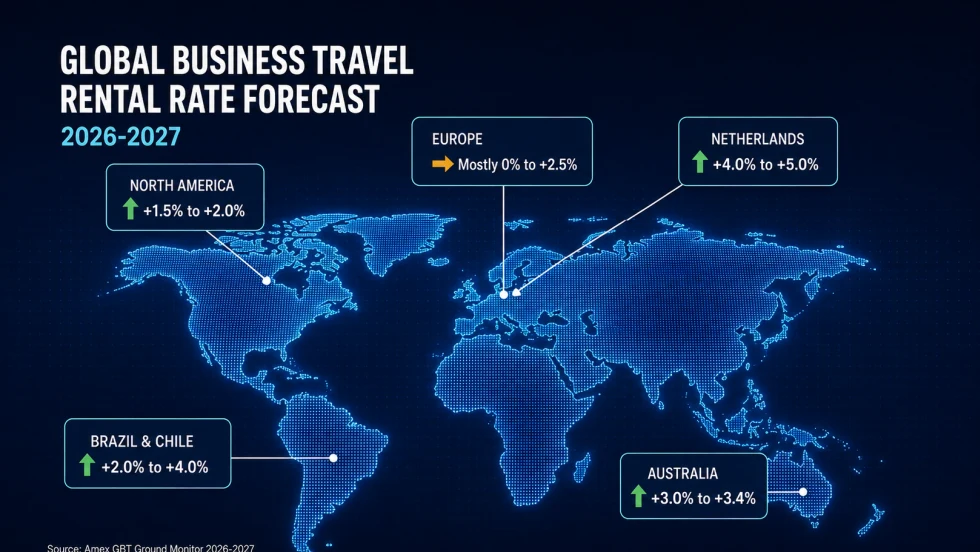
U.S. Business Travel Car Rental Rates Forecast to Rise Up to 2%
Improved fleet supply should limit pricing gains in 2026-27, while insurance, repair costs, and softer residual values continue to pressure rental operations, according to Amex GBT.
Read More →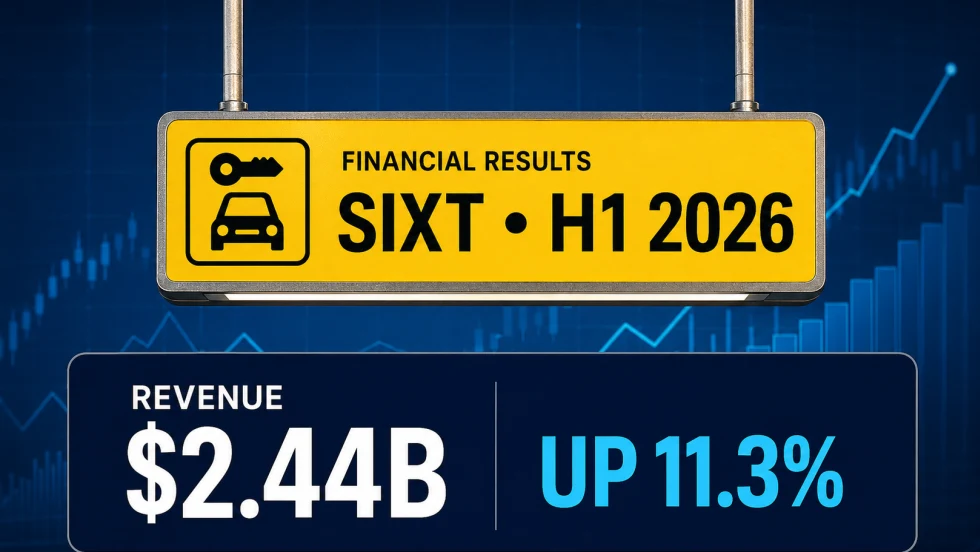
Sixt Revenue Tops $2.4 Billion in First Half of 2026
Sixt’s first-half revenue surpassed $2.4 billion for the first time as demand outpaced fleet growth, lifting utilization and earnings despite weaker consumer sentiment in North America.
Read More →
In Memoriam: Bobby Klyce, Avis Licensee Legend
The longtime Birmingham Avis operator and 2018 Auto Rental News Impact Award recipient was remembered as an advocate for independent licensees and the broader car rental industry.
Read More →
How to Build Custom Fleet Tools With AI and Vibe Coding [Webinar]
A new Automotive Fleet webinar explores how fleet managers are using AI and vibe coding to automate routine work and create simple operational tools without traditional programming skills.
Read More →