





Related: Vehicle Recalls Reach 9-Year High
AutoAp Launches Recall Notification Service
Dynamic Recall Management service enables fleet managers to access the daily recall status of their vehicles.
September 8, 2015
3 min to read
Automotive software developer AutoAp Inc. has released a recall notification service designed to allow fleet managers to more easily assess the daily recall status of their vehicles.
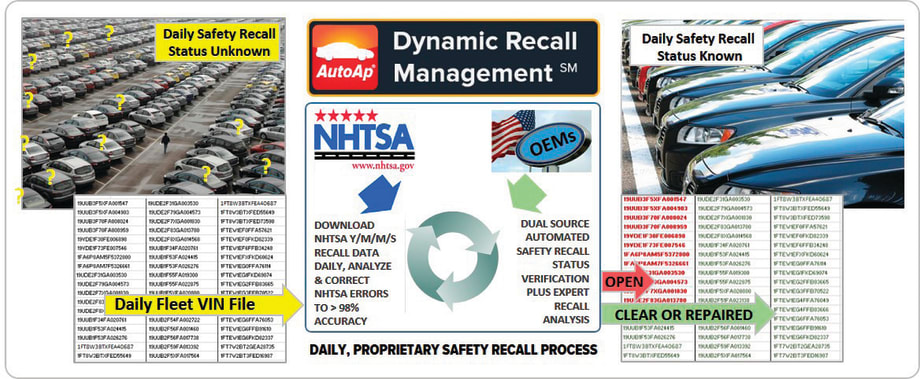
AutoAp’s Dynamic Recall Management service is a multi-source, VIN-specific, daily safety recall repair status database, says Ross Macdonald, chief marketing officer for AutoAp.
“Last year’s record 63.9 million vehicles, affected by NHTSA-issued safety recalls, have made it abundantly clear that auto manufacturing defects will remain a significant issue,” says Macdonald. “We created this recall management service to address the difficulty in obtaining accurate, timely and consistent safety recall information from the OEMs and the National Highway Traffic Safety Administration [NHTSA].”
Addressing the Gap
Safety recall data is held by two groups: the vehicle manufacturers and NHTSA. Fleet managers attempting to assess the recall status of their fleet VINs with information available from the OEMs or NHTSA could get inaccurate and potentially false negative results, Macdonald says.
AutoAp’s ongoing analysis of recall data found on NHTSA’s safercar.gov website finds numerous errors, including safety recalls tied to erroneous years, wrong models, wrong manufacturers and multiple models affected but not identified — and, in some cases, missing altogether.
Out of 29,620 passenger vehicle safety recalls stemming from 4,922 unique NHTSA recall IDs, as many as 1,500 — about 30% — are found to be inaccurate, the company’s research found.
Ongoing, daily analysis of NHTSA’s safety recall data continues to yield significant numbers of attribution errors, including particularly worrisome false negative recall results where NHTSA does not show an open safety recall on a specific vehicle when, in fact, there is.
“Further, safety recall data accuracy can be adversely affected by multiple timing issues surrounding the release of recall data on OEMs’ consumer-facing sites, NHTSA’s consumer-facing site safercar.gov, OEMs’ dealer-facing communication platforms, and finally, between the OEMs and their fleet customers.”
“And waiting for an official OEM recall notice to arrive in the mail can leave a considerable gap between the recall notification from the manufacturer and when NHTSA first published the safety recall ID on its consumer-facing website,” Macdonald says.
How it Works
The Dynamic Recall Management service is designed to connect to a fleet’s VIN or stock number data feed. The service downloads, analyzes and corrects the current NHTSA safety recall database file on a daily basis. The errors in attribution are reviewed and corrected by the company’s safety recall data experts to achieve a 98% accuracy level, Macdonald says.
Using this corrected safety recall database, the proprietary process automates the recall status verification on nearly 80% of clients’ VINs to determine the repaired, open and open-but-waiting-for-remedy status. The remaining 20% that cannot be automatically verified are validated by a semi-automated process, to deliver 100% VIN coverage. A daily report is then created, listing VINs with known open, unrepaired safety recalls and emailed daily to clients.
In some cases, the Dynamic Recall Management service returns an early warning alert for a safety recall on a particular year, make, model and style, before the OEMs have identified or published the affected VIN-pool for that safety recall. This early warning alert allows fleet owners to anticipate potential open safety recalls on fleet VINs in advance of the official VIN-specific recall notification from the OEM.
“Designed to reduce the manual effort it takes to be proactive on safety recall assessment, Dynamic Recall Management shows clients at the earliest possible moment which vehicles have open, repairable safety recalls,” Macdonald says.
Subscribe to Our Newsletter
More Rental Operations

The $100,000 Insurance Trap in Exotic Car Rentals
Exotic rental agencies often rely on customers’ personal auto policies to protect six-figure vehicles. But policy language can dramatically change the coverage for vehicles over $100,000 MSRP.
Read More →
The Booking Is Confirmed, But Is Your Customer Ready to Drive?
For international renters, a confirmed reservation doesn’t always mean they’re eligible to drive. Earlier checks can help operators catch documentation and payment issues before the customer reaches the counter.
Read More →
ICRS 2027 Opens Call for Papers
The International Car Rental Show seeks session proposals on the business, operational, and technology issues facing car rental operators. Submissions are due Jan. 15.
Read More →
Turo to Launch Vehicle Delivery Service
Turo Delivered will let travelers search for vehicles that hosts can deliver directly to hotels, homes, airports, train stations, and other locations.
Read More →
Palm Beach Airport Code Change Creates Car Rental Distribution Gap
A test of rental searches under the old PBI and new DJT airport codes returned largely different sets of brands and vehicles, highlighting a potential distribution problem for rental operators.
Read More →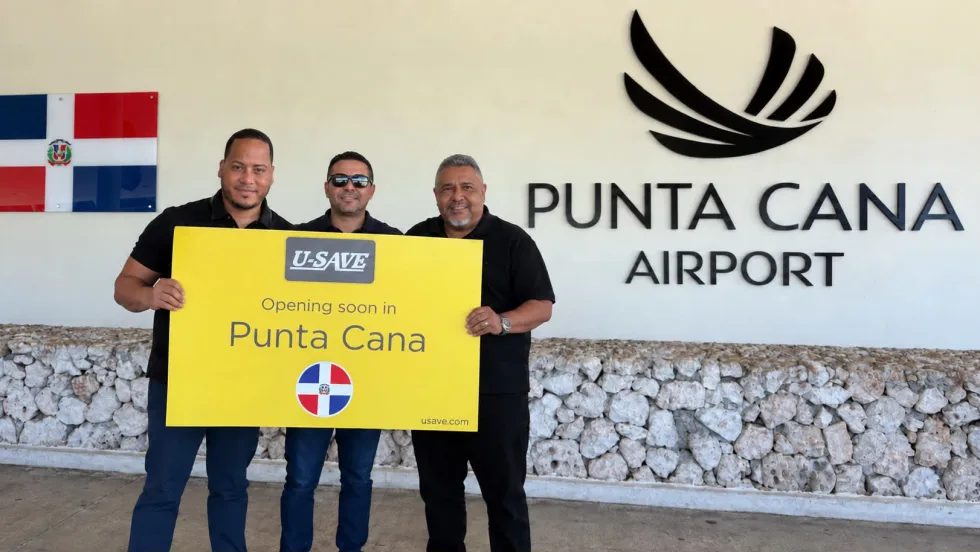
U-Save Continues Dominican Republic Expansion with Launch in Punta Cana
The new franchise location builds on U-Save’s existing Santo Domingo operation and will begin taking reservations for October 2026.
Read More →
When AI Books the Rental Car, Who Controls the Sale?
As AI moves from comparing rental rates to completing transactions, operators need to understand how travelers find, interpret, rank, and ultimately see their offers. (Part 2 of 2.)
Read More →
European Booked Car Rental Rates Fell 5%, Results Varied by Country
Ireland, Cyprus, and the United Kingdom saw steep declines, while booked rates rose in Poland and Hungary.
Read More →
Is It Time to Rethink Rental Categories?
As traditional economy and compact cars disappear from the market, longtime rental operator Mike DeLorenzo asks whether the industry’s familiar vehicle categories still make sense — and what operators need to rethink along with them.
Read More →
Who Owns the Rate? AI Is Creating a New Distribution Problem for Car Rental
Generative Engine Optimization asks whether AI can find a rental company, but operators also need to know whether the agent inspected enough of the market, compared equivalent offers, and presented a rate the traveler can actually book. (Part 1 of 2)
Read More →