Car Rental Q&A: Where Do I Start When Automating the Car Rental Process?
An operator has been hearing a lot about new ways to automate the car rental process, but he doesn't know where to start.
by Michael Youssef
February 15, 2017
Photo courtesy of Rent Centric
3 min to read
Photo courtesy of Rent Centric
Q: As a rental manager, I'm hearing a lot about new ways to automate the car rental process. Where do I start? — Dino Bavadi, DAnza Car Rental, Southern Calif.
A: Before one can begin to consider suitable car rental automation, it’s important to understand long-term industry direction and the short-term keys and roadblocks to success.
Ad Loading...
I believe that predicting the future is virtually impossible. But by understanding established trends based on data within our industry as well as observing changes of service distribution methods for other industries, one can better plan for this future.
Statistically speaking, the best odds for car rental business investment success, with proper risk mitigation, are realized by maximizing monetization capability within these observed trends. For instance, take accessing music. Not too many years ago, the common method was via cassette and compact disc. Soon after, digital audio formats like MP3 became available, and companies such as Napster enabled peer-to-peer distribution of these media formats.
At first, early adopters utilized this MP3 technology, but digital media distribution services soon became legally formalized through apps like iTunes and Google Play Store. Thus record stores became obsolete.
In retail, local outlets have been replaced with digital e-commerce platforms such as eBay, Amazon, and AliExpress, coupled with courier services that deliver direct from product manufacturers to consumers.
In both cases, new technology that efficiently connected the product to the consumer became the new effective business model.
In this way, new self-service and peer-to-peer carsharing platforms are an established reality, deployed to vehicle rental businesses with ease. Rental operators can now position themselves to service many more facets of the rental experience than once was possible.
Ad Loading...
This is important because automation at the dealership level, as well as encroachment from services such as Uber, requires rental operators to reinvent themselves as efficient distributors that provide products to customers and maximize the monetization opportunity. Areas where monetization can be maximized include widespread rental locations, shorter, more precise rental durations, customer credit rating considerations, and driver behavior history from telematics.
We are very close to seeing automated service refinements, for example, where a customer with a positive behavior history — and within a certain age and financial credit range — can rent a brand-new luxury vehicle for a certain price per minute, while another individual with lesser standing might be limited in the vehicle selection he or she can rent.
Consider the new revenue potential to meet this customer’s request: “I would like the 2017 Audi with an A+ cleanliness rating and fewer than 15,000 miles on the odometer for two hours and a Toyota for a week after that. Thank you.”
As the world continues to change rapidly, rental operators have a unique opportunity to leverage their existing business acumen and combine it with the efficiencies and new benefits provided in the self-service, on-demand car rental and carsharing business models.
About The Author
Email your car rental operation-related questions to Auto Rental News care of chris.brown@bobit.com.
Michael Youssef is president and CEO of Rent Centric, a car rental management software provider, including self-service car rental and peer-to-peer carsharing platforms. He can be reached at michael.youssef@rentcentric.com.
A test of rental searches under the old PBI and new DJT airport codes returned largely different sets of brands and vehicles, highlighting a potential distribution problem for rental operators.
As AI moves from comparing rental rates to completing transactions, operators need to understand how travelers find, interpret, rank, and ultimately see their offers. (Part 2 of 2.)
As traditional economy and compact cars disappear from the market, longtime rental operator Mike DeLorenzo asks whether the industry’s familiar vehicle categories still make sense — and what operators need to rethink along with them.
Generative Engine Optimization asks whether AI can find a rental company, but operators also need to know whether the agent inspected enough of the market, compared equivalent offers, and presented a rate the traveler can actually book. (Part 1 of 2)
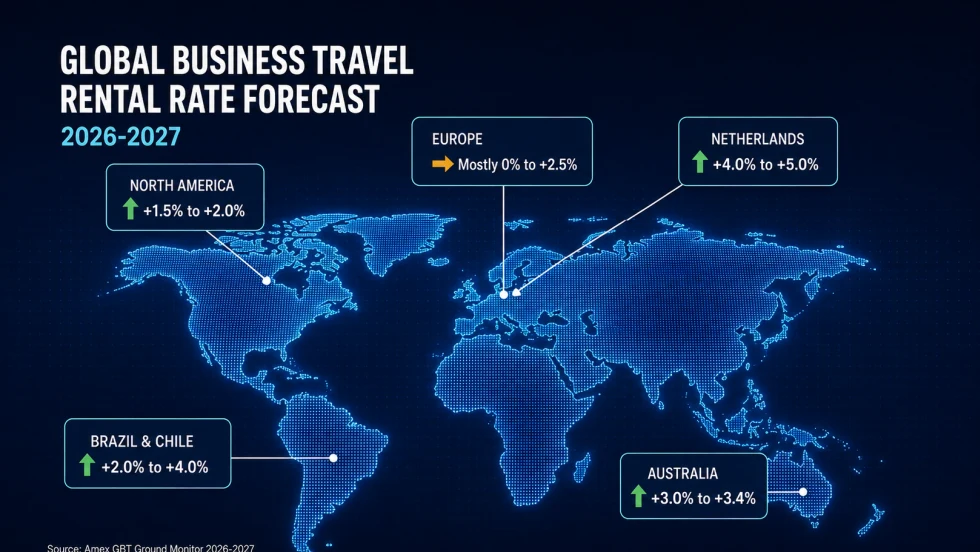
Improved fleet supply should limit pricing gains in 2026-27, while insurance, repair costs, and softer residual values continue to pressure rental operations, according to Amex GBT.
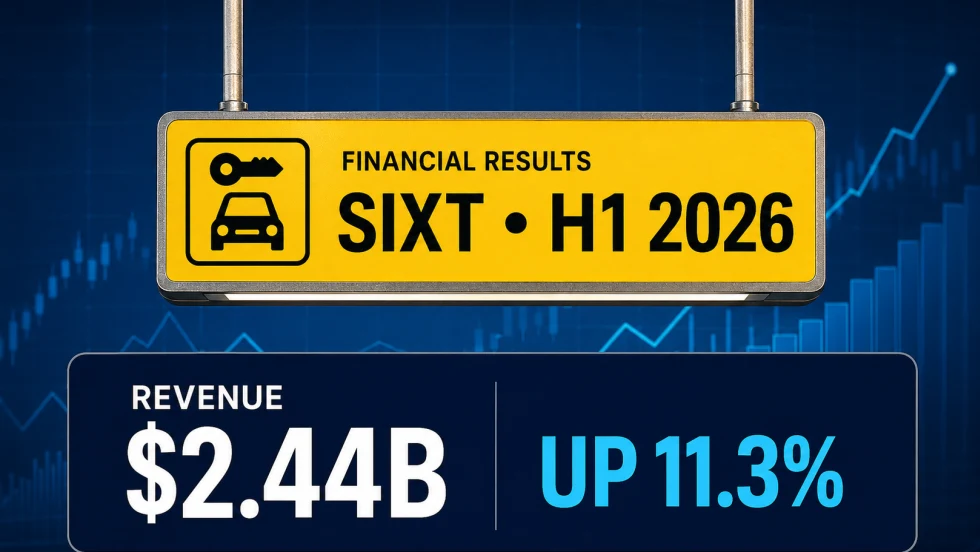
Sixt’s first-half revenue surpassed $2.4 billion for the first time as demand outpaced fleet growth, lifting utilization and earnings despite weaker consumer sentiment in North America.
The longtime Birmingham Avis operator and 2018 Auto Rental News Impact Award recipient was remembered as an advocate for independent licensees and the broader car rental industry.
A new Automotive Fleet webinar explores how fleet managers are using AI and vibe coding to automate routine work and create simple operational tools without traditional programming skills.