


Not All Damage Waivers Are Created Equal
Unlike protection offered by credit card companies, damage waivers sold at the rental counter are always primary. Unfortunately, most consumers are unaware of the difference.
In today’s marketplace, the competition for greater profit margin is fierce. As a result, more and more service industries are expanding customer benefits. Occasionally, these add-on benefits closely mirror core products from other service providers, potentially upsetting customer demand for those. For example, if a gas station begins offering free car washes for all customers filling up the tank, that offer may affect demand at the full-service car wash across the street.
A question facing the car rental industry is whether damage waiver protection offered by major credit card companies is diminishing demand for damage waivers offered at the rental counter.
Most will agree there are similarities between the rental car industry’s damage waiver and the damage waiver products extended to consumers through credit cards. Many consumer advocates and travel industry experts are more inclined to broadcast negative opinions about the value of the rental car industry’s damage waiver. They have a skewed perspective of who stands to benefit most from the purchase.
The fact is, the owner of the rented vehicle, not the credit card used to rent it, can provide the best protection for the renting consumer’s assets, whether they’re measured in time or money. The damage waiver offered by rental car companies remains primary, regardless of the vehicle type, length of rental and the customer’s final choice of payment. Most importantly, the rental company’s waiver eliminates potential up-front or out-of-pocket cost for the customer.
But what’s the use in having the best product if no one believes you?
Using the Internet to research, I spent hours reading virtually anything I could find on automobile rental damage waivers. In countless articles, chat messages and press releases, I came upon words and phrases like “strong-arm,” “ploy,” “imply that it [the damage waiver] is required,” “pressure,” and the proverbial “hard sell” — all in reference to the manner that rental agencies offer damage waivers to consumers. [PAGEBREAK]
The Best Defense Is Not Offense
Statistics prove that people are more likely to buy from someone they trust. If you’d like to improve your customers’ perception of a damage waiver’s value, you might consider polishing your staff’s sales presentations at the counter. Here are some tips:
• Educate your staff. It’s difficult to sell what you don’t understand. Make certain your rental agents have the facts regarding the terms of your rental agreement and your damage waiver product. Key points should include what the product covers, the amount of protection the customer receives if purchased, as well as limits, exclusions and circumstances that may void protection. With such training, agents will make recommendations more confidently and respond more effectively to questions and objections.
• Be aware of your perceived competition. While credit card companies do offer damage waiver products, their coverage and level of benefits usually differ from those of rental companies. Nonetheless, credit card companies tend to use much of the same terminology (i.e., CDW, LDW, PDW), which implies the products are the same. It’s important that you, your agents and your customers know how these products differ.
For example, by definition the term “damage waiver” means the benefit provider waives the right to hold the renter or authorized driver financially responsible for damages to, or loss of, the rented vehicle, under the terms specified. The waiver is in effect during the length of the rental, provided the customer’s use of the vehicle complies with the rental agreement. The specific level of protection may be further defined by such terms as “collision,” “loss,” “physical” and other more definitive clauses in the agreement.
Typically, a collision damage waiver (CDW) protects the renter or authorized driver from financial responsibility for damages resulting from collision or upset. In some cases, protection against theft is included. [PAGEBREAK]
Loss/physical damage waivers (LDWs/PDWs) are more comprehensive and typically protect the renter from financial responsibility for vehicle loss or physical damage resulting from collision, fire, theft and vandalism.
The damage waiver offered through many credit cards mirrors CDW. The literature indicates that coverage is for rental vehicle damage resulting from collision or theft. Among those cards offering loss/physical damage protection, some do not specify coverage for fire and vandalism.
Regardless of the type of damage covered, most credit cards provide protection that’s secondary to damages/losses reimbursable by the renter’s own insurance, employer or employer’s insurance, or any other valid insurance.
In all cases, when relying on credit card coverage, the renter is restricted to a limited number of rental days, specific vehicle categories and form of final payment. Additionally, in order to file a claim, most cards require at least:
• Police or incident report
• Completed claim form
• Copy of rental agreement
• Copy of driver’s license (front/back)
• Copy of charge receipt
• Copy of itemized repair bill or estimate.
Most card companies do allow at least 90 days for confirmed receipt of the required documentation. Even so, this could mean several months of up-front expense for the customer. [PAGEBREAK] Dispel the Myths
Words are power. Make certain your agents are using them wisely. An effective product offer is a clear, confident statement of recommendation — not a question like, “How do you want to cover the car, full or basic?” Without the proper training, agents may unwittingly say something that could be considered deceptive.
The most common mistake is implying that the customer must purchase the damage waiver to rent the car. This may be the case in some situations if the customer is not otherwise protected through personal auto insurance, an employer, a credit card or other supplemental damage waiver plan. But the purchase of any optional product or plan should never be represented as a compulsory condition of rental. Customers should decide to purchase your damage waiver based solely on its benefits.
Focus on Benefits Versus Consequences
Most everyone likes to buy, but no one wants to be sold. Confident buying decisions are based on WIIFM (what’s in it for me). Your customers will respond more favorably to an offer that clearly illustrates the benefits they’ll receive if they take it, rather than the consequences they’ll suffer if they don’t.
Often, rental agents miss opportunities simply because they react ineffectively to customer objections when the product offer is made. Teach them to:
• Actively listen to the customer objection
• Identify the type of objection (comment, soft/firm no)
• Select a response that reflects the benefits for the customer.
Finally, help your rental agents develop presentation skills that project an image of professionalism. Encourage them to see their primary responsibility as providing every customer with the opportunity to make informed buying decisions. Ensure they offer benefits-based solutions that lead to enjoyable, hassle-free rental experiences. When presented effectively, your damage waiver recommendation will serve everyone’s needs.
Lynda Fleming is director of training and development for the Khoury Group.
More Fleet Insurance
Hanging By A Vote: What the Hertz Insurance Ruling Means for Rental Operators
A recent precedent-setting court case points to the precautions and steps a rental fleet operation should take to minimize risk, reduce exposure, and avert legal consequences.
Read More →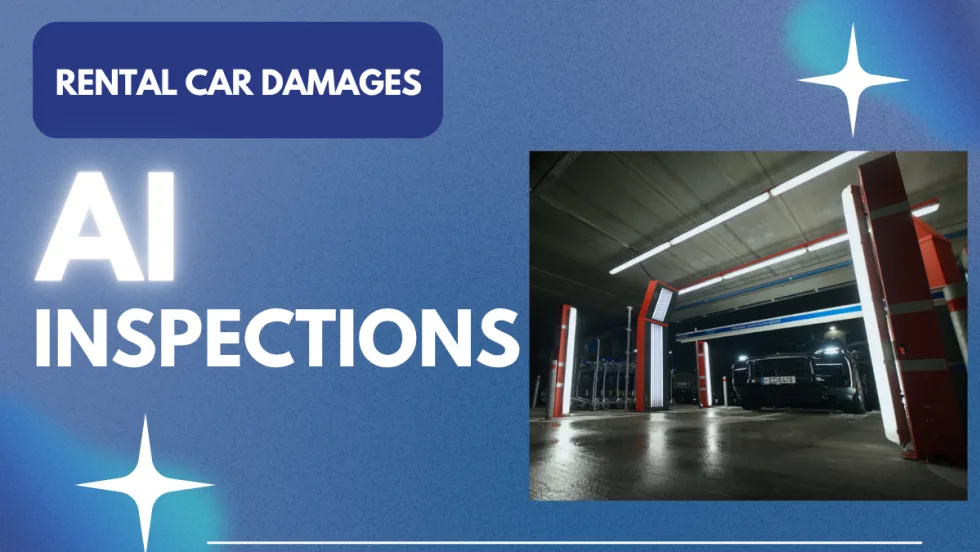
Using AI to Create Clarity, Not Conflict, in Rental Car Damage
Rental companies still need people, policy, judgment, and thoughtful implementation, with operators remaining in control of the customer experience.
Read More →
Go Rentals, Repair Provider Partner To Ease Insurance Claims Experience
The arrangement helps reduce the stress of collision repair for vehicle owners by connecting them to reliable, timely rental cars.
Read More →
U.S. Collision-Related Rental Length of Rental Declined Modestly in Q4 2025
While LOR continues to decrease from post-pandemic highs, ongoing market and economic conditions could impact future results.
Read More →
Beyond The Rental Desk: Inside Car Rental’s Push To Simplify
Greater transparency, simplified digital access, and connected fleets will be the key factors in determining who comes out on top over the next 10 years.
Read More →
Tripiamo Brings Certified Driving Confidence Training For Car Renters
Driving abroad is one of the leading causes of death among international travelers, who are not used to new traffic patterns.
Read More →
AI in Car Rental Should Be the Customer’s Advocate, Not Accuser
Opinion/Editorial: What happens when AI randomly overcharges car renters outrageous fees and penalties?
Read More →
TSD Mobility, Canopy Connect Partner to Ease Insurance Verification
The new integration brings streamlined functionality to rental agents and dealerships.
Read More →
Length of Rental Could Be Finding a New Normal of More Days
The industry may not be returning to the lower LORs of 2019 and 2020 as two years of declining repair shop backlogs appear to flatline.
Read More →
Gallagher Insurance Hires Broker Focused on Rental Car Operations
The former rental fleet executive informs his insurance practices with the everyday realities of managing rented vehicles.
Read More →