



Using AI to Create Clarity, Not Conflict, in Rental Car Damage
Rental companies still need people, policy, judgment, and thoughtful implementation, with operators remaining in control of the customer experience.
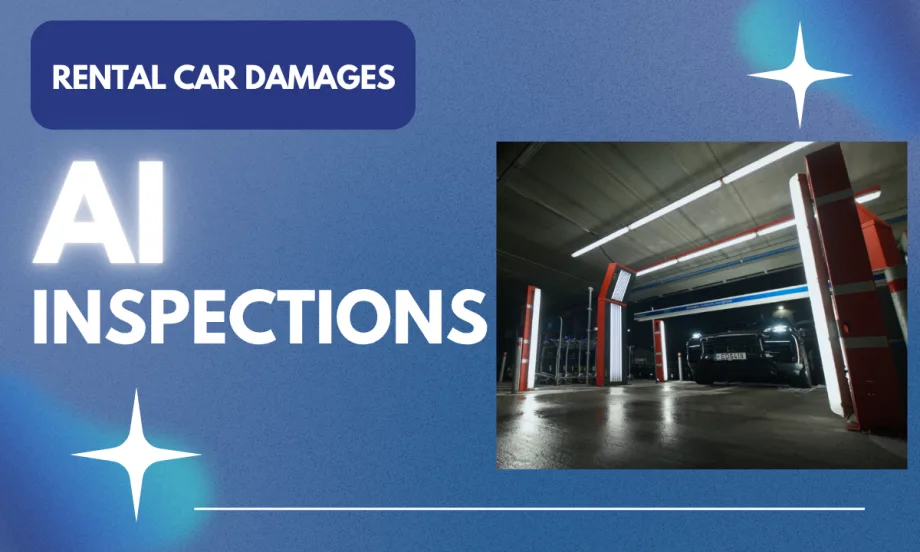
An AI-data driven tunnel instantly scans a car at Wenn's location in Lithuania.
Image: Auto Rental News / Photo: Wenn
- Rental companies need human involvement and policy frameworks to guide technological advancements.
- Judgment and thoughtful implementation are essential for applying AI in rental car returns.
- Operators play a crucial role in maintaining control over the customer experience in the rental industry.
*Summarized by AI
It has been a long time since I rented someone a vehicle. But that is exactly what I did when I graduated college.
I’m from St. Louis, Missouri, and when I graduated, I wanted to work for a St. Louis company. There are a lot of great ones, but Enterprise caught my eye. So each morning I put on my dress shirt, tie, and the cheapest “best-looking” dress shoes I could find, and I worked my tail off renting vehicles.
And while it may be a joke made famous by Step Brothers that “Enterprise gives you the tools to be your own boss,” I always found it to be true.
Over the years, I worked at and managed just about every type of rental location you can imagine; city branches, rural locations, high-dealership locations, high-insurance locations, and airport locations.
I have seen a lot, and I have stories for days, including a recurring nightmare I’m sure many operators can relate to: I am standing at the rental desk with a line full of people and no cars.
I also got to watch technology change, and I saw how customers changed with it. Toward the later part of my time in rental, I noticed far more customers pulling out their phones to take photos or videos of the vehicle before leaving the lot.
They would usually assure me it was not because I was doing a bad job on the walkaround or because I was not marking damage correctly. It was “just in case.” They had a bad experience before, heard a horror story from a friend, or simply wanted their own record.
I didn’t take it personally. Honestly, I thought the photos could help both of us if we ever needed that dreaded conversation rental operators know too well: the one where a car comes back damaged.
It is never a fun conversation. It is almost always difficult. It has been nearly 10 years since I stepped away from rental operations, and today, as the renter, I do the same thing. I think that behavior says something important about the rental experience.
There is a trust gap.
I think I have a somewhat unique frame of reference. As a manager, I understood the need to protect my fleet and make sure we captured and charged for damage when appropriate. At the same time, customer experience and satisfaction were things I took seriously.
I wanted customers to feel confident that when they rented from me or my location, we would take care of them. I wanted them to know they would not be charged for damage already on the vehicle. But I could not be everywhere at once, so I had to trust my people to uphold those same values.
Frontline employees, especially at airport locations, work hard. They need to move quickly to keep up with demand. They are balancing speed, service, documentation, and customer expectations all at once.
No process is perfect.
The traditional rental damage process often asks everyone to rely on an imperfect record: a quick walkaround, a few notes, maybe some photos, and the memory or judgment of whomever was involved at the time. When there is not a clear record, the conversation can quickly become adversarial.
That is why the recent hesitation around AI in rental is understandable.
If customers believe AI is being used simply to find more reasons to charge them, the technology will not build trust. It will erode it. A surprise invoice after returning a vehicle, with little context, unclear evidence, and no meaningful review process, is not just a technology problem. It becomes a customer experience problem.
In that model, technology and AI become the accusers. The better role is not to accuse but to create the record.
A clear conditionrecord at pickup and return can help answer the question that matters most:
Was this damage already there, or does it appear to be new?
That distinction is everything.
For the rental company, it supports fair damage review and better documentation.

Mark Havel of Wenn draws upon his experience running rental cars to recommend a balanced approach to AI-driven scans of returned rental cars.
For the renter, it can help protect against being charged for pre-existing damage.
For the frontline team, it reduces ambiguity in one of the most sensitive parts of the customer journey.
One of my biggest takeaways from recent industry conversations, including ICRS, is that AI is not the strategy by itself. AI is a tool.
Rental companies still need people, policy, judgment, and thoughtful implementation around it. Operators should remain in control of the customer experience. They should define what counts as normal wear and tear, what requires review, what should and should not be a charge.
AI can help identify possible issues. It can help compare records. It can help route information faster, but it cannot replace fairness, context, or human judgment.
Having been both an operator and a renter, here is what I believe responsible use of AI in rental should look like:
- Clear customer communication: Customers should understand condition capture is happening and why.
- Pickup and return records: The value is comparison, not just return-time detection.
- Pre-existing vs. new damage distinction: This is the heart of fairness.
- Operator-controlled policy: The rental company defines thresholds, acceptable wear, and review rules.
- Human review before customer-facing action: AI should support decisions, not automatically create disputes.
- A clear dispute path: Customers need a way to ask questions and receive a fair review.
This is what drew me to Wenn, nearly 10 years after stepping away from rental operations. The opportunity is not just AI-powered damage detection. The opportunity is to help bring trust and transparency to an industry I started in.
The future of rental damage should not be built around surprise charges or black-box decisions. It should be built around better records, clearer communication, and more trust between the renter and the rental company.
AI can help us get there, but only if we remember its proper role.
The technology should not be the accuser. It should be the record.
More Rental Operations

Advantage, Sixt Place Among Top Five in Annual Satisfaction Study
While Enterprise and National retain the top spots in JD Power’s 2026 rankings, the latest customer satisfaction results suggest renters can find competitive service beyond the biggest car rental names.
Read More →
The $100,000 Insurance Trap in Exotic Car Rentals
Exotic rental agencies often rely on customers’ personal auto policies to protect six-figure vehicles. But policy language can dramatically change the coverage for vehicles over $100,000 MSRP.
Read More →
The Booking Is Confirmed, But Is Your Customer Ready to Drive?
For international renters, a confirmed reservation doesn’t always mean they’re eligible to drive. Earlier checks can help operators catch documentation and payment issues before the customer reaches the counter.
Read More →
ICRS 2027 Opens Call for Papers
The International Car Rental Show seeks session proposals on the business, operational, and technology issues facing car rental operators. Submissions are due Jan. 15.
Read More →
Turo to Launch Vehicle Delivery Service
Turo Delivered will let travelers search for vehicles that hosts can deliver directly to hotels, homes, airports, train stations, and other locations.
Read More →
Palm Beach Airport Code Change Creates Car Rental Distribution Gap
A test of rental searches under the old PBI and new DJT airport codes returned largely different sets of brands and vehicles, highlighting a potential distribution problem for rental operators.
Read More →
U-Save Continues Dominican Republic Expansion with Launch in Punta Cana
The new franchise location builds on U-Save’s existing Santo Domingo operation and will begin taking reservations for October 2026.
Read More →
When AI Books the Rental Car, Who Controls the Sale?
As AI moves from comparing rental rates to completing transactions, operators need to understand how travelers find, interpret, rank, and ultimately see their offers. (Part 2 of 2.)
Read More →
European Booked Car Rental Rates Fell 5%, Results Varied by Country
Ireland, Cyprus, and the United Kingdom saw steep declines, while booked rates rose in Poland and Hungary.
Read More →
Is It Time to Rethink Rental Categories?
As traditional economy and compact cars disappear from the market, longtime rental operator Mike DeLorenzo asks whether the industry’s familiar vehicle categories still make sense — and what operators need to rethink along with them.
Read More →