Beyond The Rental Desk: Inside Car Rental’s Push To Simplify
Greater transparency, simplified digital access, and connected fleets will be the key factors in determining who comes out on top over the next 10 years.
Tanel Rungi and Ingmar Pilt, Car Rental Gateway
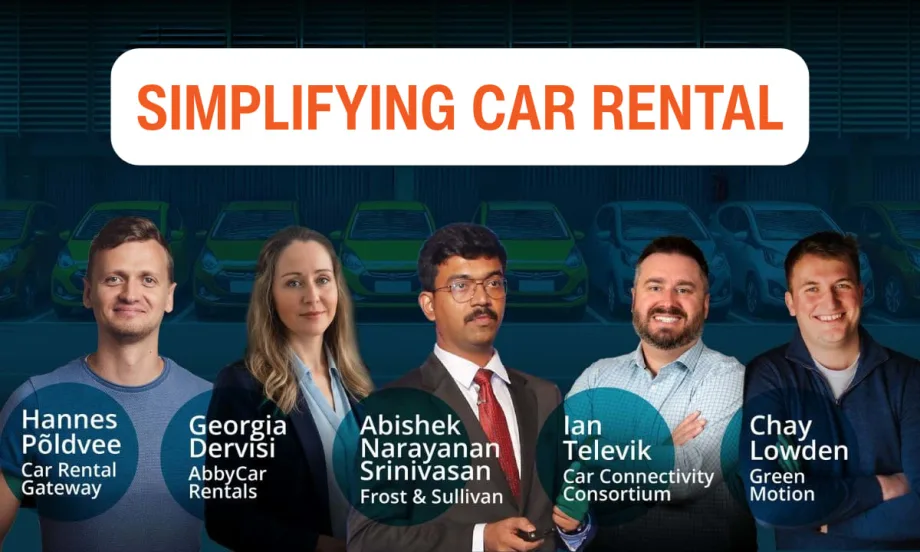
Five experts analyze key areas of rental car operations to identify opportunities to streamline and enhance the rental process.
Photos: Car Rental Gateway
11 min to read
Everyone in the car rental industry could benefit from some transformation. Although demand has rebounded after the pandemic, many of the sector’s underlying issues remain: hidden fees, long queues at rental desks, and disputes over vehicle damage.
A more recent challenge, however, is the growing tangle of apps and sales channels.
Ad Loading...
A common theme emerges fromfive industry experts: make it simpler, more transparent, and let new technology do more of the heavy lifting.
The car rental industry is in the middle of a mixed phase of modernization, said Abishek Narayanan Srinivasan, an associate director at Frost & Sullivan who leads he fleet leasing and rental program.
It’s thriving on post-pandemic recovery while grappling with cost pressures and outdated systems. He also said that hidden fees, disputes over vehicle damage, and poor communication continue to erode trust.
The continued lack of transparency about what to include in the rental price remains a source of frustration for customers.
To address this, Srinivasan suggests the industry move toward all-inclusive pricing and allow customers to select the features and services they want in their package.
Although this approach may slightly reduce margins, it could lead to higher conversion rates and lower dispute-related costs in the long run.
The online booking process and the transparency of the terms and conditions displayed to customers have improved considerably, said Hannes Põldvee, a sales and product leader at Car Rental Gateway.
He credits European Commission regulations for clearer online presentations in Europe. Extra coverage purchased on broker sites, however, still confuses customers, as it may not be recognized at all rental desks.
Greater transparency could be achieved if suppliers and distributors agreed on mutually beneficial ways to bundle protection and waiver products or simply offered more inclusive pricing, Põldvee said.
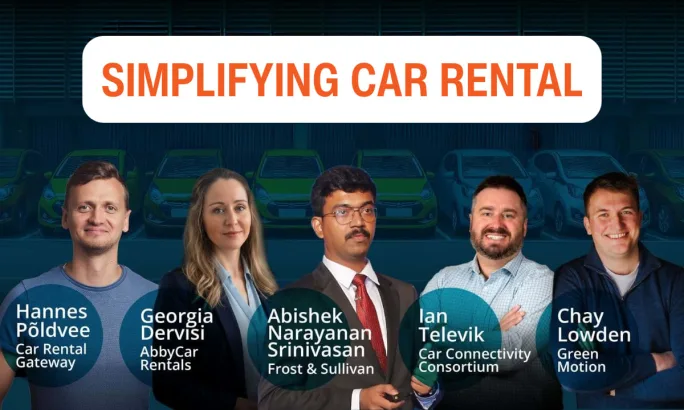
Five experts analyze key areas of rental car operations to identify opportunities to streamline and enhance the rental process.
Photos: Car Rental Gateway
Rental Desks Remain Bottlenecks
Online booking may be faster and clearer than it was five years ago, but the rental desk remains a bottleneck, Põldvee said. Customers still encounter unwelcome surprises such as extra insurance costs, hidden fees, or unexpected fuel charges, Srinivasan added.
To avoid this, customers need to understand what they are purchasing, said Chay Lowden, Green Motion International's chief product officer.
“It’s well known that customers do not read the terms and conditions, where all the information is contained. As an industry, we need to ensure that the key requirements for customers are front and center across the board,” Lowden said.
Põldvee added: “Quality and vehicle age are unclear behind ‘or similar’ labels, creating a false impression that cars from different rental companies are of equal quality.”
Large multinationals may offer new, low-mileage cars, while smaller local brands with similar listings often may have fleets two to three years old, or even older, Põldvee said.
Georgia Dervisi, a digital marketing leader at AbbyCar Rentals in Khania, Crete, Greece,said: ‘When customers feel confident that ‘what they see is what they get,’ long-term loyalty follows naturally.”
Such friction points, Srinivasan noted, create a negative feedback loop that discourages customers from booking with the same provider again.
Disagreements at the desk also lengthen queues, leading to more dissatisfaction. People coming off long flights are not expecting to spend hours of their holiday completing additional paperwork.
Distribution Needs Both Control and Reach
Most rental companies divide their strategy into two: direct corporate channels provide more control over the bottom line and the brand narrative. At the same time, OTAs and brokers help fill capacity among price-sensitive and international travelers, Srinivasan said.
The key building blocks are strong brand positioning, standardization, and powerful technology, Põldvee said.
Strong brand positioning ensures customers recognize and trust the rental company across all channels, whether booking directly or through a third-party platform. Standardizing products, pricing, and service procedures ensures consistency across corporate and franchise locations, reducing conflicting offers and customer confusion.
While these foundations are clear, technology remains the hardest piece to execute. Dervisi recommended investing in modern, connected systems and APIs that unify operations to overcome a fragmented customer journey, helping rental companies move faster, deliver better service, and remain competitive in an increasingly digital travel ecosystem.
Outdated, siloed software underpinning many core systems continues to limit true digital transformation, even as new customer-facing apps are deployed, Srinivasan said. The solution lies in consolidating all operations within a unified digital platform.
Rental Operation Tech Tips
Automate toll payments, fueling or charging, and parking, to transform the rental car into a mobile concierge.
Invest in tech that connects related operational areas.
Rework processes, teams, and partnerships to fit new digital workflows.
Use API-driven integrations and centralized rate management to unify inventory, content, and pricing across channels.
Invest in a unified platform that combines all systems and processes.
Use customer data to smooth their experience by preparing preferred vehicles in advance and completing paperwork before arrival.
Build systems and partnerships that enable seamless integration with super apps.
Pursue keyless, app-based rentals that offer a seamless and universally interoperable experience.
Srinivasan sees market leaders using API-driven integrations and centralized rate management to unify inventory, content, and pricing across channels. He points to one example: Europcar’s integration with Amadeus has allowed it to maintain brand control while expanding market reach.
Põldvee added that maintaining consistency across corporate and franchise locations depends on reinforcing standardization with strong brand positioning and a capable channel stack. That mix lets a rental brand scale distribution without diluting its identity.
Rental Car As a Concierge
The real technical leap isn’t a fresher app design, but a smarter journey where the administrative side disappears into the background. The future of the industry lies in connected fleet technology and integrated, predictive mobility solutions, Srinivasan said.
Connected cars will enable rental companies to improve service in many ways by leveraging real-time location and diagnostic data to enhance the customer experience. For example, they could alert a driver to slow punctures and direct them to the nearest garage, Lowden said.
Technology is already mostly a reality, but there is still no single, universal service that brings it all together.
Marketing teams are seeing the same shift towards services that make life easier for customers while connecting more elements of the journey behind the scenes.
AbbyCar’s Dervisi said customers rent experiences, not just cars. The more integrated the rental cycle becomes for the customer, the less noticeable it will be. She sees a single hub where customers can manage their entire trip in real time.
“The most impactful innovation will be personalization, understanding customers so well that every interaction feels tailored and effortless,” Dervisi said. Offers, support, and even vehicle preparation should feel tailored to the traveler.
Traditional Key Handovers Add Friction
If the customer has completed all the paperwork and passed the necessary checks in advance, they see little reason to stand in a queue just to collect their car keys. If anything can cut those queues, it’s digital keys.
That’s also one of the biggest growth opportunities in the car rental industry. Ian Televik, marketing director at the Car Connectivity Consortium, said the shift is underway, with expectations already set by digital boarding passes stored in digital wallets.
“A traveler landing after a long international flight wants to skip the rental counter and instantly access their car with a secure digital key on their smartphone,” Televik said. For rental companies, digitalization brings greater efficiency, security, and control.
However, the main hurdle, said Srinivasan, is that retrofitting older fleets with the hardware needed for mobile access also increases costs. While keyless, app-based rentals are becoming increasingly feasible, adoption will vary by market and grow unevenly over the next three to seven years, he added.
Keyless vehicle access will only become mainstream once the experience is both seamless and universally interoperable, Televik said. He pinpoints the issue as fragmentation across mobile platforms, vehicle brands, and rental systems.
The Car Connectivity Consortium, which brings together over 300 members from the automotive, smart device, and technology sectors, is working to establish global digital key standards for vehicle access, Televik said. This will be key to scaling automation, cutting costs, and improving vehicle usage without relying on proprietary systems.
Lowden argues that smarter, app-based access to rental services isn’t a universal solution. Frequent travelers already benefit from loyalty schemes that streamline the rental process without needing another app. At the same time, occasional renters find downloading and verifying a new one each year hardly worth the effort.
Until digital adoption reaches critical mass, the human touch will remain an important part of the experience.
Until then, a trend is emerging that bridges the gap between traditional keys and fully digital access, Põldvee said. Self-service kiosks now allow customers to collect and return vehicles independently, even outside regular opening hours.
Loyalty Is Earned In Minutes Saved
Price will always be important, but time is the new currency. Travelers want to reach their destination as quickly as possible and with minimal hassle, Televik said.
Lowden agreed that convenience is the only real way to differentiate beyond price: if customers can get the same experience for less, they’ll go there.
Srinivasan added that using customer data can make this journey smoother. Preparing preferred vehicles in advance and completing paperwork before arrival turns loyalty into saved time, a gesture most customers value highly.
Dervisi noted that customers return to brands that make their journey easy and stress-free. Personalized communication, transparent pricing, and post-rental engagement all help build lasting relationships.
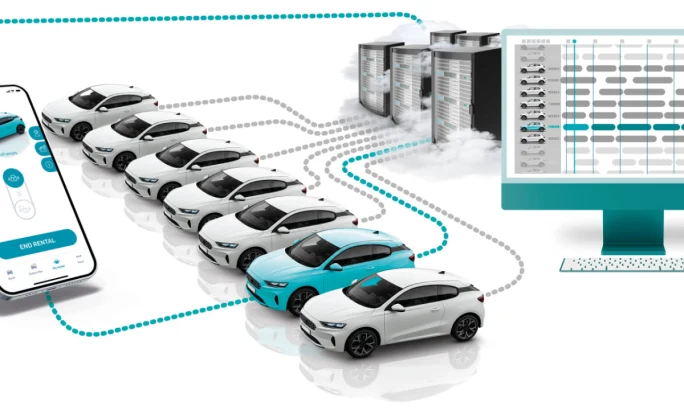
With connected vehicles and AI integration come predictive operations such as dynamic pricing, demand forecasting, fraud detection, and automated damage assessment.
Photo: Car Rental Gateway
Super Apps Can Boost Sales but Reduce Control
Super apps promise to increase rental volumes but could just as easily squeeze margins and wrest control of customer data. Srinivasan warned that operators will need to balance the pursuit of scale with maintaining control over their brand and pricing power.
Much will depend on how these platforms approach car rental, Põldvee said. If they act as distributors and keep supplier brands visible to consumers, they could serve as an additional channel to generate new business.
However, if super apps present rental as an opaque service under their own brand and predefined conditions, especially when enabled by keyless technology, operators will face trade-offs between higher volume and reduced control over brand, data, and customer loyalty.
Dervisi believes the future lies in smart collaboration. Super apps will inevitably redefine how travelers move through the mobility ecosystem. Still, rental brands that remain visible, trusted, and distinct on those platforms will thrive, she said.
The practical move is to prepare for each scenario. Rental companies should build systems and partnerships that enable seamless integration with super apps without sacrificing control over pricing or brand identity.
That means ensuring consistent rates and standardized content across channels, keeping customer data connected to their own platforms, and maintaining clear brand signals wherever their offers appear.
Evolving Rental Models
Rental companies are increasingly prioritizing monthly car subscriptions and blending their services with car-sharing and ride-hailing models. These aren’t entirely new trends, Põldvee said, but they offer opportunities to improve fleet usage and tailor services to different customer segments.
Car sharing is often handled in separate apps, so integrating it into rental platforms or distributor networks would let customers find the nearest vehicle in one place, rather than switching between apps. The challenge is aligning partnership models with commercial goals and customer acquisition, since car sharing usually generates lower transaction values than traditional rentals, he said.
Lowden agreed, noting that most major rental companies already offer these services, while smaller players struggle to match the scale required.
Outlook For 2035
McKinsey & Company projects that 90% of vehicles sold by 2030 will be connected, creating new opportunities to simplify every step of the rental process, Televik said, referring to its research.
With connected vehicles and AI integration come predictive operations, Srinivasan added. Key applications include dynamic pricing, demand forecasting, fraud detection, and automated damage assessment, an area already being developed by companies such as Netradyne, Lytx, and Nexar.
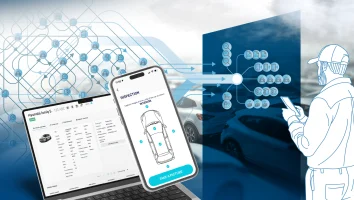
Manual vehicle inspections tie up staff and cause delays, but AI-driven damage detection is now automating much of this process. The biggest gains will come from real-time vehicle connectivity, which improves usage, predicts maintenance needs, and reduces downtime. Companies such as Geotab and Samsara are already demonstrating measurable improvements in fleet uptime.
Srinivasan predicts that by then, the car rental landscape will include a much larger share of electrified fleets, but several issues remain. He noted that uncertainty about the resale value of used EVs remains a barrier, particularly for larger fleets.
Charging infrastructure remains limited, contributing to range anxiety, while charging times, though improving, remain lengthy. Sourcing energy sustainably remains a challenge. Dervisi added that charging points are often scarce in popular holiday destinations, making EV use more difficult for travelers.
What’s Next For Car Rental Operators?
Srinivasan recommends investing in a unified platform that integrates all legacy systems and standardizes core operational processes to stay competitive. He noted that while fleet connectivity is essential, the real advantage lies in using analytics teams to turn data into insights that drive smarter decisions. Customer data can also be used to develop new service KPIs and strengthen performance tracking, Põldvee said.
He believes the greater challenge is a mindset one. Rental firms need to think and operate like e-commerce businesses, with digital rental desks open around the clock rather than physical desks limited by office hours.
This means reworking processes, teams, and partnerships to fit new digital workflows rather than forcing technology into old structures. He suggests starting with selecting the right technology partners and investing in digital identity verification, seamless online payments, and keyless vehicle access.
Echoing previous experts, Dervisi advises investing in technology that connects booking, operations, and communication, while keeping transparency, automation, and personalization at the core. She emphasizes that innovation should never come at the expense of empathy. Customers remember how they were treated, not just how quickly they picked up the keys.
Car rental has more tools and more pressure than ever before. The winners won’t be those with the most integration across sales channels, but those who make the journey feel simple and natural. They’ll be the ones with transparent pricing, a car that’s ready for the customer, and a digital key that opens it. A brand that values people’s time, every time.
About the Authors: Tanel Rungiis thePR and communications manager for Car Rental Gateway Limited. Ingmar Pilt works for the company. This article was authored and edited according to the editorial standards and style of Auto Rental News. Opinions expressed may not reflect those of Auto Rental News or Bobit Business Media.
Exotic rental agencies often rely on customers’ personal auto policies to protect six-figure vehicles. But policy language can dramatically change the coverage for vehicles over $100,000 MSRP.
In my return to writing about the day-to-day challenges of car rental, I have a few observations about shrinking vehicle mix, changing customer base, and the incessant hunt for new efficiencies.
A reservation captures demand. The operating test is whether the business can keep the customer, vehicle, commercial terms, and next action aligned until the rental is closed.
A recent precedent-setting court case points to the precautions and steps a rental fleet operation should take to minimize risk, reduce exposure, and avert legal consequences.
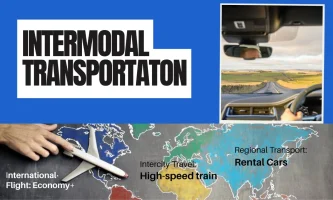
As a growing number of itineraries now feature segments with multiple transportation providers, car rental serves as a core mobility link in travel journeys.
This primer on how AI intersects with rental fleet pricing covers the technology, costs, and steps to ensure an accurate, 24/7 smart system that delivers more revenue to rental car providers.
Greater transparency, simplified digital access, and connected fleets will be the key factors in determining who comes out on top over the next 10 years.