




Where Rental Fleets Must Adjust To Shifting Catastrophe Risks
West Coast disasters pose unique challenges and liabilities for rental fleet operators, who are advised to take steps tailored to their specific situations.

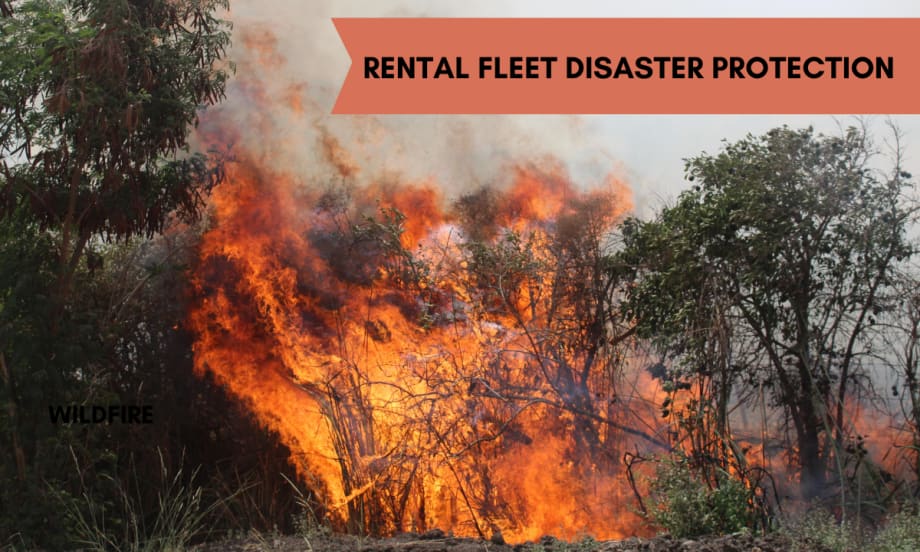
Rental fleet operators should work closely with their insurance carriers to update their coverage in line with the latest trends in natural disaster risks and areas prone to them.
Credit: Auto Rental News
- Rental fleet operators on the West Coast face distinct challenges due to regional disasters.
- It is crucial for these operators to implement strategies specific to their unique circumstances.
- Tailored measures can help reduce liabilities and adapt to shifting catastrophe risks.
*Summarized by AI

For unused rental cars parked on lots or being turned over, a rental fleet operation should maintain an updated plan to move vehicles to safer locations in the event of an impending natural disaster.
Credit: Jane-Grn / Pexels
Rental fleet operations carry an inherent advantage over other fleets when facing the threat of natural disasters.
If the business is going well, most of the cars will be rented out at any given time and will likely be parked and driven across a wide region. That means fewer vehicles that operators need to move out of the way from a central location as a disaster looms or strikes.
That works well on the East Coast, too, where hurricanes are most common.
“We handle a lot of hurricanes, so we have some time for preparation, but with the wildfires, you don’t have as much time to get people out,” said Mark Plousis, senior vice president of Philadelphia Insurance in Bala Cynwyd, Pennsylvania. “Timing is the issue. If the fleet operators have enough time, they can react and get their cars to a safer spot.”
Some wildfires, like the Pacific Palisades and Altadena fires in Southern California on Jan. 7, 2025, roar in too fast to move fleets, but in other situations, a longer-burning wildfire can be tracked, and its path predicted based on winds, allowing people and equipment to escape.
Citing extreme weather events, Plousis said people often “need to rent cars to leave.”
“We always feel better when a lot of the rental cars are rented and moved out of the area,” he said. “Many people who don't have a car or access, rent one. So that's always been a positive for us.”
More Informed Risk Areas
Technology and accumulated experience with more disasters enable insurers to categorize zip codes based on catastrophic potential.
Those ratings can help inform rental fleet operators of risk levels and the related precautions and plans to pursue, not just for their facilities and fleets, but for car renters in real time.
“Let’s say you rented a car to John Doe, and he lives in a certain zip code, and it's one of the zip codes that's potentially impacted,” Plousis said. A rental operator can call the customer to advise them on where to pick up or return the car.
“It can be hard for fleet operators with a 70% or 80% fleet usage rate where the vehicles are all out,” he said. “It’s the ones on rental where you don’t actually know where they are,” beyond the information the car renter provides.
One solution is to equip rental vehicles with telematics and/or tracking devices for use during emergencies.
For unused rental cars parked on lots or being turned over, a rental fleet operation should maintain an updated plan to move vehicles to safer locations in the event of an impending natural disaster, Plousis advised.
Rental fleet operations can contract with third parties to arrange space on parking lots and in garages away from vulnerable areas in the event of a major storm, possible mudslides, or red zone high fire risks.
Operators can also offer to reimburse parking rates for parked rental cars.
“Rental cars are best placed out of harm’s way because most rental car operators usually self-insure their physical damage,” Plousis said. “Although we cover liability for a lot of people, cars create significant exposure for rental operators.”
Car Renter Safety and Awareness
Rental fleet companies should also consider creating safety checklists and reference materials for car renters, advising them on how to avoid natural disaster areas or how to protect themselves during a sudden event, such as an earthquake. It could also provide steps to protect or move a rental vehicle.
“I believe in a lot of prevention to mitigate risk,” Plousis said. “That checklist can help someone in a situation. What is the cost to print a piece of paper and attach it to a rental agreement?”
However, remember that car renters don’t own the car, so they may not show as much urgency in protecting or guarding a vehicle that isn't theirs, he added. Providing simple instructions and reminders that focus on both personal safety and common-sense car use can incentivize renters to do the right thing.
Locations Vary In Risk Levels
Plousis underscored the number-one factor in risk mitigation and business protection: “Location, location, location.”
However, even if you can pinpoint risk factors to specific local areas and zip codes, natural disasters have occurred more often in places where they were rare, Plousis pointed out.
“People need to be more aware of their locations and the propensity for losses,” he said. “In Japan, they didn't get hit with hail for 25 years, and then they had two major hailstorms that happened in two years in a row.”
Risk maps in the U.S. have shifted due to more frequent storms and natural disasters across broader areas, he said.
The Pacific Palisades fire, for example, was a sudden, unexpected catastrophe in a coastal area that never experienced such a rapid fire of that magnitude. That’s why brush fire ratings at that time were not relevant.
The same phenomenon occurred in the Lahaina, Maui fires of August 2023.
“If you plan to operate in certain areas, you should have a good idea of what can happen there,” Plousis said. “You can no longer assume ‘it will never happen here.’ It’s all changed drastically.”
Rental fleet operators should work closely with their insurance carriers to update their coverage in line with the latest trends in natural disaster risks and areas prone to them.
Likewise, rental car companies looking to open new outlets or facilities should not choose areas at higher disaster risk or relocate to safer areas.
While spreading out fleet vehicles can reduce risk, operators should also ensure they do not offset that structure by inadvertently moving vehicles into higher-risk locations.
Layered Insurance Coverage
Rental fleets generally arrange insurance across multiple tiers for specific purposes. Plousis outlined six key areas:
Liability insurance covers the car renter.
Owner-only excess insurance protects the company.
Physical vehicle damage can be self-insured and offered as a purchased CDW (collision damage waiver) option to car renters.
Catastrophic comprehensive (catcomp) protects fleets during large-scale events.
Property insurance covers facilities.
Flood and earthquake coverage may require separate policies, depending on locations, and is generally sold through state governments.
More Rental Operations
How Did This Independent Rental Operator Grow to 170 Vehicles in 4 Years?
With 170 vehicles across three Kentucky locations, Joel Price relies on an overseas team to handle reservations, payments, and after-hours customer service. It's one part of an unconventional approach to growing an independent rental operation.
Read More →
What Does It Take to Succeed in B2B Rentals?
The fundamentals may be familiar to daily car rental operators, but project-based truck rentals put different demands on the fleet and the business.
Read More →
NPR Builds on International Partnerships to Grow Rental Bookings
With Ana Laborde supporting broker development, NPR Auto Group is tailoring distribution strategies, rate packages, and partnerships to grow international reservations across its three brands.
Read More →
Advantage, Sixt Place Among Top Five in Annual Satisfaction Study
While Enterprise and National retain the top spots in JD Power’s 2026 rankings, the latest customer satisfaction results suggest renters can find competitive service beyond the biggest car rental names.
Read More →
The $100,000 Insurance Trap in Exotic Car Rentals
Exotic rental agencies often rely on customers’ personal auto policies to protect six-figure vehicles. But policy language can dramatically change the coverage for vehicles over $100,000 MSRP.
Read More →
The Booking Is Confirmed, But Is Your Customer Ready to Drive?
For international renters, a confirmed reservation doesn’t always mean they’re eligible to drive. Earlier checks can help operators catch documentation and payment issues before the customer reaches the counter.
Read More →
ICRS 2027 Opens Call for Papers
The International Car Rental Show seeks session proposals on the business, operational, and technology issues facing car rental operators. Submissions are due Jan. 15.
Read More →
Turo to Launch Vehicle Delivery Service
Turo Delivered will let travelers search for vehicles that hosts can deliver directly to hotels, homes, airports, train stations, and other locations.
Read More →
Palm Beach Airport Code Change Creates Car Rental Distribution Gap
A test of rental searches under the old PBI and new DJT airport codes returned largely different sets of brands and vehicles, highlighting a potential distribution problem for rental operators.
Read More →
U-Save Continues Dominican Republic Expansion with Launch in Punta Cana
The new franchise location builds on U-Save’s existing Santo Domingo operation and will begin taking reservations for October 2026.
Read More →