
April 1, 2026
Making Connections: More Options Diversify Travel Plans
As a growing number of itineraries now feature segments with multiple transportation providers, car rental serves as a core mobility link in travel journeys.
Charlie Coniglio, CarTrawler
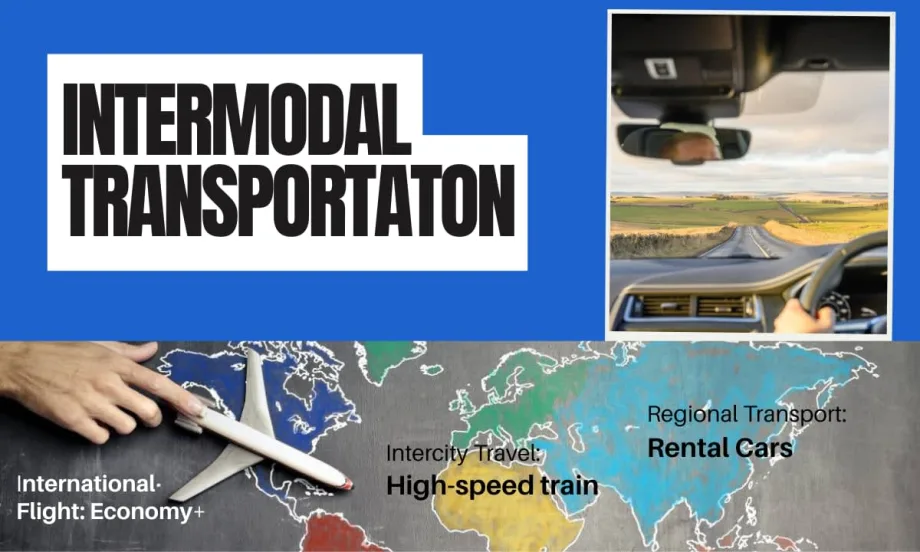
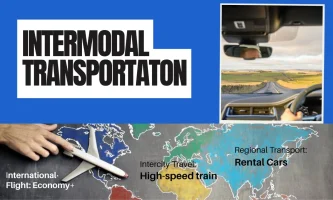
The car rental category often receives less attention than flights or trains in discussions of intermodal travel, yet it plays a central role in enabling those journeys.
Credit:
Auto Rental News / Tripiamo / Pexels
8 min to read
The idea of combining multiple modes of transportation into a single trip isn’t new.
For many, if not most, travelers, it’s natural and expected to disembark from an airplane and get into a rental car or onto a train. After all, no one flies from one airport to another just to visit the terminal.
But as passenger rail networks expand, last-mile mobility options multiply, and public transit choices improve, a growing number of itineraries now feature several segments with different transportation providers.
More Opportunities For Car Rental
For travel suppliers, such as car rental operators and airlines, and travel sellers like online travel agencies and loyalty programs, the growth of virtual interline and self-connect travel represents more than a logistical challenge.
It presents a tangible opportunity to improve the traveler’s experience while increasing conversion, retention, and overall trip value.
The ability to create convenient travel routes that include the required modes of transport to complete a journey and reduce friction between those modes determines who can best meet and capture this demand, and who loses travelers to competitors offering better connection choices.
The car rental category often receives less attention than flights or trains in discussions of intermodal travel, yet it plays a central role in enabling those journeys. As an option, car rental can close the last-mile mobility gap and make trips more efficient and practical overall.
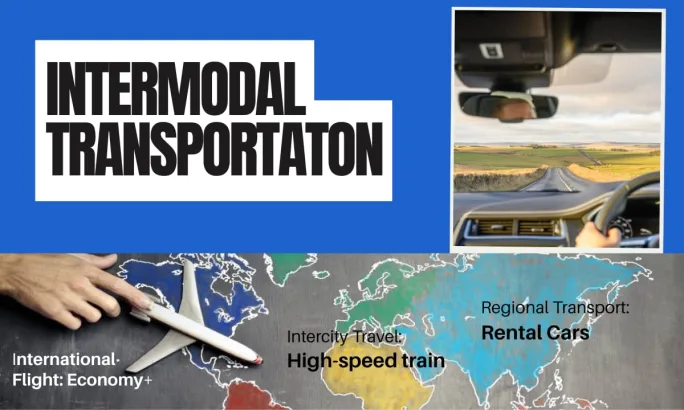
The car rental category often receives less attention than flights or trains in discussions of intermodal travel, yet it plays a central role in enabling those journeys.
Credit:
Auto Rental News / Tripiamo / Pexels
The Steady Growth of Intermodal Passenger Travel Across Continents
Intermodal travel combines air, rail, and ground transportation. It is gaining momentum, especially in Europe, where non-air travel options are widely available and viable.
EU rail passenger transport reached about 275 billion passenger miles in 2024, a 5.8% increase over 2023 and the highest level recorded since data collection began in 2004, according to Eurostat.
This trend reflects both improving infrastructure and changing traveler preferences, as passengers discover that combining modes can often deliver faster, more flexible, or more economical travel than relying on a single mode.
Beyond Europe, about 55% of the U.S.’s 14,000 passenger transportation terminals allow travelers to connect among scheduled passenger transport modes, according to the Bureau of Transportation Statistics' Intermodal Passenger Connectivity Database. Public transport use is also growing; total U.S. ridership across public transport, including light and heavy rail, rose by 7.8% in 2024, and climbed to more than 2 billion unlinked passenger trips in Q3 2025, according to the American Public Transportation Association's ridership reports.
These figures show the rise of intermodal travel as passengers choose journeys that combine modes, and as the related infrastructure expands accordingly. For car rental brands and travel sellers, this growth helps them serve a larger, more diverse customer base and meet rising expectations for booking experiences that reflect how people travel.
Expanded Choice, Connected Journeys, Sustainable Options
The appeal of intermodal travel is more straightforward than a multi-leg journey might appear. Passengers gain access to more routes, schedules, and price points by combining modes rather than limiting themselves to a single option.
A traveler might fly into a major hub, continue by rail to a regional destination, and complete the final segment by rental car, creating a journey that would be either impossible or prohibitively expensive using air travel alone.
Research shows that a small set of variables shapes intermodal travel decisions. Travel duration, distance, vehicle ownership, and proximity to the nearest metro station account for at least 70% of the factors influencing whether passengers choose an intermodal route, according to research published by the International Journal of Transportation Science and Technology.
Many of these factors fall squarely within the control of travel sellers and transport providers, such as car rental brands. Improving connections, providing a diverse inventory, shortening transfer times, and presenting relevant options can influence if a passenger chooses a convenient intermodal route or a long, expensive single-mode odyssey.
Sustainability is another topical (and compelling) advantage. The European Environment Agency finds that rail and waterborne transit are the most efficient and lowest-emission forms of motorized travel in Europe, with greenhouse-gas emissions per passenger-mile well below those of aviation.
By making it easier for rail passengers to complete their journeys with rental cars or transfers rather than booking short-haul flights or driving the entire route, partnerships between rail providers and car rental platforms support more sustainable travel behaviors.
Nowhere is this more visible than in urban tourism. The EU Urban Mobility Observatory notes that sustainable urban mobility depends on “proactive stakeholder engagement, transparent communication, and strong partnerships between government, industry, and civil society.” These partnerships must also include travel technology providers capable of delivering the infrastructure to make multi-modal journeys as straightforward as booking a single flight.
Loyalty Programs, OTAs, and Other Travel Sellers
This is where loyalty programs, online travel agencies, and other enterprises that sell or offer travel booking need to adapt. Not only should they rethink their inventory and partner portfolio to offer connected, friction-free options that incorporate multiple modes of transport, including trusted car rental options, but they must also invest in the technology to present those options at the most relevant moment in the booking journey.
This requires more than simply displaying multiple transport options on a single page. True intermodal integration means understanding the passenger's full journey and providing a range of tailored, complementary services that improve convenience, reduce cost, or save time.
A passenger booking the Acela from Boston to Washington, DC, will also need a car or a car service to reach a hotel in the Virginia suburbs. An airline passenger arriving at a regional airport might prefer to drive the final 100 miles rather than waiting for an infrequent bus connection. These scenarios create opportunities for travel sellers to increase basket size, and for car rental brands to increase volume and revenue, while improving the travel experience.
Loyalty programs stand to gain by integrating with intermodal options. By enabling members to earn and redeem points across multiple transport modes, programs can engage and retain more travelers while operating as travel coordinators and problem solvers instead of as a place to redeem points for a hotel room. The member who can book a flight, train, and rental car in a single itinerary and transaction experiences the loyalty program as an integrated travel partner rather than a fragmented menu of services.
To achieve this level of integration, loyalty programs need to identify travel technology partners that make intermodal integration scalable by providing access to reliable, option-rich car rental inventory that can be embedded directly into booking flows.
The alternative is to build and maintain relationships with hundreds of individual travel suppliers, including dozens of car rental operators. This resource-intensive approach limits flexibility and increases operational complexity.

Car rental plays a vital role in the intermodal system by enabling travelers to complete journeys that rail or air alone cannot fulfill.
Credit:
Tripiamo
Car Rentals: The Balancer of Mobility
Intermodal travel often focuses on air-rail connections, coach transfers, or ferry links. Yet car rental plays a vital role in the intermodal system by enabling travelers to complete journeys that rail or air alone cannot fulfill. This applies to destinations beyond major urban centers, where options that depend on infrastructure (e.g., airports) or public transit become sparse.
Consider a business traveler flying from New York to Frankfurt, Germany, taking a train to Nuremberg, and then needing to reach a manufacturing facility 25 miles outside the city. Alternatively, a family arriving by train in Marseille, France, before continuing to a villa in Provence.
In both cases, car rental transforms a partial journey into a complete one and provides the flexibility and autonomy that other modes cannot match.
The value proposition extends beyond filling gaps in public transport networks. Car rental gives travelers control over their schedules, allowing them to explore destinations at their own pace without timetables or route limitations.
For travel sellers and loyalty programs, embedding car rental into the booking flow increases transaction value while reducing the likelihood that customers will complete this leg of their journey through a competitor.
Integration is the sticking point. A traveler shouldn’t need to leave the booking platform, create a new account with a separate car rental provider, and manually coordinate pickup times and locations.
The car rental component should flow naturally from the preceding transport segments, with pickup locations automatically aligned to arrival points and times pre-populated based on the inbound journey.
Achieving this requires partnerships with technology providers that can deliver both inventory and the technical platforms that handle all transactions from booking to rental return.
Intermodal Combos in Action
High-profile collaborations demonstrate intermodal integration in practice. The SkyTeam alliance’s partnership with Eurostar, established in 2024, allows passengers on member airlines to book connecting rail segments on Eurostar trains as part of a single itinerary.
This approach eliminates the complexity of booking separate tickets and creates a single, unified journey for the passenger.
Partnerships like this work because they simplify intermodal travel. By consolidating booking, payment, and customer service into one experience, it eliminates the hassle that might otherwise deter travelers from choosing multi-modal journeys.
The result benefits all stakeholders: Travelers enjoy more choice and convenience. Rail operators and airlines extend their networks. Car rental brands land customers planning their trips. Technology partners enable these connections at scale, providing the links and tools that manage complex arrangements.
Building A Connected Travel System
The momentum behind intermodal travel will speed up as infrastructure improves, environmental factors influence travel decisions, and passengers get used to the benefits of multimodal transport. Car rental brands, airlines, OTAs, loyalty programs, and other travel sellers that recognize this shift early will be best positioned to capture the opportunity.
Success will hinge on identifying the right partnerships, implementing the right technology, and taking the right approach to improving the travel experience. Technology partnerships deliver access to a comprehensive inventory without the operational burden of managing multiple supplier relationships.
Technical infrastructure must support integrated booking, unified pricing, and coherent customer service across all transport modes in play. The customer experience must feel like a single, continuous journey rather than a series of disconnected transactions.
For my company, CarTrawler, for example, this represents a duty and an opportunity.
As a technology partner to airlines, loyalty programs, OTAs, and now rail providers, we enable the connections that make intermodal transportation more practical.
Our role is to ensure that when a passenger needs ground transport to complete their journey, the right options appear at the right time, naturally embedded in the booking flow they are already navigating.
The future of travel is multi-modal, connected, and built on partnerships that put passenger convenience and choice at the center of every decision.
Loading data...