




ACRA: It's Time to Address No-Show Fees
ACRA applauds Avis Budget for taking a step toward obtaining credit card information for bookings to cover no-show fees.
Listed below is an opinion piece written by ACRA President Bob Barton in regards to Avis Budget for taking a step toward obtaining credit card information for bookings to cover no-show fees. This piece will be featured in the Nov. 19 issue of Management.travel.
Letter to the Editor:
This letter is in response to the article released on Nov. 5, 2009 by Jay Campbell, entitled, “Avis Budget Readies Capability for No-Show Fees.”
The initiative that Avis Budget is taking to require credit card information for bookings to cover no-show fees is a huge step in bringing the car rental industry up to the standards of the rest of the travel industry. The car rental industry is the only major travel segment that DOES NOT ask customers to guarantee their reservations with a credit card.
No-show rates have been shown to be as high as 30 percent in some locations. We strongly believe this is because there is no penalty imposed on the renter for not cancelling. Aside from the internal cost of operations incurred by the car rental company, there are third-party hard costs associated with each reservation, such as GDS segment fees, that have a direct impact on the car rental company’s bottom line. Why is it that we, as an industry, do not recoup these fees?
Our ability to service the customer properly is directly impaired by these no-shows. You will never hear from a customer who chooses not to pick up their car, but will most certainly here from the customer when a car is not available because the “anticipated” no-show customers actually arrived for a car.
New web technology has brought out companies that monitor reservations and rebook the consumer when others drop their rates. Let’s put this in perspective: For each vehicle a rental car company rents, assuming 80 percent utilization, a three-day length of rental, and a 30 percent no-show factor, hard costs for no-shows can easily be $60 per year for this vehicle. If you operate 2,000 vehicles, that cost is $120,000 a year; 20,000 vehicles costs $1.2 million. These are HARD COSTS. This does not even consider the soft costs, or more importantly, customer service issues from fleeting problems related to no-shows.
When you book a flight, you pay in full at the time of reservation. If you cancel any fare (except the most expensive unrestricted ticket), you get a CREDIT for future use. In other words, the airline keeps your money.
When you reserve a hotel online, you have one of two choices: You can book the non-refundable discounted Internet rate, or you can simply reserve a room. Under the Internet rate, if you do not show up, you lose your money. If you book the regular rate, all you have to do is call before 6pm and cancel to avoid a fee.
The car rental industry should do exactly the same thing. If you cancel your reservation, there is no fee. But if you do not show up within three hours after the time of the reservation, you are charged the first day, at a rate set by the individual company. The three hours comes from the GDS system requirements. You must hold a reservation for three hours after the scheduled arrival time for any travel product.
It is time for our industry to move forward. Think about everyday life. For example, you make an appointment with your doctor; if you do not show up, they will bill you for the visit. This is the same for a lawyer, same for the dentist, etc. Years ago, the car rental companies were given thousands and thousands of cars from the manufacturers to take up excess capacity. This is no longer the case. We all must operate much tighter fleets and manage our costs much better.
This is sound policy, and one widely accepted in the travel industry and daily life. Remember, it is not a fee, unless the consumer chooses it to become one by not cancelling.
Respectfully submitted,
Robert M. Barton, President
American Car Rental Association
More Rental Operations
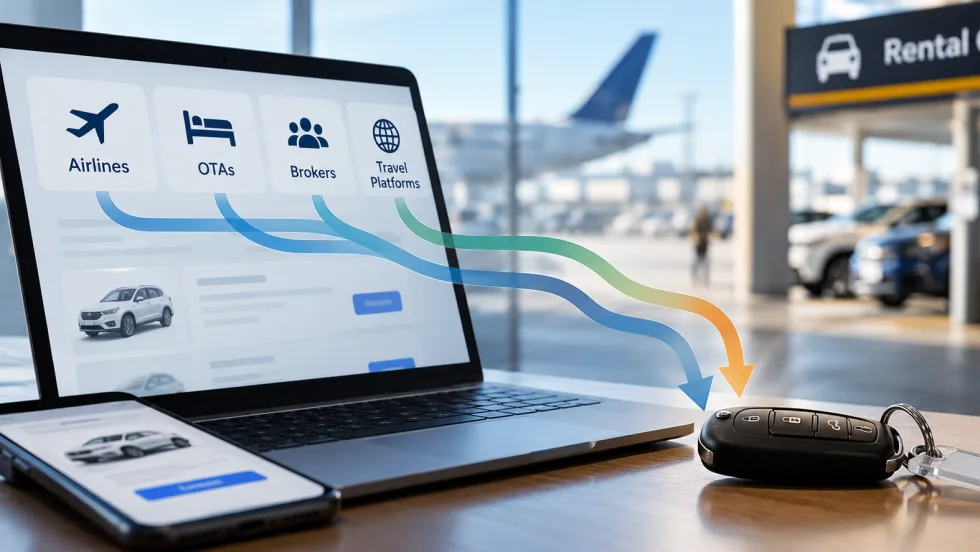
Direct, Broker or Hybrid? How Travel Retailers Source Rental Cars
As travel retailers weigh direct supplier relationships against third-party distribution, rental operators need to understand how those decisions affect their business.
Read More →
How Did This Independent Rental Operator Grow to 170 Vehicles in 4 Years?
With 170 vehicles across three Kentucky locations, Joel Price relies on an overseas team to handle reservations, payments, and after-hours customer service. It's one part of an unconventional approach to growing an independent rental operation.
Read More →
What Does It Take to Succeed in B2B Rentals?
The fundamentals may be familiar to daily car rental operators, but project-based truck rentals put different demands on the fleet and the business.
Read More →
NPR Builds on International Partnerships to Grow Rental Bookings
With Ana Laborde supporting broker development, NPR Auto Group is tailoring distribution strategies, rate packages, and partnerships to grow international reservations across its three brands.
Read More →
Advantage, Sixt Place Among Top Five in Annual Satisfaction Study
While Enterprise and National retain the top spots in JD Power’s 2026 rankings, the latest customer satisfaction results suggest renters can find competitive service beyond the biggest car rental names.
Read More →
The $100,000 Insurance Trap in Exotic Car Rentals
Exotic rental agencies often rely on customers’ personal auto policies to protect six-figure vehicles. But policy language can dramatically change the coverage for vehicles over $100,000 MSRP.
Read More →
The Booking Is Confirmed, But Is Your Customer Ready to Drive?
For international renters, a confirmed reservation doesn’t always mean they’re eligible to drive. Earlier checks can help operators catch documentation and payment issues before the customer reaches the counter.
Read More →
ICRS 2027 Opens Call for Papers
The International Car Rental Show seeks session proposals on the business, operational, and technology issues facing car rental operators. Submissions are due Jan. 15.
Read More →
Turo to Launch Vehicle Delivery Service
Turo Delivered will let travelers search for vehicles that hosts can deliver directly to hotels, homes, airports, train stations, and other locations.
Read More →
Palm Beach Airport Code Change Creates Car Rental Distribution Gap
A test of rental searches under the old PBI and new DJT airport codes returned largely different sets of brands and vehicles, highlighting a potential distribution problem for rental operators.
Read More →