




U.S. Business Travel Drives $623 Billion+ in Economic Impact as Spending Reaches $538 Billion
The data also underscores the industry’s strong multiplier effect across the U.S. economy, revealing that each dollar invested in business travel in 2024 generated $1.16 in GDP.

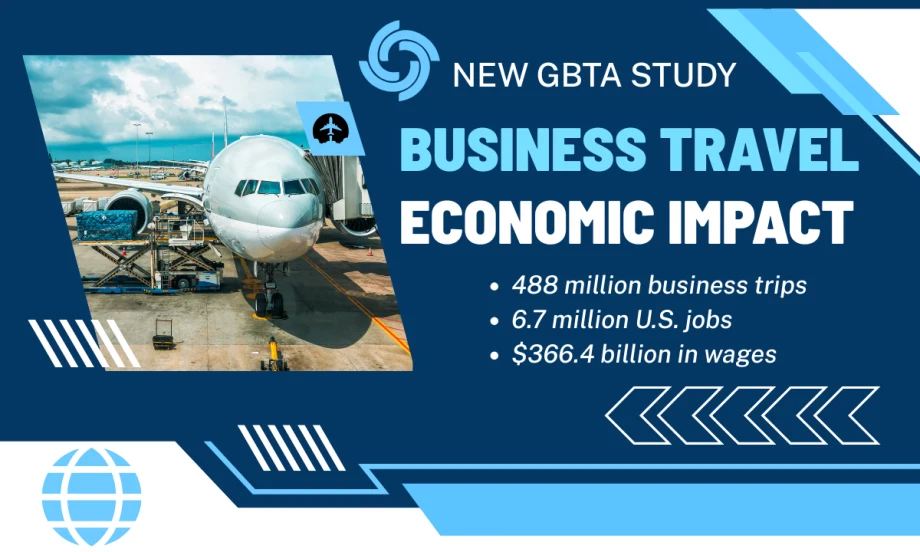
Altogether, one in every 24 U.S. jobs was linked to business travel activity, reinforcing its importance as a pillar of the American workforce.
Auto Rental News
A GBTA study finds business travel supports 6.7 million U.S. jobs and accounts for 2.1% of GDP, underscoring its role as a critical driver of economic growth nationwide
Business travel within and to the U.S. continues to be a major engine powering the nation’s economy and growth, generating $623.8 billion in total gross domestic product (GDP) impact as related travel spending reached $538.5 billion, according to a study released June 4 by the Global Business Travel Association (GBTA).
Based on comprehensive analysis of 2024 data, the report reveals the far-reaching effects of business travel across industries, employment, public finances and regional economies across all 50 states, including accounting for 2.1% of the entire U.S. economy (GDP) and $148.6 billion in U.S. tax revenue.
It supports 6.7 million jobs nationwide and is also linked to 1 in every 24 U.S. jobs.
The new findings also show that nearly 488 million business trips were taken across the U.S. in 2024, underscoring the scale and reach of business travel activity to, within and across U.S. states.
“Business travel delivers value that reaches well beyond companies and travelers,” said Suzanne Neufang, CEO of GBTA, in a June 4 news release. “From supporting millions of jobs to funding public services, the data shows how deeply business travel is connected to U.S. economic resilience, growth and competitiveness.”
Record Business Travel Spending
Business travel spending in U.S. destinations reached a record $538.5 billion in 2024 (up from $501.1 billion, or 7.5%, since 2023) and includes:
- $270 billion from domestic travel
- $50.7 billion from international inbound travel
- $217.8 billion from meetings and events delivery and management
The data also underscores the industry’s strong multiplier effect across the U.S. economy, revealing that each dollar invested in business travel in 2024 generated $1.16 in GDP. Business travel is inherently location-focused, so increased travel spending translates directly into domestic growth, jobs and tax revenue at those locations.
Driving Jobs Wages and Wages
In 2024, business travel supported 6.7 million jobs nationwide, spanning direct employment in travel-related sectors, supply chain roles, and jobs supported through re-spending of wages.
Altogether, one in every 24 U.S. jobs was linked to business travel activity, reinforcing its importance as a pillar of the American workforce, including:
- 3.7 million direct jobs (e.g., travel-related industries)
- 1.2 million indirect jobs (e.g., related supply chains)
- 1.8 million induced jobs (e.g., the re-spending of wages)
Additionally, in 2024 the sector also generated $366.4 billion in wages, supporting U.S. workers across hospitality, transportation, professional services sectors and beyond.
Business Travel Boosts Public Revenue
Business travel remains a substantial source of government funding, contributing $148.6 billion in total tax revenues in 2024, including:
- $76.9 billion in federal taxes
- $71.7 billion in state and local taxes
On average, each business trip generated about $290 in tax revenue, highlighting the industry’s direct value to public services and government revenue. Notably, the study finds that without business travel, U.S. households would need to contribute an additional $1,102 annually to maintain current tax revenues.
Meetings and Events Generate 40% of Biz Travel Spend
Meetings, conventions and events drove $217.8 billion in U.S. business travel spending, representing 40.4% of total spending in 2024 and highlighting the expanding role of in-person group meetings in the sector’s total economic impact.
These expenditures, ranging from venue rental and food and beverage to production and event management, reflect the critical role of in-person collaboration in driving commerce and innovation.
Operational spending for meetings includes:
- $59.9 billion in food and beverage business
- $47.9 billion in production and speakers
- $34.3 billion in meeting administration
Economic Impact Spans Every U.S. State
Business travel generates economic activity that reaches every corner of the U.S., connecting cities, regions and industries nationwide.
- Spending is concentrated in major economic hubs. The top five states are California ($40.6 billion), New York ($30.2 billion), Florida ($26.2 billion), Texas ($23.7 billion) and Illinois ($13.3 billion).
- The top 10 states account for over half (57%) of total U.S. business travel spending.
- Domestic travel including for meetings and events remains the foundation of this activity, representing about $270 billion of the $538.5 billion in total U.S. business travel spending.
The economic impact of business travel extends well beyond direct visitor spending. It supports a wide range of industries, including transportation, lodging, food service, retail and local suppliers, while also driving indirect supply chain activity and induced household spending.
Business Travel Enables Commerce, Connectivity
The report also highlights the diversity of business travel and traveler activity:
- 59% of business trips were taken for transient business purposes such as sales meetings, client services engagements, or government and military travel.
- 41% were for group travel purposes, such as conventions, trainings, and seminars.
- The most common trip length was three to four nights (30.5%), while trips lasting more than four nights accounted for 18.6% of all overnight business travel.
- Blended travel, where business and leisure purposes are combined in the same trip, made up nearly a third of all U.S. business travel (31.3%), with travelers staying for 4.2 days on average during blended trips.
“While 2024 marked a strong year for business travel and its economic impact, 2025 and 2026 have presented new and complex challenges shaped by rising geopolitical tensions, cost pressures and cross-border uncertainties,” Neufang said. “Delivering economic and industry insights is central to GBTA’s mission, and we will continue to monitor these shifts and report on how evolving dynamics are affecting the business travel industry.”
More Rental Operations

NPR Builds on International Partnerships to Grow Rental Bookings
With Ana Laborde supporting broker development, NPR Auto Group is tailoring distribution strategies, rate packages, and partnerships to grow international reservations across its three brands.
Read More →
Advantage, Sixt Place Among Top Five in Annual Satisfaction Study
While Enterprise and National retain the top spots in JD Power’s 2026 rankings, the latest customer satisfaction results suggest renters can find competitive service beyond the biggest car rental names.
Read More →
The $100,000 Insurance Trap in Exotic Car Rentals
Exotic rental agencies often rely on customers’ personal auto policies to protect six-figure vehicles. But policy language can dramatically change the coverage for vehicles over $100,000 MSRP.
Read More →
The Booking Is Confirmed, But Is Your Customer Ready to Drive?
For international renters, a confirmed reservation doesn’t always mean they’re eligible to drive. Earlier checks can help operators catch documentation and payment issues before the customer reaches the counter.
Read More →
ICRS 2027 Opens Call for Papers
The International Car Rental Show seeks session proposals on the business, operational, and technology issues facing car rental operators. Submissions are due Jan. 15.
Read More →
Turo to Launch Vehicle Delivery Service
Turo Delivered will let travelers search for vehicles that hosts can deliver directly to hotels, homes, airports, train stations, and other locations.
Read More →
Palm Beach Airport Code Change Creates Car Rental Distribution Gap
A test of rental searches under the old PBI and new DJT airport codes returned largely different sets of brands and vehicles, highlighting a potential distribution problem for rental operators.
Read More →
U-Save Continues Dominican Republic Expansion with Launch in Punta Cana
The new franchise location builds on U-Save’s existing Santo Domingo operation and will begin taking reservations for October 2026.
Read More →
When AI Books the Rental Car, Who Controls the Sale?
As AI moves from comparing rental rates to completing transactions, operators need to understand how travelers find, interpret, rank, and ultimately see their offers. (Part 2 of 2.)
Read More →
European Booked Car Rental Rates Fell 5%, Results Varied by Country
Ireland, Cyprus, and the United Kingdom saw steep declines, while booked rates rose in Poland and Hungary.
Read More →