



Related: San Francisco Sues Hertz for Charging High Toll Fees
Avis Budget to Change Billing Practices for Cashless Toll
A settlement agreement resolves an investigation by Attorney General Pam Bondi’s office regarding Avis, Budget, and Payless’ practices involving add-on fees for cashless tolls in Florida and other related add-on charges.
by Staff
July 19, 2017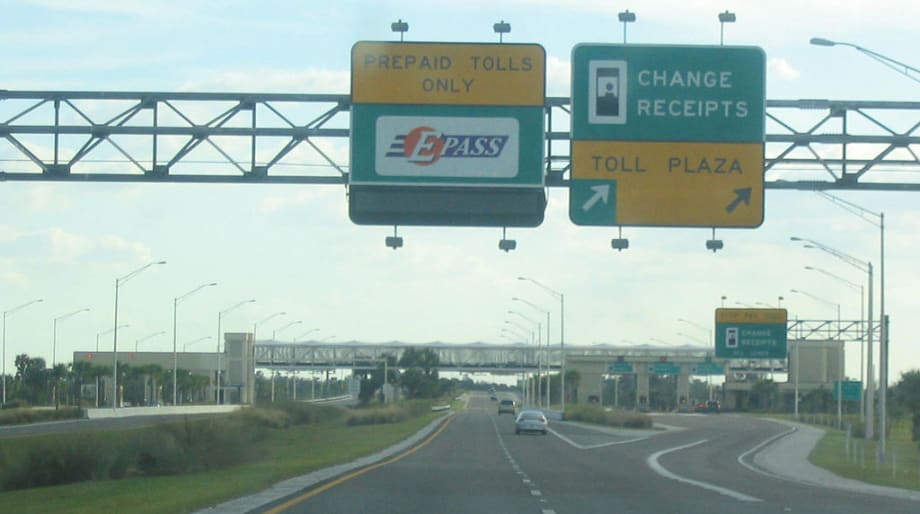
Photo via Wikimedia/SPUI
3 min to read
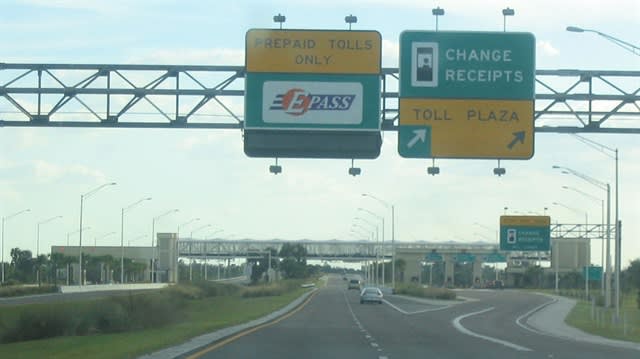
Photo via Wikimedia/SPUI
The Florida Attorney General’s office obtained a court enforceable settlement agreement with Avis Budget Car Rental System, LLC which owns the Avis, Budget, and Payless car rental companies.
The settlement agreement resolves an investigation by Attorney General Pam Bondi’s office regarding Avis, Budget, and Payless’ practices involving add-on fees for cashless tolls in Florida and other related add-on charges, according to a news report from the attorney general’s office.
Bondi’s office investigated allegations that Avis, Budget, and Payless did not sufficiently disclose to consumers that they would be charged a daily fee for the companies’ e-Toll service, in addition to the cost the customer incurs for a toll on a cashless toll road, according to the report.
The rental companies imposed this charge for each day of the rental, even on days the customer did not use a cashless toll road. Unaware of the e-Toll fee or how to avoid it, many consumers received bills from Avis, Budget, or Payless four to six weeks after concluding their rental, advising of the additional charges owed.
The settlement agreement requires Avis, Budget, and Payless to clearly and conspicuously disclose its $3.95 per day charge to consumers who rent an Avis, Budget, or Payless car, according to the report. The companies must clearly disclose on their websites, in their online reservation paths, in their confirmation emails, and at the rental counter the existence of the $3.95 per day charge as well as how consumers can avoid this charge.
The companies must also train employees to make sure they are not telling consumers that the only way to pay for tolls in Florida is through their e-Toll system, or telling consumers that all toll roads in Florida are cashless, says the report. Additionally, the companies are required to provide consumers with truthful information about damage waiver products. The rental car companies must clearly and conspicuously disclose the cost of any damage waiver product and cannot impose a damage waiver fee when the consumer has declined coverage.
The companies also may not charge consumers for a higher car class when the car class reserved by a consumer is unavailable, and the per day cost of any car class upgrade must be clearly and conspicuously disclosed, according to the report.
Since the Attorney General’s office commenced its investigation, Avis, Budget and Payless have provided more than $1 million in refunds to consumers. The settlement further requires the three companies to provide refunds to any consumers charged for e-Toll without sufficient disclosures, who have not already been reimbursed and who file a claim for a refund, says the report.
The consumers must have been wrongfully charged for e-Toll by Avis, Budget, or Payless during the period Jan. 1, 2010 through July 10, 2017. All claims must be filed by Jan. 7, 2018.
More Rental Operations

The Booking Is Confirmed, But Is Your Customer Ready to Drive?
For international renters, a confirmed reservation doesn’t always mean they’re eligible to drive. Earlier checks can help operators catch documentation and payment issues before the customer reaches the counter.
Read More →
ICRS 2027 Opens Call for Papers
The International Car Rental Show seeks session proposals on the business, operational, and technology issues facing car rental operators. Submissions are due Jan. 15.
Read More →
Turo to Launch Vehicle Delivery Service
Turo Delivered will let travelers search for vehicles that hosts can deliver directly to hotels, homes, airports, train stations, and other locations.
Read More →
Palm Beach Airport Code Change Creates Car Rental Distribution Gap
A test of rental searches under the old PBI and new DJT airport codes returned largely different sets of brands and vehicles, highlighting a potential distribution problem for rental operators.
Read More →
U-Save Continues Dominican Republic Expansion with Launch in Punta Cana
The new franchise location builds on U-Save’s existing Santo Domingo operation and will begin taking reservations for October 2026.
Read More →
When AI Books the Rental Car, Who Controls the Sale?
As AI moves from comparing rental rates to completing transactions, operators need to understand how travelers find, interpret, rank, and ultimately see their offers. (Part 2 of 2.)
Read More →
European Booked Car Rental Rates Fell 5%, Results Varied by Country
Ireland, Cyprus, and the United Kingdom saw steep declines, while booked rates rose in Poland and Hungary.
Read More →
Is It Time to Rethink Rental Categories?
As traditional economy and compact cars disappear from the market, longtime rental operator Mike DeLorenzo asks whether the industry’s familiar vehicle categories still make sense — and what operators need to rethink along with them.
Read More →
Who Owns the Rate? AI Is Creating a New Distribution Problem for Car Rental
Generative Engine Optimization asks whether AI can find a rental company, but operators also need to know whether the agent inspected enough of the market, compared equivalent offers, and presented a rate the traveler can actually book. (Part 1 of 2)
Read More →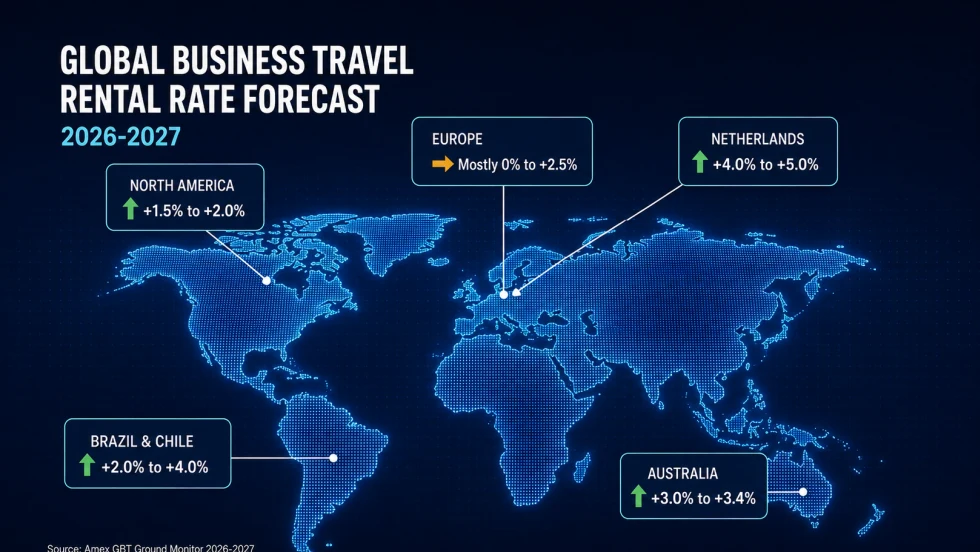
U.S. Business Travel Car Rental Rates Forecast to Rise Up to 2%
Improved fleet supply should limit pricing gains in 2026-27, while insurance, repair costs, and softer residual values continue to pressure rental operations, according to Amex GBT.
Read More →