




Data Demonstrates Increase in Mobility and Upsurge in COVID-19 Cases
Spireon data shows that 10-14 days after recent spikes in driving activity, there have been corresponding upticks in the number of reported cases of COVID-19.

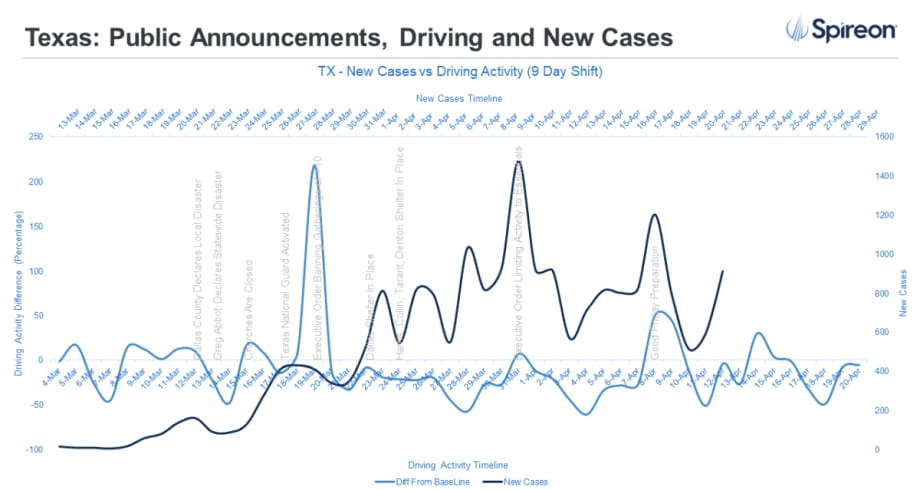
Spireon gathered and analyzed 8 billion data points nationwide, studying the driving activity of over three million vehicles starting March 1, to understand the relationship between spikes in driving and growth in the number of COVID-19 cases.
Source: Spireon
Spireon, a vehicle intelligence company, revealed an analysis of proprietary consumer driving data that signals a distinct relationship between increased driving that has occurred following stay-at-home orders and increase in COVID-19 cases both at the state and national level.
Specifically, Spireon data shows that 10-14 days after recent spikes in driving activity, there have been corresponding upticks in the number of reported cases of COVID-19.
This timeframe mirrors the incubation period of the virus, with the data serving as another indication that surges in public mobility can lead to an escalation of viral infections.
“As the coronavirus pandemic is sweeping across the nation, claiming the lives of thousands of Americans and causing disruption across industries, analysis of Spireon data shows clearly that having more vehicles on the road has negative implication for the spread of the virus,” stressed Spireon CEO Kevin Weiss. “The correlation between more driving activity and new cases of the virus further substantiates the importance of social distancing. We want these findings to serve as an important public service announcement as we all strategize ways to reopen the economy safely.”
Spireon gathered and analyzed 8 billion data points nationwide, studying the driving activity of more than 3 million vehicles starting March 1, to understand the relationship between spikes in driving and growth in the number of COVID-19 cases. Driving activity was measured against baseline reflecting average driving activity before COVID-19.
At the state level, an analysis of 1.1 million vehicles and 2.5 billion data points shows a significant increase in driving occurred immediately following the shelter-in-place orders in states such as California and Texas.
Subsequently, approximately 10-14 days after the surge in driving, the number of reported COVID-19 cases also rose. The 10-14 day delay in infections matches the duration of the COVID-19 incubation period, as outlined by the World Health Organization.
In Florida and Louisiana, spikes in driving during spring break yielded the same result. Nationwide, driving data reveal a significant uptick in driving over Easter weekend, from Friday, April 10 to Sunday, April 12, which is already beginning to reflect an increase of COVID-19 infections this week.
“As the largest aftermarket telematics supplier in the country, Spireon’s data analysis team has unique visibility to a large volume of commercial and consumer driving data,” said Prem Hareesh, senior vice president of software engineering at Spireon. “As COVID-19 has rapidly transformed American life, our team continues to analyze how state and federal order, major holidays and more are causing spikes in driving that leads to increase in viral infections.”
Spireon data also shows that reported COVID-19 cases notably dropped following a 40-50% downturn in driving activity at both the state and national level in late March. These findings support public health guidelines enforced during the pandemic and illustrate the strong causal relationship between mobility and increased infections.
Originally posted on Work Truck Online
More Rental Operations

What Does It Take to Succeed in B2B Rentals?
The fundamentals may be familiar to daily car rental operators, but project-based truck rentals put different demands on the fleet and the business.
Read More →
NPR Builds on International Partnerships to Grow Rental Bookings
With Ana Laborde supporting broker development, NPR Auto Group is tailoring distribution strategies, rate packages, and partnerships to grow international reservations across its three brands.
Read More →
Advantage, Sixt Place Among Top Five in Annual Satisfaction Study
While Enterprise and National retain the top spots in JD Power’s 2026 rankings, the latest customer satisfaction results suggest renters can find competitive service beyond the biggest car rental names.
Read More →
The $100,000 Insurance Trap in Exotic Car Rentals
Exotic rental agencies often rely on customers’ personal auto policies to protect six-figure vehicles. But policy language can dramatically change the coverage for vehicles over $100,000 MSRP.
Read More →
The Booking Is Confirmed, But Is Your Customer Ready to Drive?
For international renters, a confirmed reservation doesn’t always mean they’re eligible to drive. Earlier checks can help operators catch documentation and payment issues before the customer reaches the counter.
Read More →
ICRS 2027 Opens Call for Papers
The International Car Rental Show seeks session proposals on the business, operational, and technology issues facing car rental operators. Submissions are due Jan. 15.
Read More →
Turo to Launch Vehicle Delivery Service
Turo Delivered will let travelers search for vehicles that hosts can deliver directly to hotels, homes, airports, train stations, and other locations.
Read More →
Palm Beach Airport Code Change Creates Car Rental Distribution Gap
A test of rental searches under the old PBI and new DJT airport codes returned largely different sets of brands and vehicles, highlighting a potential distribution problem for rental operators.
Read More →
U-Save Continues Dominican Republic Expansion with Launch in Punta Cana
The new franchise location builds on U-Save’s existing Santo Domingo operation and will begin taking reservations for October 2026.
Read More →
When AI Books the Rental Car, Who Controls the Sale?
As AI moves from comparing rental rates to completing transactions, operators need to understand how travelers find, interpret, rank, and ultimately see their offers. (Part 2 of 2.)
Read More →