




Related: Enterprise Launches Annual Customer Loyalty Promotion
Enterprise, Penn. Department of Transportation Partnership Decreasing Commuting Costs by 50%
This past summer, PennDOT and Enterprise joined together and launched a new statewide public-transit program, the Pennsylvania Vanpool Incentive Program (PVIP), with flexibility and local service unmatched in the vanpool industry.
October 15, 2018

The PVIP, available to all Pennsylvania commuters, is expected to decrease commuting costs for riders by more than 50%. Currently, there are more than 50 PVIP vanpools, with seven-passenger vans (an average of six passengers each) accounting for approximately 90% of the vehicles.
Photo via Enterprise.
4 min to read
The partnership between the Pennsylvania Department of Transportation (PennDOT) and Enterprise Rideshare — part of the global Enterprise Rent-A-Car network — is already paying dividends, less than three months since Governor Tom Wolf announced it in July.
This past summer, PennDOT and Enterprise joined together and launched a new statewide public-transit program, the Pennsylvania Vanpool Incentive Program (PVIP), with flexibility and local service unmatched in the vanpool industry.
The PVIP is designed to expand the availability of regional public transportation by subsidizing a portion of the cost of new Enterprise Rideshare-managed vanpools for local commuters who agree to share their ride to and from work in a vehicle large enough to accommodate seven to 15 people.
Like many state transportation departments — including those in Florida, Michigan, Nebraska, and Vermont — PennDOT is expanding mobility options by launching an innovative statewide vanpooling program. The PVIP, available to all Pennsylvania commuters, is expected to decrease commuting costs for riders by more than 50%. Currently, there are more than 50 PVIP vanpools, with seven-passenger vans (an average of six passengers each) accounting for approximately 90% of the vehicles.
Eventually, PVIP is expected to create 100 new vanpools statewide.
Through Enterprise Rideshare, PVIP participants will be able to choose a qualifying vanpool vehicle from an industry-leading selection of makes and models, including crossovers, SUVs, minivans and large passenger vans. Enterprise Rideshare will provide 24-hour roadside assistance, liability insurance, and scheduled maintenance. Vanpoolers also can choose to upgrade their vehicles with optional high-end features, such as satellite radio, in-vehicle Wi-Fi service, and power ports for individual seats.
Strategic, Cost-Effective, and Sustainable
Genuine ridesharing programs represent one of the most strategic, cost-effective, and sustainable transportation options available today for consumers and businesses alike.
Every business day, Enterprise Rideshare takes thousands of cars off U.S. roads, eliminating more than 1.4 billion commuter miles driven each year and eradicating the need for more than 64,500 parking spaces. More than 1.4 billion pounds of carbon emissions are reduced by Enterprise Rideshare customers annually.
Governing magazine has reported that the number of commuters who travel 90 minutes or more to get to work increased sharply between 2010 and 2015. However, for an average commute of 100 miles per day, ridesharing can save individuals up to $10,000 per year by reducing the cost of tolls, gas, vehicle maintenance, and depreciation.
And vanpooling further reduces annual transportation expenses by using volunteer drivers — which is much more cost-efficient than hiring paid drivers (for example, through ride-hailing companies).
Additionally, according to U.S. Department of Transportation Bureau of Transportation Statistics data, commuter vanpools are one of the safest modes of public transportation when compared to motor bus, light rail, heavy rail, commuter rail, and demand response services. Other benefits of Enterprise Rideshare vanpooling include:
Quality Vehicles: Enterprise Rideshare vanpools feature new models of crossovers, SUVs, minivans, and large passenger vans. Many vanpools also are equipped with high-end features such as in-vehicle Wi-Fi, GPS, satellite radio, and HD traffic capabilities.
Convenient Commuting Routes: Vanpool participants determine driving responsibilities and routing among themselves — unlike ride-hailing apps that require you to request, wait, and pay for each use. Enterprise also offers a free ride-matching program to help find coworkers with similar hours and routes.
Guaranteed Ride Home: Thanks to the extensive Enterprise neighborhood network, vanpoolers have access to Enterprise’s Guaranteed Ride Home program, which ensures they can leave work at unscheduled times worry-free.
Industry Leadership
Enterprise has a long history of leadership in the transportation and mobility sectors. For example, in 2017, Enterprise collaborated with the Wharton School of Business at the University of Pennsylvania to produce a special 2017 report titled “Driving Forward: The Future of Urban Mobility.”
That same year, Enterprise moderated a panel discussion about “The Changing World of Transit Benefits” at the annual Association for Commuter Transportation’s Public Policy Summit in Washington, D.C. The session explored commuter benefit programs and common-sense efforts to further expand transit options at the grassroots level.
Furthermore, earlier this year, the KCnext news hub highlighted the benefits of vanpooling services like Enterprise Rideshare, since they not only complement Kansas City’s efforts to provide commuter resources for both individuals and employers, but also support plans to double the number of jobs accessible by transit.
More Rental Operations
Advantage, Sixt Place Among Top Five in Annual Satisfaction Study
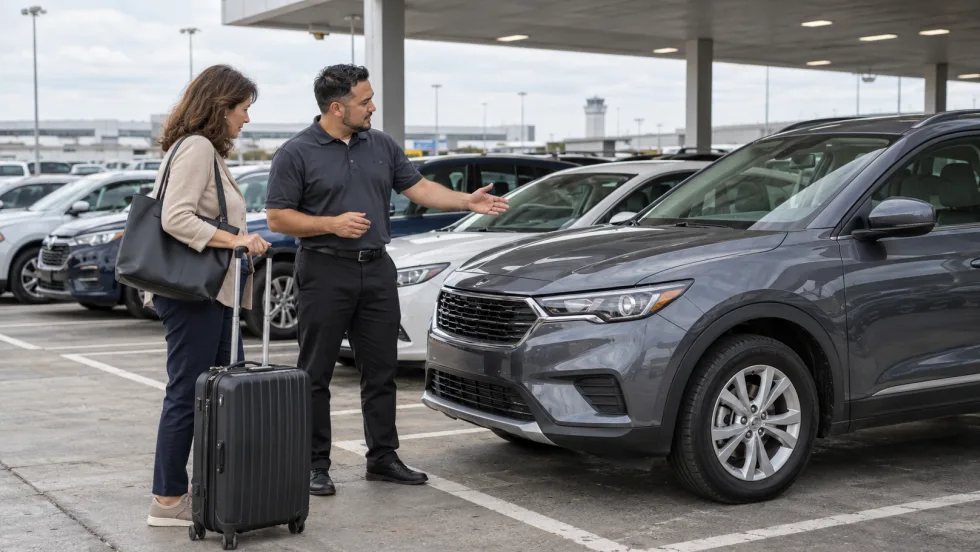
While Enterprise and National retain the top spots in JD Power’s 2026 rankings, the latest customer satisfaction results suggest renters can find competitive service beyond the biggest car rental names.
Read More →
The $100,000 Insurance Trap in Exotic Car Rentals
Exotic rental agencies often rely on customers’ personal auto policies to protect six-figure vehicles. But policy language can dramatically change the coverage for vehicles over $100,000 MSRP.
Read More →
The Booking Is Confirmed, But Is Your Customer Ready to Drive?
For international renters, a confirmed reservation doesn’t always mean they’re eligible to drive. Earlier checks can help operators catch documentation and payment issues before the customer reaches the counter.
Read More →
ICRS 2027 Opens Call for Papers
The International Car Rental Show seeks session proposals on the business, operational, and technology issues facing car rental operators. Submissions are due Jan. 15.
Read More →
Turo to Launch Vehicle Delivery Service
Turo Delivered will let travelers search for vehicles that hosts can deliver directly to hotels, homes, airports, train stations, and other locations.
Read More →
Palm Beach Airport Code Change Creates Car Rental Distribution Gap
A test of rental searches under the old PBI and new DJT airport codes returned largely different sets of brands and vehicles, highlighting a potential distribution problem for rental operators.
Read More →
U-Save Continues Dominican Republic Expansion with Launch in Punta Cana
The new franchise location builds on U-Save’s existing Santo Domingo operation and will begin taking reservations for October 2026.
Read More →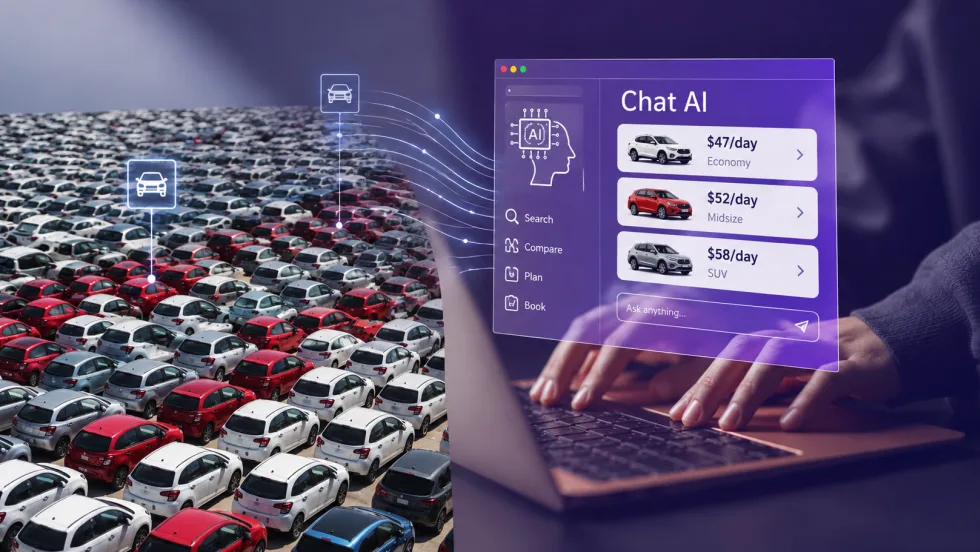
When AI Books the Rental Car, Who Controls the Sale?
As AI moves from comparing rental rates to completing transactions, operators need to understand how travelers find, interpret, rank, and ultimately see their offers. (Part 2 of 2.)
Read More →
European Booked Car Rental Rates Fell 5%, Results Varied by Country
Ireland, Cyprus, and the United Kingdom saw steep declines, while booked rates rose in Poland and Hungary.
Read More →
Is It Time to Rethink Rental Categories?
As traditional economy and compact cars disappear from the market, longtime rental operator Mike DeLorenzo asks whether the industry’s familiar vehicle categories still make sense — and what operators need to rethink along with them.
Read More →