




Expedia Measures Travel Behavior of Beachgoers in Five Continents
Expedia launched a summer sale for travelers after finding out the results of the study, in which some respondents reported that booking their hotel and car rental together made it feel like a ‘free’ rental.
Expedia.com released the results of the 2012 Flip Flop Report measuring beachgoer travel strategies in North America, South America, Europe, Asia and Australia. The report found that the average beach holiday is about one week in length, and in combination with another Expedia study, 40% of Americans spend their vacation time at the beach.
Because of the results, Expedia announced a worldwide summer sale, which began on May 15 and ends Aug. 31. Customers that stay one to four nights can save up to 35% off at more than 12,000 hotels and resorts worldwide.
The reports also found that “some travelers found booking their hotel and car rental together yields a savings so great they offset the cost of the car, making it feel like a ‘free’ car rental.”
As well, 41% of Americans at some point in their life have traveled across the United States. To help more people experience the open road, Expedia is offering up to $100 gas cards for travelers spending up to $450 at participating Summer Sale hotels.
Beach Travel Trends
More than half (52%) of respondents plan to holiday at the beach in the next 12 months compared to 45% who said they took a beach vacation in the year prior.
While the average stay for a beach vacation is 7.7 days, this is less true of Koreans, Japanese and Singaporeans, who seem more likely to prefer beach weekends to extended stays.
Argentineans are the most sun-soaked, spending an average of 11 days at a time, while Koreans spent a mere 3.2 days per trip.
Americans are creatures of habit: one of the least important criteria for Americans when selecting a beach location is the desire to find a new location.
For Indians, new locations were among the highest priority.
Relaxing and sunbathing were among the top two activities for beachgoers across all five continents.
New Zealanders (36%) and Australians (35%) were most likely to fish at the beach.
Canadians were likeliest to strap on a snorkel (34%).
82% of Germans spend beach time swimming. Only 28% of the Japanese do the same.
The online study was conducted by Harris Interactive and polled roughly 9,000 adults in 21 countries.
Full details on the 2012 Flip Flop Report can be found here: www.expedia.com/flipflop.
More Rental Operations
Palm Beach Airport Code Change Creates Car Rental Distribution Gap
A test of rental searches under the old PBI and new DJT airport codes returned largely different sets of brands and vehicles, highlighting a potential distribution problem for rental operators.
Read More →
U-Save Continues Dominican Republic Expansion with Launch in Punta Cana
The new franchise location builds on U-Save’s existing Santo Domingo operation and will begin taking reservations for October 2026.
Read More →
When AI Books the Rental Car, Who Controls the Sale?
As AI moves from comparing rental rates to completing transactions, operators need to understand how travelers find, interpret, rank, and ultimately see their offers. (Part 2 of 2.)
Read More →
European Booked Car Rental Rates Fell 5%, Results Varied by Country
Ireland, Cyprus, and the United Kingdom saw steep declines, while booked rates rose in Poland and Hungary.
Read More →
Is It Time to Rethink Rental Categories?
As traditional economy and compact cars disappear from the market, longtime rental operator Mike DeLorenzo asks whether the industry’s familiar vehicle categories still make sense — and what operators need to rethink along with them.
Read More →
Who Owns the Rate? AI Is Creating a New Distribution Problem for Car Rental
Generative Engine Optimization asks whether AI can find a rental company, but operators also need to know whether the agent inspected enough of the market, compared equivalent offers, and presented a rate the traveler can actually book. (Part 1 of 2)
Read More →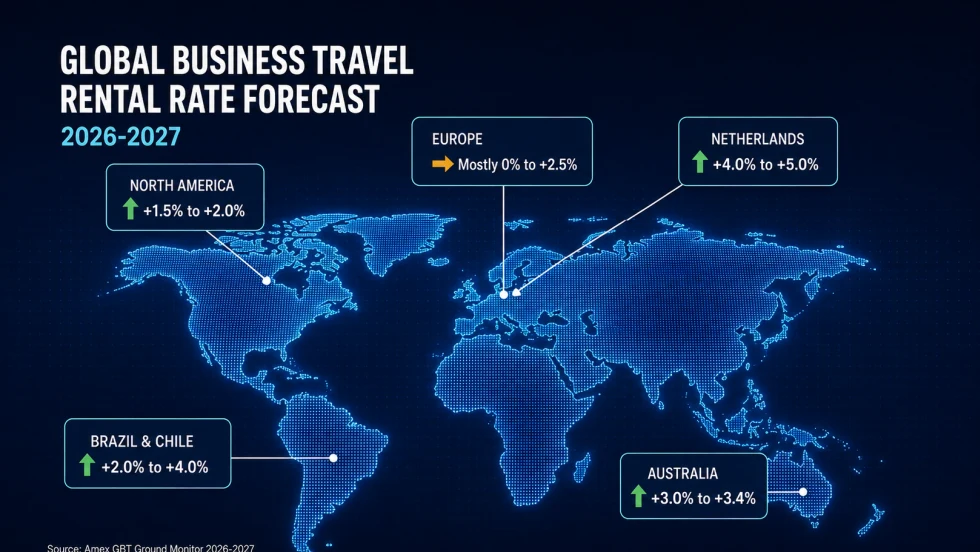
U.S. Business Travel Car Rental Rates Forecast to Rise Up to 2%
Improved fleet supply should limit pricing gains in 2026-27, while insurance, repair costs, and softer residual values continue to pressure rental operations, according to Amex GBT.
Read More →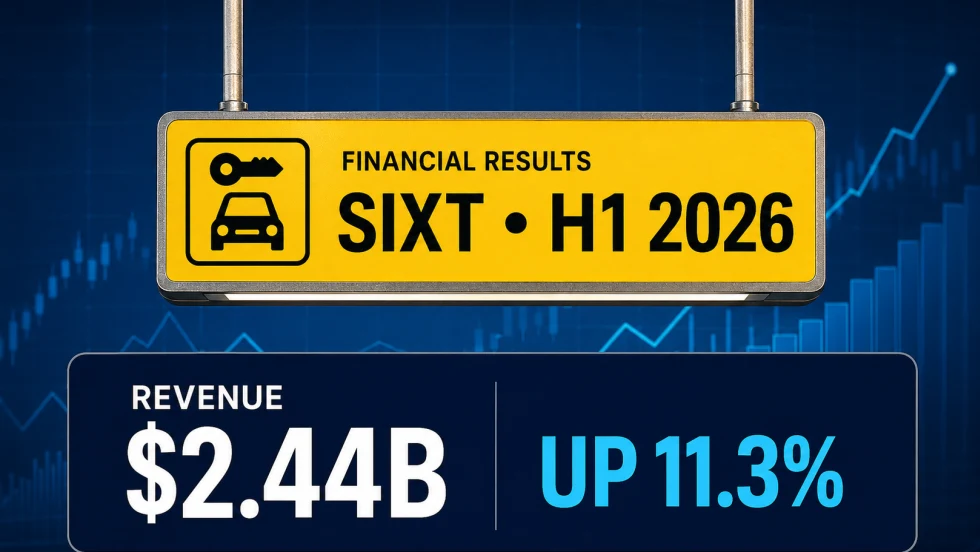
Sixt Revenue Tops $2.4 Billion in First Half of 2026
Sixt’s first-half revenue surpassed $2.4 billion for the first time as demand outpaced fleet growth, lifting utilization and earnings despite weaker consumer sentiment in North America.
Read More →
In Memoriam: Bobby Klyce, Avis Licensee Legend
The longtime Birmingham Avis operator and 2018 Auto Rental News Impact Award recipient was remembered as an advocate for independent licensees and the broader car rental industry.
Read More →
How to Build Custom Fleet Tools With AI and Vibe Coding [Webinar]
A new Automotive Fleet webinar explores how fleet managers are using AI and vibe coding to automate routine work and create simple operational tools without traditional programming skills.
Read More →