



Fort Lauderdale-Hollywood Named North America's 'Fastest Growing Airport'
The fastest growing North American hub is Fort Lauderdale-Hollywood, Fla., (FLL), which grew 11%, or two million seats, over the 12-month period.

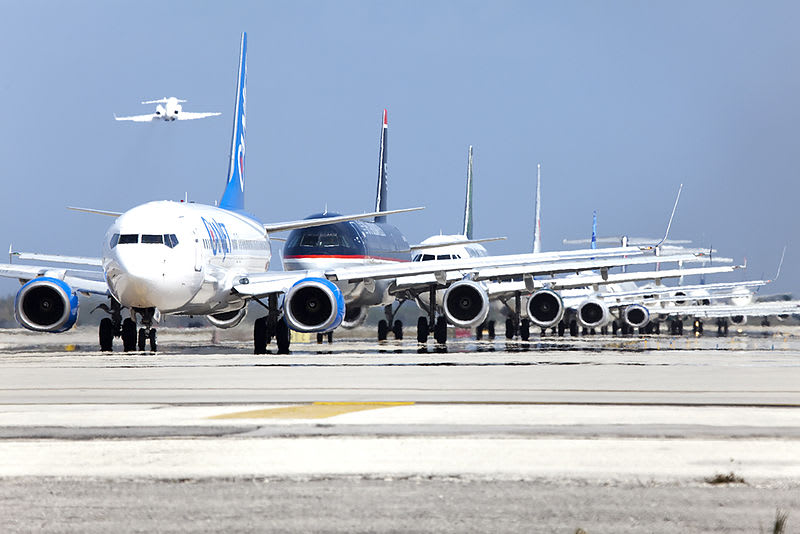
Collectively, JetBlue, Southwest, and Spirit Airlines combined operate two-thirds of total capacity at Fort Lauderdale Airport, each with roughly similar market share.
Photo via Maarten Visser/Wikimedia.
OAG, a leader in flight information, released its list of North America’s Fastest Growing Airports 2018. The new report ranks the region’s fastest growing hub airports (over 20 million departing seats) and midsized airports (three – 20 million departing seats) based on percentage growth in departing seat capacity between May 2017 and April 2018.
“Low-cost carriers are driving exceptional demand and are the biggest contributors to airport growth in the North American market”
The fastest growing North American hub is Fort Lauderdale-Hollywood, Fla., (FLL), which grew 11%, or two million seats, over the 12-month period. The airport’s growth was driven primarily by low-cost carriers (LCCs). Collectively, JetBlue, Southwest, and Spirit Airlines combined operate two-thirds of total capacity at FLL, each with roughly similar market share. Southwest was the fastest growing airline of the group, adding 32% more capacity than the previous year. The fastest growing route from Fort Lauderdale is to Hartsfield-Jackson Atlanta International Airport (ATL), which operates 50 flights per day.
New Jersey's Newark Airport (EWR) finished as the second fastest-growing hub airport in the region, with 8% growth and 1.4 million new departing seats. Newark is United Airlines’ third largest hub after Chicago’s O’Hare International Airport (ORD) and Houston’s George Bush Intercontinental Airport (IAH). United also controlled 65% of capacity at the airport over the 12-month period evaluated by OAG.
Orlando International Airport (MCO) increased its seat capacity by 7%, finishing as the third fastest-growing hub airport. MCO experienced growth from several major airline carriers in 2017-2018, with Southwest, Delta Airlines, and Spirit Airlines combining to add 115,000 seats. Boston (BOS) finished fourth and San Francisco (SFO) fifth, both with a 6% growth in seat capacity.
“Low-cost carriers are driving exceptional demand and are the biggest contributors to airport growth in the North American market,” John Grant, senior analyst of OAG, said in a statement. “These carriers have revolutionized the way consumer and business travelers get around and have opened up additional access to key connecting points such as Fort Lauderdale and Cincinnati/Northern Kentucky International (CVG). LCC capacity was up 62% this year at CVG alone – a great example of how small and regional airports are effectively utilizing LCCs to appeal to a wider customer base.”
After CVG, which grew 18% this year, the second fastest-growing mid-sized airport is Austin-Bergstrom International Airport (AUS) with 16% growth.
“Although most flights out of Austin are domestic (97%), international service from the airport is growing quickly at 22%, likely due to the city’s growth as a technology hub,” added Grant. California's San Jose and Burbank (15% growth each) and Cleveland (11% growth) round out the top-five fastest growing mid-sized airports.
Related: Car Rental Revenue Up at St. Louis Airport after Uber, Lyft Added
More Rental Operations

NPR Builds on International Partnerships to Grow Rental Bookings
With Ana Laborde supporting broker development, NPR Auto Group is tailoring distribution strategies, rate packages, and partnerships to grow international reservations across its three brands.
Read More →
Advantage, Sixt Place Among Top Five in Annual Satisfaction Study
While Enterprise and National retain the top spots in JD Power’s 2026 rankings, the latest customer satisfaction results suggest renters can find competitive service beyond the biggest car rental names.
Read More →
The $100,000 Insurance Trap in Exotic Car Rentals
Exotic rental agencies often rely on customers’ personal auto policies to protect six-figure vehicles. But policy language can dramatically change the coverage for vehicles over $100,000 MSRP.
Read More →
The Booking Is Confirmed, But Is Your Customer Ready to Drive?
For international renters, a confirmed reservation doesn’t always mean they’re eligible to drive. Earlier checks can help operators catch documentation and payment issues before the customer reaches the counter.
Read More →
ICRS 2027 Opens Call for Papers
The International Car Rental Show seeks session proposals on the business, operational, and technology issues facing car rental operators. Submissions are due Jan. 15.
Read More →
Turo to Launch Vehicle Delivery Service
Turo Delivered will let travelers search for vehicles that hosts can deliver directly to hotels, homes, airports, train stations, and other locations.
Read More →
Palm Beach Airport Code Change Creates Car Rental Distribution Gap
A test of rental searches under the old PBI and new DJT airport codes returned largely different sets of brands and vehicles, highlighting a potential distribution problem for rental operators.
Read More →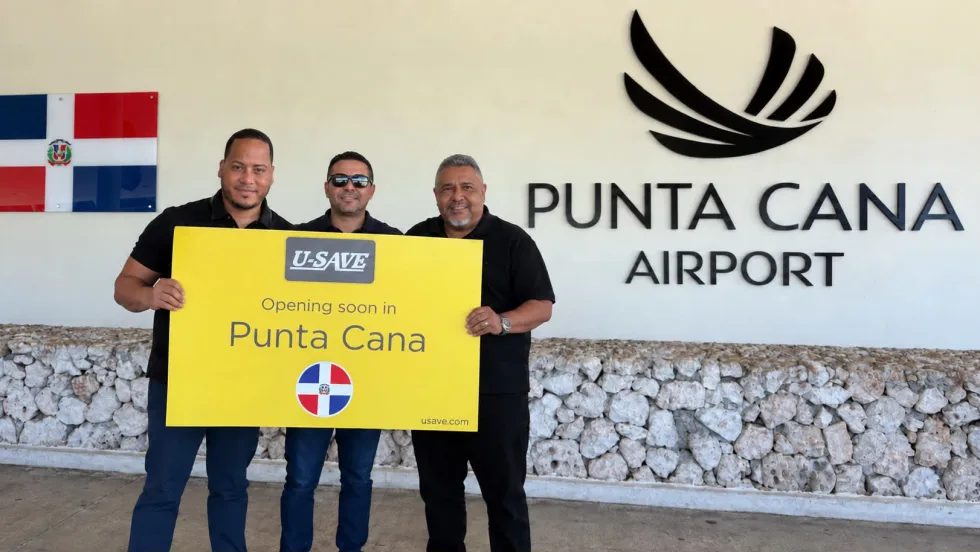
U-Save Continues Dominican Republic Expansion with Launch in Punta Cana
The new franchise location builds on U-Save’s existing Santo Domingo operation and will begin taking reservations for October 2026.
Read More →
When AI Books the Rental Car, Who Controls the Sale?
As AI moves from comparing rental rates to completing transactions, operators need to understand how travelers find, interpret, rank, and ultimately see their offers. (Part 2 of 2.)
Read More →
European Booked Car Rental Rates Fell 5%, Results Varied by Country
Ireland, Cyprus, and the United Kingdom saw steep declines, while booked rates rose in Poland and Hungary.
Read More →