




Gap Shrinking Between New and Used Prices
After factoring in incentives and lower finance APRs on new cars, purchasing these new vehicles ends up only marginally more than purchasing their one-year-old counterparts, according to Kelley Blue Book.
The gap between new- and used-vehicle pricing in many segments has narrowed significantly, with new vehicles, on average, selling for only 11.5% more than a comparable 1-year-old used car, reports Alec Gutierrez, senior market analyst of automotive insights, Kelley Blue Book.
Used subcompact and compact cars only offer consumers an average savings between 5 to 7%, while used hybrid cars and mid-size crossovers are within 3 to 4% of an equivalent new vehicle. After factoring in incentives and lower finance APRs on new cars, purchasing a new vehicle is in many cases only marginally more than purchasing used.
While traditionally shoppers would save thousands of dollars by purchasing a slightly used vehicle rather than new, this is no longer the case. As used-car values remain near their all-time peak, Kelley Blue Book sees new-vehicle sales cannibalizing used vehicle sales.
During the past several months, Kelley Blue Book has observed a shift in shopper activity from used to new vehicles based on the 14 million visitors to KBB.com each month, as well as new- and used-vehicle sales. In terms of Web traffic on the company’s car-shopping website, there has been a 5 percentage point shift in new-car shopper activity since January. Similarly, new-vehicle sales have been increasing consistently year-over-year (increasing 9% in July alone), while used-vehicle registrations declined by 4 to 5% year-over-year from March through May.
The choice to purchase a new or used car can certainly vary depending on the model being considered. For instance, a consumer considering a Ford Focus can save as much as $3,000 by purchasing a used model-year 2011; however, the strength of the 2012 redesign may prompt them to spend a little more on the latest and greatest model. A consumer in the market for a Toyota FJ Cruiser should almost always opt to buy new. A brand new 2012 FJ Cruiser currently has a Fair Purchase Price of $28,500, a mere $300 more than a used 2011 FJ Cruiser with 20,000 miles.
To assist consumers in identifying those vehicles that may make more sense to buy new, Kelley Blue Book has compiled a list of 10 new vehicles that are only marginally more expensive than their 1-year-old counterpart.
10 New Vehicles to Buy New Rather Than Used Make Model Trim New MSRP Kelley Blue Book Fair Purchase Price (NEW)* Kelley Blue Book Sugg. Retail Value (USED)
New - Used
$/%
Chevrolet Camaro LT Coupe 2D $26,180 $25,261 $25,135 $126/0.5% Toyota 4Runner SR5 Sport Utility 4D $33,640 $32,294 $32,040 $254/0.8% Toyota FJ Cruiser Sport Utility 2D $28,515 $28,444 $28,200 $244/0.9% Subaru Impreza 2.0i Sedan 4D $18,245 $17,450 $17,300 $150/0.9% Jeep Wrangler Sport SUV 2D $22,970 $22,281 $22,000 $281/1.3% Honda Fit Sport Hatchback 4D $17,850 $17,234 $17,000 $234/1.4% Volkswagen Golf TDI Hatchback 4D $25,705 $24,168 $23,730 $438/1.8% Kia Rio LX Sedan 4D $14,150 $13,433 $13,150 $283/2.1% Mazda MAZDA2 SPort Hatchback 4D $15,325 $14,406 $14,100 $306/2.2% Chevrolet Equinox LT Sport Utility 4D $25,875 $24,845 $24,305 $540/2.2%
*Fair Purchase Price reflects value of a MY2012 new vehicle while Sugg. Retail Value reflects a MY2011 used vehicle.
More Rental Operations

Palm Beach Airport Code Change Creates Car Rental Distribution Gap
A test of rental searches under the old PBI and new DJT airport codes returned largely different sets of brands and vehicles, highlighting a potential distribution problem for rental operators.
Read More →
U-Save Continues Dominican Republic Expansion with Launch in Punta Cana
The new franchise location builds on U-Save’s existing Santo Domingo operation and will begin taking reservations for October 2026.
Read More →
When AI Books the Rental Car, Who Controls the Sale?
As AI moves from comparing rental rates to completing transactions, operators need to understand how travelers find, interpret, rank, and ultimately see their offers. (Part 2 of 2.)
Read More →
European Booked Car Rental Rates Fell 5%, Results Varied by Country
Ireland, Cyprus, and the United Kingdom saw steep declines, while booked rates rose in Poland and Hungary.
Read More →
Is It Time to Rethink Rental Categories?
As traditional economy and compact cars disappear from the market, longtime rental operator Mike DeLorenzo asks whether the industry’s familiar vehicle categories still make sense — and what operators need to rethink along with them.
Read More →
Who Owns the Rate? AI Is Creating a New Distribution Problem for Car Rental
Generative Engine Optimization asks whether AI can find a rental company, but operators also need to know whether the agent inspected enough of the market, compared equivalent offers, and presented a rate the traveler can actually book. (Part 1 of 2)
Read More →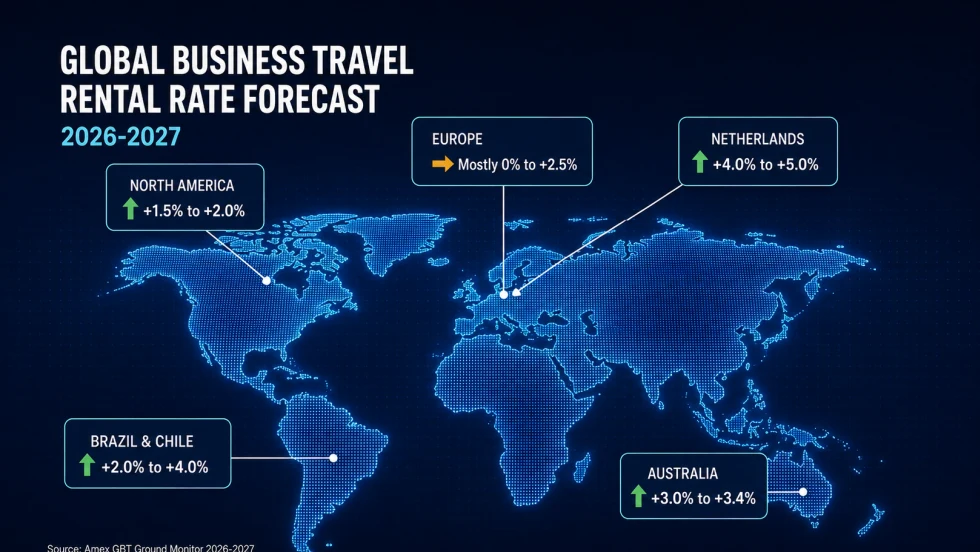
U.S. Business Travel Car Rental Rates Forecast to Rise Up to 2%
Improved fleet supply should limit pricing gains in 2026-27, while insurance, repair costs, and softer residual values continue to pressure rental operations, according to Amex GBT.
Read More →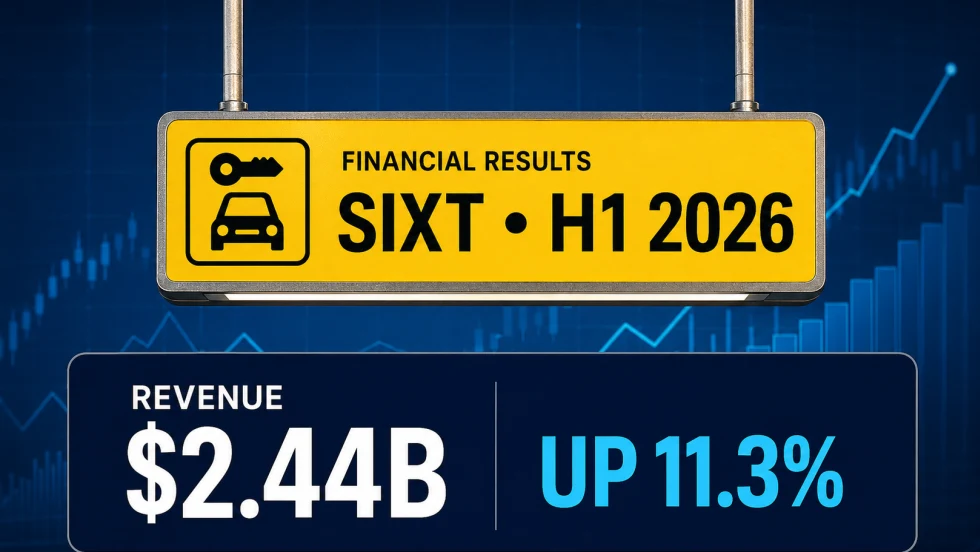
Sixt Revenue Tops $2.4 Billion in First Half of 2026
Sixt’s first-half revenue surpassed $2.4 billion for the first time as demand outpaced fleet growth, lifting utilization and earnings despite weaker consumer sentiment in North America.
Read More →
In Memoriam: Bobby Klyce, Avis Licensee Legend
The longtime Birmingham Avis operator and 2018 Auto Rental News Impact Award recipient was remembered as an advocate for independent licensees and the broader car rental industry.
Read More →
How to Build Custom Fleet Tools With AI and Vibe Coding [Webinar]
A new Automotive Fleet webinar explores how fleet managers are using AI and vibe coding to automate routine work and create simple operational tools without traditional programming skills.
Read More →