



Tax Report Projects U.S. Travel Costs to Be Higher After Recession
Compared to last year's report, the findings show that even as new travel taxes are introduced and discriminatory travel tax rates continue to…
The NBTA Foundation, the education and research foundation of the National Business Travel Association (NBTA), and Concur, a provider of on-demand employee spend management services, released the updated findings of a comprehensive study of car rental, hotel and meal taxes in the top 50 U.S. travel destination cities.
Compared to last year's report, the findings show that even as new travel taxes are introduced and discriminatory travel tax rates continue to rise across the country, there has been a slight decrease in actual dollars travelers pay in taxes for lodging, rental cars and meals. The decline is attributable to decreases in the average rates for those travel services across the country. As the price of a car rental, hotel, or meal drops, the percentage-based taxes on those services drop.
For example, the report shows a year-over-year decline of 53 cents in the average combined taxes a traveler pays on lodging, rental cars and meals in central city locations (as distinct from airport locations).
Fay Beauchine, NBTA Foundation chair, said, “While the report shows that the travel taxes paid have slightly declined, we know that the fall is due to the weak economy and not tax cuts. In fact, tax rates increased and more were implemented across the United States to make up for government revenue shortfalls during the recession. So when the economy recovers, travelers will take a double hit of rising prices and exploding taxes due to tax rate increases enacted during this downturn.”
The study provides several different views of travel taxes to help readers make informed choices. The top 50 markets are ranked by overall travel tax burden, including general sales tax and discriminatory travel taxes, and by discriminatory travel tax burden, excluding general sales taxes to count only taxes that target car rentals, hotel stays and meals. Separate data are offered for central city and airport locations, as the tax regimes are often distinct.
The research shows the U.S. cities where travelers incur the lowest total tax burden in central city locations, factoring in general sales taxes and discriminatory travel taxes for lodging, car rentals, and meals, are:
Portland, Ore: $21.49/day
Detroit: $22.37/day
Honolulu: $22.55/day
Fort Myers, Fla.: $22.91
Fort Lauderdale, Fla.: $23.69
The cities that impose the highest total taxes on travelers are:
Chicago: $40/day
Seattle: $37.95/day
Dallas: $37.26/day
San Antonio: $37.20/day
Houston: $36.83/day
Discriminatory travel taxes are those imposed on specifically on travel services above and beyond general sales taxes. The U.S. cities with the lowest discriminatory travel tax rates for lodging, car rentals, and meals in central city locations are:
Burbank, Calif.: 76 cents/day
Oakland, Calif.: $1.24/day
Orange County, Calif. $1.72/day
San Jose, Calif.: $2.14/day
Ontario, Calif.: $2.92/day
The cities that impose the highest discriminatory travel taxes on travelers for lodging, car rentals, and meals are:
Portland, Ore.: $21.49/day
Minneapolis: $17.49/day
Boston: $17.12/day
San Antonio: $16.48/day
Dallas: $16.22/day
More Rental Operations

Turo to Launch Vehicle Delivery Service
Turo Delivered will let travelers search for vehicles that hosts can deliver directly to hotels, homes, airports, train stations, and other locations.
Read More →
Palm Beach Airport Code Change Creates Car Rental Distribution Gap
A test of rental searches under the old PBI and new DJT airport codes returned largely different sets of brands and vehicles, highlighting a potential distribution problem for rental operators.
Read More →
U-Save Continues Dominican Republic Expansion with Launch in Punta Cana
The new franchise location builds on U-Save’s existing Santo Domingo operation and will begin taking reservations for October 2026.
Read More →
When AI Books the Rental Car, Who Controls the Sale?
As AI moves from comparing rental rates to completing transactions, operators need to understand how travelers find, interpret, rank, and ultimately see their offers. (Part 2 of 2.)
Read More →
European Booked Car Rental Rates Fell 5%, Results Varied by Country
Ireland, Cyprus, and the United Kingdom saw steep declines, while booked rates rose in Poland and Hungary.
Read More →
Is It Time to Rethink Rental Categories?
As traditional economy and compact cars disappear from the market, longtime rental operator Mike DeLorenzo asks whether the industry’s familiar vehicle categories still make sense — and what operators need to rethink along with them.
Read More →
Who Owns the Rate? AI Is Creating a New Distribution Problem for Car Rental
Generative Engine Optimization asks whether AI can find a rental company, but operators also need to know whether the agent inspected enough of the market, compared equivalent offers, and presented a rate the traveler can actually book. (Part 1 of 2)
Read More →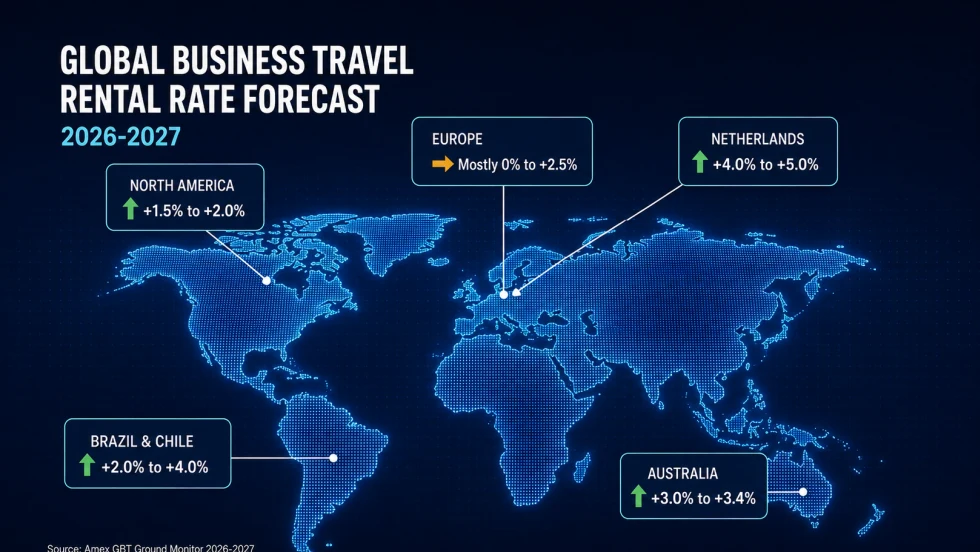
U.S. Business Travel Car Rental Rates Forecast to Rise Up to 2%
Improved fleet supply should limit pricing gains in 2026-27, while insurance, repair costs, and softer residual values continue to pressure rental operations, according to Amex GBT.
Read More →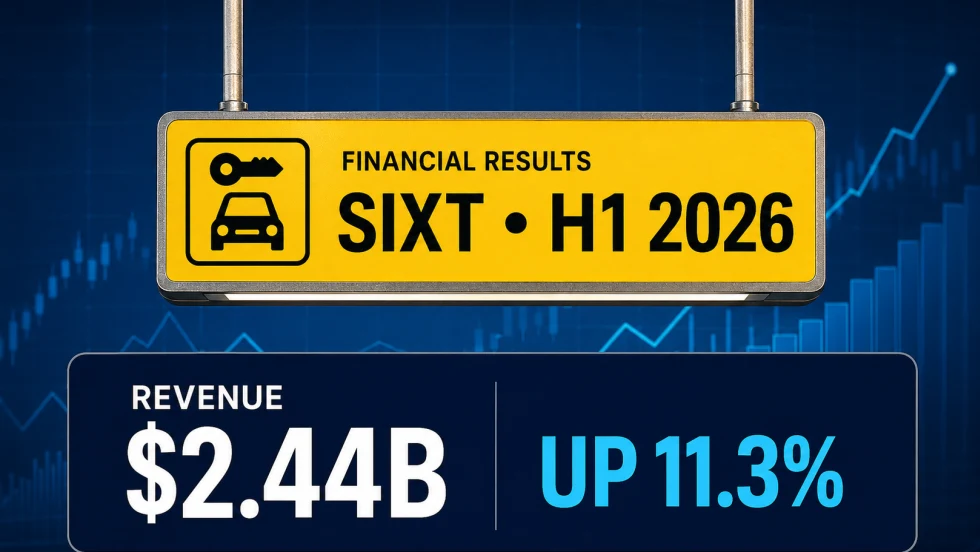
Sixt Revenue Tops $2.4 Billion in First Half of 2026
Sixt’s first-half revenue surpassed $2.4 billion for the first time as demand outpaced fleet growth, lifting utilization and earnings despite weaker consumer sentiment in North America.
Read More →
In Memoriam: Bobby Klyce, Avis Licensee Legend
The longtime Birmingham Avis operator and 2018 Auto Rental News Impact Award recipient was remembered as an advocate for independent licensees and the broader car rental industry.
Read More →