




Related: Rental Cars Remain Idle in Arizona During Coronavirus Pandemic
What Markets Show a Car Rental Rate Gain During the Pandemic?
Rate Gain analyzed rate data from over 28 U.S. markets pre-coronavirus pandemic (Jan 1 to Feb. 28) and after onset of the pandemic (March 1 to April 30). Remarkably, some markets have shown an overall gain, in the early days of the pandemic at least.
April 1, 2020
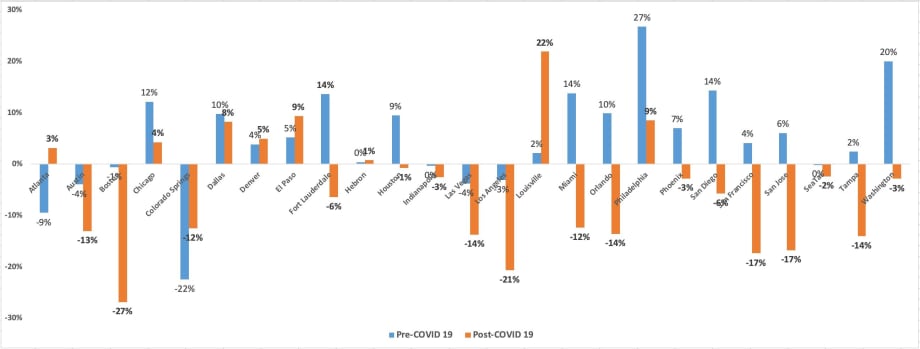
This chart shows the percentage average loss or gain year over year in 28 U.S. markets pre-coronavirus pandemic (Jan 1 to Feb. 28) and after onset of the pandemic (March 1 to April 30).
Photo via RateGain.
3 min to read
RateGain, a provider of revenue management for the travel and hospitality industries, including all major car rental companies, has released “State of Car Rental Pricing During Covid-19 and Next Steps,” a report designed to give car rental operators an understanding of the present crisis from a pricing perspective as well as help them with coping strategies.
The study analyzed 400 million car rental data points from all major car rental companies from over 700 online sites in over 28 markets. The data was taken from two periods: pre-coronavirus pandemic (Jan 1 to Feb. 28) and after onset of the pandemic (March 1 to April 30).
“Our intent is to help the industry get a frequent update on the condition of the market” said Apurva Chamaria, chief revenue officer for RateGain. “We’ll continue to bring more insights and publish these reports to track the recovery of the market so as to help car rentals everywhere be ready for a better tomorrow. Our teams are planning to share insights on an upcoming webinar series as well.”
Findings
Not surprisingly, the report found that in most markets rates are down, some substantially more than others. Some, surprisingly, are up — though the report notes that this will likely change in the next 15 to 20 days.
The Atlanta market shows a price increase of 3% for Atlanta for the March 1 to April 30 period. However, the study notes that prices will decrease as the effects of Atlanta’s stay-at-home order take effect.
Dallas has seen an upswing of demand in the same period, the report states. This could be due to the city’s relatively late restrictions imposed on personal and business travel.
In Austin, the cancellation of the SXSW festival did cause rates to crash. However, Austin is experiencing very few cases of coronavirus, and prices had been improving for the month of April. Dallas may be benefiting from Austin’s lower virus case load, as commuters travel between the two cities, the report surmises.
El Paso, Texas has seen 9% gain in the pandemic period studied. At the time of the repot, a lockdown had not been ordered.
Louisville has seen a surprisingly 22% gain for the pandemic period. The city’s executive order to shelter in place came relatively late, March 23. This gain should erode as well, as the Kentucky Derby, normally scheduled for early May, is rescheduled for September.
From a segment standpoint, full-size passenger van demand crashed in January and February. The report surmises that at this time, China was in the midst of the worst part of the pandemic, and those travel restrictions prohibited large groups from visiting the U.S. during the Chinese New Year break.
Demand for compact and economy cars remained relatively stable. The report notes that with the drop off in family vacations, preference may have shifted to smaller cars to get around in markets where public movement is not completely restricted.
“As most people are not taking vacations, this might be the right time for car rental managers to increase prices on the CCAR and ECAR categories to compensate for losses,” the report states.
Coping Strategies
The report concludes with potential actions car rental operators can take to adjust to the extraordinary circumstances. These “coping strategies” include:
Pivoting away from leisure and corporate business to rentals for delivery and logistics services;
Ensure easy cancellations and rebookings to future dates;
Enact “contactless” home delivery of a rental car for free;
Market long-term rentals for those postponing buying a car;
Keep track of booking trends in 90- to 180-day windows in relation to fleet size;
Target local travelers as international travel curtails;
Change the mindset from “cheap” to “safe” by marketing sanitization policies
The full report can be accessed here.
More Rental Operations

Hertz, Avis: Parsing the Q3 Headwinds and Tailwinds
Third-quarter results from Hertz and Avis show resilient pricing despite softer travel demand. Meanwhile, higher operating costs, recalls, uneven vehicle depreciation, and international weakness continue to put pressure on profits.

How Better Cleaning Processes Improve Rental Fleet Efficiency
A consistent approach to vehicle cleaning helps rental operators reduce turnaround delays and return vehicles to service without compromising cleanliness.

Clean on Paper: Red Flags in Exotic Car Rental Verification
A suspicious $45,000 Lamborghini booking reveals the strengths and limitations of renter verification, from forged insurance documents to coverage gaps and unauthorized drivers. (Part 2 of 3)
Turo and Tesla Take the Next Step Toward Autonomous Car Rentals
The partnership brings Tesla's Full Self-Driving (Supervised) technology into the rental experience, offering a glimpse of how increasingly automated vehicles could change car rental.
How Rental Operators Can Navigate Personalized Pricing Rules
As regulators scrutinize the use of customer data in pricing, rental operators need to know whether they can explain why one renter pays more than another.
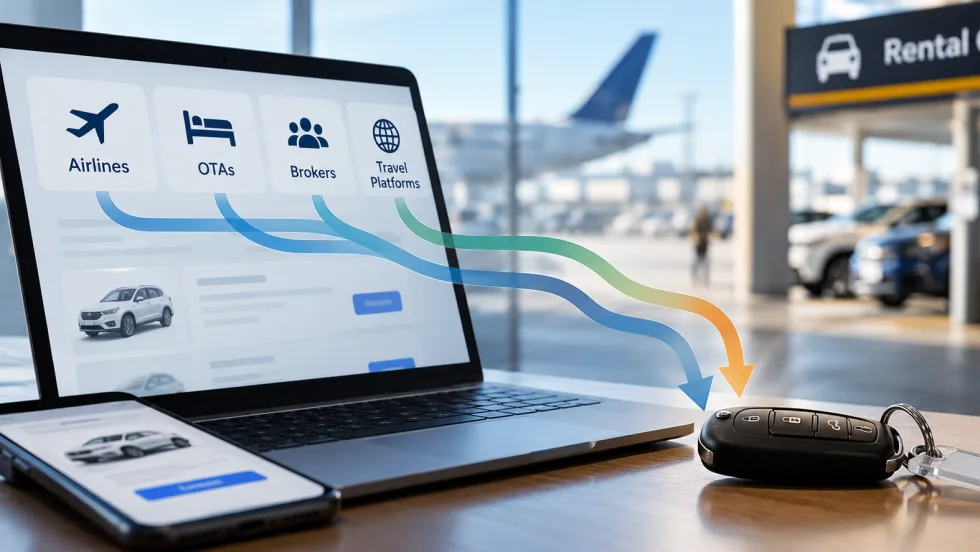
Direct, Broker or Hybrid? How Travel Retailers Source Rental Cars
As travel retailers weigh direct supplier relationships against third-party distribution, rental operators need to understand how those decisions affect their business.

How Did This Independent Rental Operator Grow to 170 Vehicles in 4 Years?
With 170 vehicles across three Kentucky locations, Joel Price relies on an overseas team to handle reservations, payments, and after-hours customer service. It's one part of an unconventional approach to growing an independent rental operation.

What Does It Take to Succeed in B2B Rentals?
The fundamentals may be familiar to daily car rental operators, but project-based truck rentals put different demands on the fleet and the business.

NPR Builds on International Partnerships to Grow Rental Bookings
With Ana Laborde supporting broker development, NPR Auto Group is tailoring distribution strategies, rate packages, and partnerships to grow international reservations across its three brands.

Advantage, Sixt Place Among Top Five in Annual Satisfaction Study
While Enterprise and National retain the top spots in JD Power’s 2026 rankings, the latest customer satisfaction results suggest renters can find competitive service beyond the biggest car rental names.