




Zipcar Partners with City Officials, UCLA & USC to Expand Car Sharing in Los Angeles
Beginning Sept. 14, Zipcar will add 12 new vehicles in reserved parking spots on city streets in the neighborhoods adjacent to UCLA and USC.
Zipcar, the world's largest car sharing service, the City of Los Angeles, University of California Los Angeles (UCLA) and University of Southern California (USC) announce an expansion of Zipcar's car sharing program on both campuses. Beginning Sept. 14, Zipcar will add 12 new vehicles in reserved parking spots on city streets in the neighborhoods adjacent to UCLA and USC. The pilot program was made possible by a partnership between Zipcar, Mayor Antonio Villaraigosa and the Los Angeles City Council and is intended as a first step toward a potentially larger expansion in the Los Angeles area.
"Los Angeles may be the car capital of the world, but through this partnership among universities, Zipcar and the City of Los Angeles we are opening the door to make car ownership optional for people who live or work here," said Mayor Antonio Villaraigosa. "Providing alternatives to car ownership will help improve the environment and the city's traffic congestion."
The expansion of the program is based on the strong success of Zipcar on the campuses of UCLA and USC, which are among the ten largest of the more than 130 campuses which partner with Zipcar across the country. Expansion of the program to local neighborhoods will bring the total number of Zipcars in the Los Angeles area to more than 40. The cars included in Zipcar's expansion will be an environmentally friendly mix of EPA Smartway-certified, hybrid and sporty vehicles.
"We like to say that a Zipcar is always just around the corner or across the street," said Mark Norman, president and chief operating officer of Zipcar. "Thanks to the city, that is now true for thousands of LA residents. We hope that becomes true for tens of thousands more in the coming months."
"Our partnership with Zipcar will give more people a real alternative to owning a car without having to sacrifice the flexibility of having one when they need one," said Eric Garcetti, City Council president. "This program will cut down on our carbon emissions, reduce our traffic congestion, and help the people of Los Angeles save money."
Convenient access to Zipcars on city streets is proven to provide benefits to local residents, taxpayers, and the environment. For residents, Zipcar helps reduce parking demand and congestion, as each Zipcar takes between 15 and 20 personally owned vehicles off the road. In addition, members report driving 40 percent fewer miles and increasing public transit use by nearly 20 percent, helping to reduce traffic congestion and emissions. Best of all, the average Zipcar member reports saving more than $600 per month on transportation costs.
"By making on-street parking spaces available to Zipcar, we make car sharing more accessible to more people," said Councilman Bill Rosendahl, chair of the Transportation Committee. "This program will empower the residents of Los Angeles with a new option to save money and reduce carbon emissions."
Zipcar vehicles are available by the hour or by the day to members, who can reserve a car via phone, online or a mobile device. A simple hourly/daily fee as low as $8/hour and $66/day weekdays, and $9/hour and $72/day weekends, includes parking in the reserved spot, gas, insurance, 180 free miles and 24/7 roadside assistance.
"I am very excited that our partnership with Zipcar will give more UCLA students options for local travel while helping to reduce the traffic impact around UCLA," said City Councilman Paul Koretz, whose district includes UCLA.
In addition to being able to access vehicles in Los Angeles, members have access to Zipcar's network of vehicles throughout the state, along the West Coast, across the country and around the world.
"There will be fewer cars in the North University Park area," said City Councilman Bernard Parks, who represents Council District 8, which includes USC. "The fact that people can share cars will cause a decrease in the need for more cars."
More Rental Operations

Turo to Launch Vehicle Delivery Service
Turo Delivered will let travelers search for vehicles that hosts can deliver directly to hotels, homes, airports, train stations, and other locations.
Read More →
Palm Beach Airport Code Change Creates Car Rental Distribution Gap
A test of rental searches under the old PBI and new DJT airport codes returned largely different sets of brands and vehicles, highlighting a potential distribution problem for rental operators.
Read More →
U-Save Continues Dominican Republic Expansion with Launch in Punta Cana
The new franchise location builds on U-Save’s existing Santo Domingo operation and will begin taking reservations for October 2026.
Read More →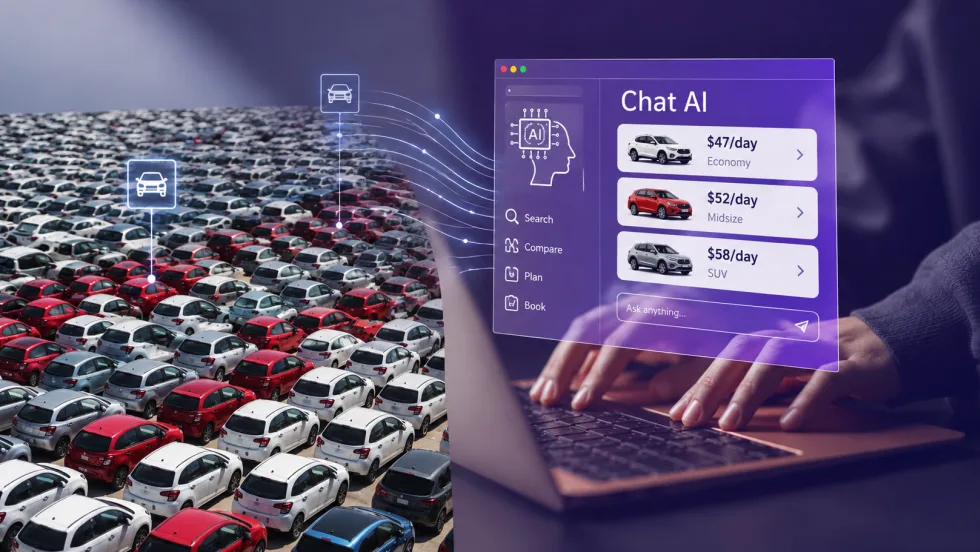
When AI Books the Rental Car, Who Controls the Sale?
As AI moves from comparing rental rates to completing transactions, operators need to understand how travelers find, interpret, rank, and ultimately see their offers. (Part 2 of 2.)
Read More →
European Booked Car Rental Rates Fell 5%, Results Varied by Country
Ireland, Cyprus, and the United Kingdom saw steep declines, while booked rates rose in Poland and Hungary.
Read More →
Is It Time to Rethink Rental Categories?
As traditional economy and compact cars disappear from the market, longtime rental operator Mike DeLorenzo asks whether the industry’s familiar vehicle categories still make sense — and what operators need to rethink along with them.
Read More →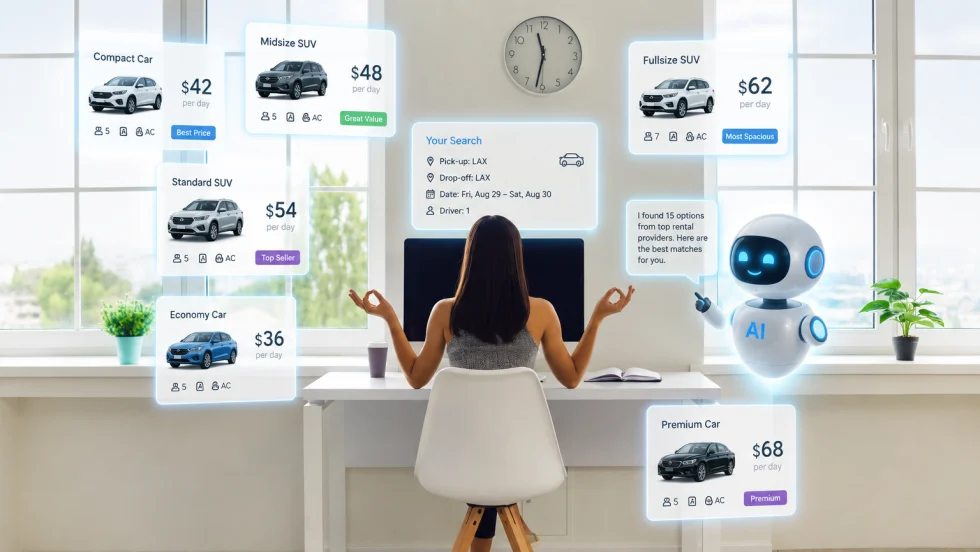
Who Owns the Rate? AI Is Creating a New Distribution Problem for Car Rental
Generative Engine Optimization asks whether AI can find a rental company, but operators also need to know whether the agent inspected enough of the market, compared equivalent offers, and presented a rate the traveler can actually book. (Part 1 of 2)
Read More →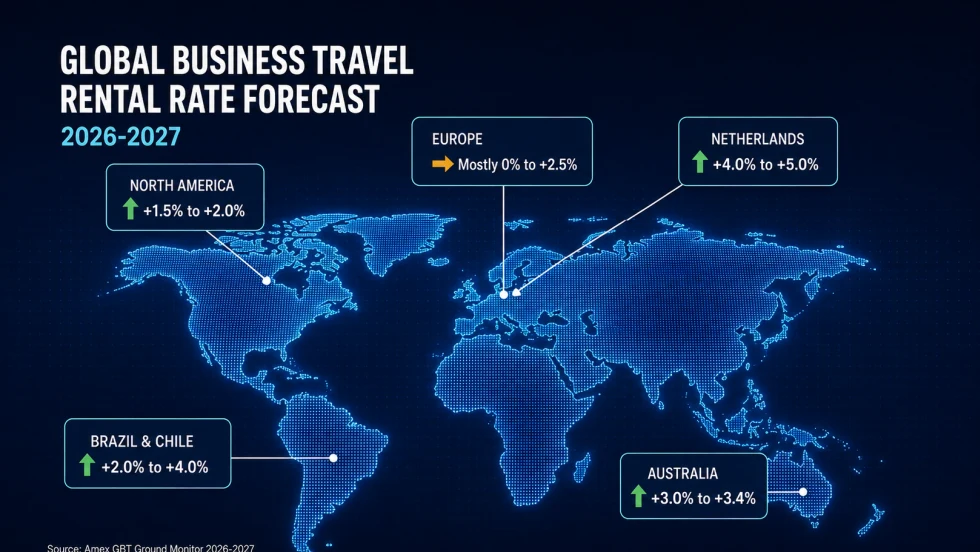
U.S. Business Travel Car Rental Rates Forecast to Rise Up to 2%
Improved fleet supply should limit pricing gains in 2026-27, while insurance, repair costs, and softer residual values continue to pressure rental operations, according to Amex GBT.
Read More →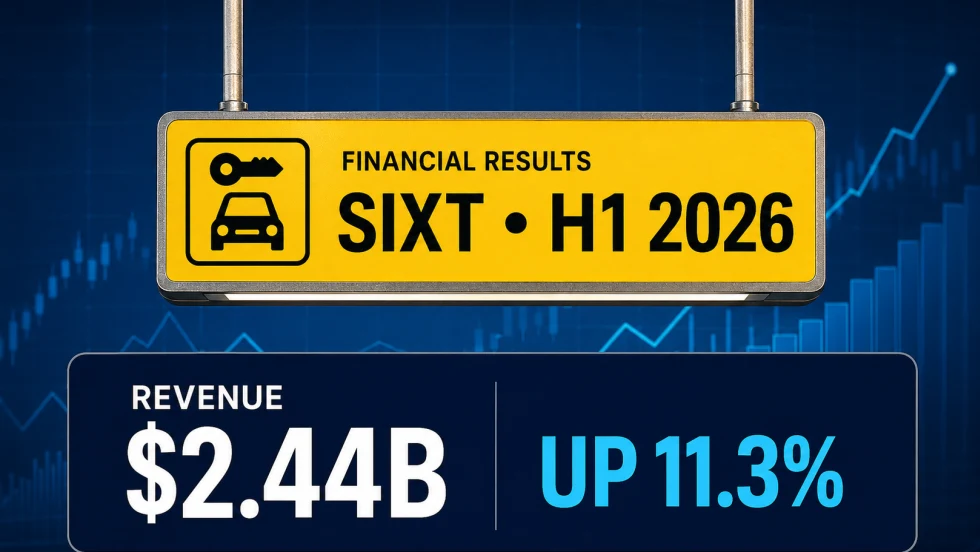
Sixt Revenue Tops $2.4 Billion in First Half of 2026
Sixt’s first-half revenue surpassed $2.4 billion for the first time as demand outpaced fleet growth, lifting utilization and earnings despite weaker consumer sentiment in North America.
Read More →
In Memoriam: Bobby Klyce, Avis Licensee Legend
The longtime Birmingham Avis operator and 2018 Auto Rental News Impact Award recipient was remembered as an advocate for independent licensees and the broader car rental industry.
Read More →