




How AI Is Making Car Rental Search Smarter and Unique
Companies are finding a clear link between relevant, personalized results and higher booking rates. Platforms that deliver tailored search results see higher conversion rates and revenues.
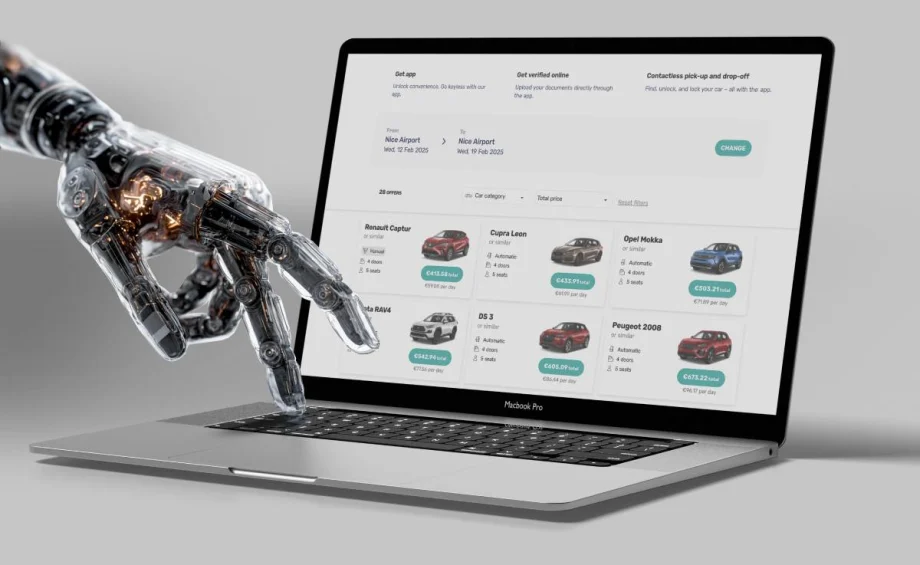
Modern AI models adjust rental car rates by analyzing historical booking behavior, local events, competitor data, and even weather forecasts.
Photo: Car Rental Gateway
- AI enhances car rental searches by providing more relevant and personalized results.
- The use of tailored search results on rental platforms can increase booking rates.
- Companies benefit from higher conversion rates and revenues when offering customized search experiences.
*Summarized by AI
Artificial intelligence is rewriting the rules of car rental.
For years, travelers have had to juggle filters and sift through price comparisons to book online.
Now, AI isn’t just speeding up the booking process; it’s also making it smarter and more approachable.
This shift is already underway, reshaping how people search for, choose, and book rental cars.
Here’s where the data leads, what’s changing quickly, and why making the right tech decisions matters more than ever.
What the Numbers Show
When Done Right, Personalization Drives Conversions
There’s a clear link between relevant, personalized results and higher booking rates. Platforms that deliver tailored search results see conversion rates and revenues increase by up to 15%.
McKinsey research supports this, showing that companies strong in personalization typically generate more revenue from those efforts than their competitors.
Focused personalization drives stronger booking outcomes — patterns that closely mirror broader industry trends.
Studies confirm that localizing content, including pricing, legal terms, and product descriptions, can lift conversion rates. For instance, one study found content adapted to local languages and cultural norms boosted conversion rates by up to 20%, along with significant increases in website traffic and engagement.
In addition, 75% of online shoppers prefer to buy when information is presented in their native language, and 40% won’t buy at all from sites in a language other than their own.
AI Filtering Reduces Friction
Separately, travel platforms like Expedia and Skyscanner increasingly rely on AI‑powered personalization to reduce decision friction and boost booking rates, because choice overload caused by irrelevant results is real.
Multiple recent reports highlight how these platforms use recommendation engines through chatbots, smart search, and behavioral pricing to deliver contextually relevant suggestions in real time.
This focused experience makes it easier for users to compare clearly described, accurately priced options and book with confidence.
AI-powered filters like “Best Value,” “Top Rated,” or “Suited for Families” make browsing easier and less overwhelming. It’s a subtle shift, but it reduces friction and helps travelers make faster, more confident decisions.
The goal should be to surface only the options that make sense for each traveler. Everything else is just noise.
AI Makes Dynamic Pricing Smarter
Dynamic pricing isn’t exactly revolutionary anymore, but AI takes it a step or two further. Traditional rule-based systems are limited to simple triggers, like increasing prices when availability drops below a certain threshold.
Modern AI models, however, adjust prices by analyzing historical booking behavior, local events, competitor data, and even weather forecasts.
A 2024 case study in travel tech using real-world systems found that adopting real-time, microservices-based dynamic pricing led to a 22% increase in revenue and a 17% faster pricing response time. For platforms that only update prices daily, it means missing opportunities. With demand changing by the minute, offers must be flexible to remain competitive.
The New Search Habits
From Search to Ask
The old model was all about typing keywords and scrolling through endless results. Today, internet users are getting used to asking full questions like, “What’s the best deal near Munich Airport for a week in August with two kids?”
They provide more nuanced information and expect the results to reflect that, not just keywords. When properly optimized, AI could be used to help travelers with what they say is the most challenging part of trip planning: finding affordable options.
Expedia recently introduced Trip Matching, a feature that lets travelers share any publicly available Instagram Reel featuring a destination they’d like to explore. In return, they receive personalized itineraries, travel tips, and booking options directly in the app. Launched in May 2025, it uses AI to translate video into real-world travel plans, clearly illustrating how search is evolving beyond traditional inputs.
This shift means travelers are beginning to expect tools that understand intent and broader context, not just typed terms. AI has to deliver context-aware suggestions based on what users feel and see, not just what they type.
Expectations Have Changed
Speed is now essential, not just a nice-to-have. Travelers expect fast, relevant results, or they’re gone. The likelihood of a visitor bouncing increases by 32% when a travel site’s load time rises from one to three seconds, according to the 2025 Promodo Tourism Marketing Benchmarks. Even a slight delay can cost bookings and erode customer loyalty.
A 2024 report from Hotel Technology News shows that over half (52%) of travelers abandon online booking when the experience is poor.
The hard fact is people aren't interested in learning the ins and outs of car rental. They just want the right option immediately along with a pleasant booking experience. If your technology lags, you will lose customers.

Hannes Põldvee of Car Rental Gateway has found that focused personalization drives stronger booking outcomes — patterns that closely mirror broader industry trends.
Photo: Car Rental Gateway
Who’s Winning and Losing Ground
Who Comes Out on Top?
Platforms that invest in strong AI infrastructure, such as smart search, real-time data, and intelligent pricing, are the clear frontrunners. Leading OTAs (like Expedia and Booking.com) and metasearch platforms like Skyscanner and Kayak are experimenting with generative AI and automation in areas such as customer service, search, and distribution, as reported by PhocusWire.
The article highlights that, although the industry is starting to adopt these technologies, the competitive advantage is already clear as innovation speeds up.
Suppliers with clean, structured, up-to-date information gain greater visibility, sell more, and expand their distribution reach. Tech-first operators that rely on API-first distribution, automation, and digital onboarding can scale quickly and connect with customers across multiple channels. If you want to keep up with travelers wherever they are, your tech stack needs to be lean and flexible.
Who’s Left Behind?
Legacy systems with generic content and clunky, overcomplicated integrations are falling behind as modern platforms demand real-time, accurate information. AI-powered discovery engines and dynamic filters increasingly overlook generic listings without reviews, strong visuals, or clear product details.
What It Means for Car Rental Tech Companies
The future belongs to the companies that anticipate change rather than simply react to it. For car rental technology companies that means focusing on three essentials:
Data standardization and enrichment: Platforms must support rich, structured content that feeds every type of search, especially those powered by AI.
Modular, future-proof technology: The ability to adapt quickly and roll out new AI-driven features without rebuilding core systems is a true competitive edge.
Readiness for conversational search: As the way people search changes, tech companies must be prepared to handle queries that feel more like conversations than keywords.
Successfully closing a deal in the car rental business is no longer just about listing cars on your website. It’s about rich content, ease of use, and visibility.
We’re living in fascinating times: customers are becoming more informed and have higher expectations, progress is constant, and technological breakthroughs are happening every day.
That said, some changes still take time to mature. Both industry professionals and travelers must maintain a clear, critical perspective throughout this shift — especially as we navigate evolving search experiences and the emerging privacy challenges posed by AI-powered tools.
The best technology doesn’t just help users; it makes everyone in the value chain smarter. The businesses that lean in and adapt will write the next chapter. Everyone else will struggle to stay relevant.
More Rental Software

How Operators Will Work With Their RMS in the Age of AI
AI embedded directly into rental management systems could change how operators analyze their businesses and take action, while raising new questions about permissions and control.
Read More →
A Leveling Force: AI Morphs Into A Rental Car Profit-Seeker
Revenue managers can’t match the emerging AI tools gobbling lots of data that could counter the competitive race to the rate bottom.
Read More →
Stop Losing Money On Rental Tolls
Regardless of your rental fleet size and structure, fleet managers, executives, and owners can gain valuable insights into an often-overlooked area of fleet operations.
Read More →
Grow Your Rental Business Beyond Cars
Rental fleet operations are facing numerous evolving challenges and opportunities from AI technology to rate and revenue management, to customer service and business growth.
Read More →
Using AI to Create Clarity, Not Conflict, in Rental Car Damage
Rental companies still need people, policy, judgment, and thoughtful implementation, with operators remaining in control of the customer experience.
Read More →
Get Ready To Roll: No Stopping Self-Driving Rental Cars
The autonomous mobility technology revolution will move at its own pace, but sooner rather than later.
Read More →
Southwest Airlines Selects CarTrawler For Its Car Rental Booking Platform
The platform is designed to allow customers to compare and book rental vehicles more easily during the travel booking process.
Read More →
RentalMatics, GeoInt Partner On Rental Car Speed Tracking Tech
Rental operators can now detect and act on speeding while vehicles are still on rent, thereby reducing fines, admin workload, vehicle wear, and safety risks.
Read More →
NextPass Expands Toll Payment Service to Highway In Toronto
Fleets and consumer can use a transponder-less option when traveling between Canada and the U.S.
Read More →
Zubie, PurCo Integrate Rental Damage Detection With Telematics
The combination brings actionable vehicle insights into PurCo’s PurInspect platform, improving damage detection and operational efficiency for rental fleets.
Read More →