



Nurturing Car Rental in Nigeria
With a population shift to the cities, a growing middle class, and new oil exploration, Elroseandria Automobile in Lagos is looking to take advantage.

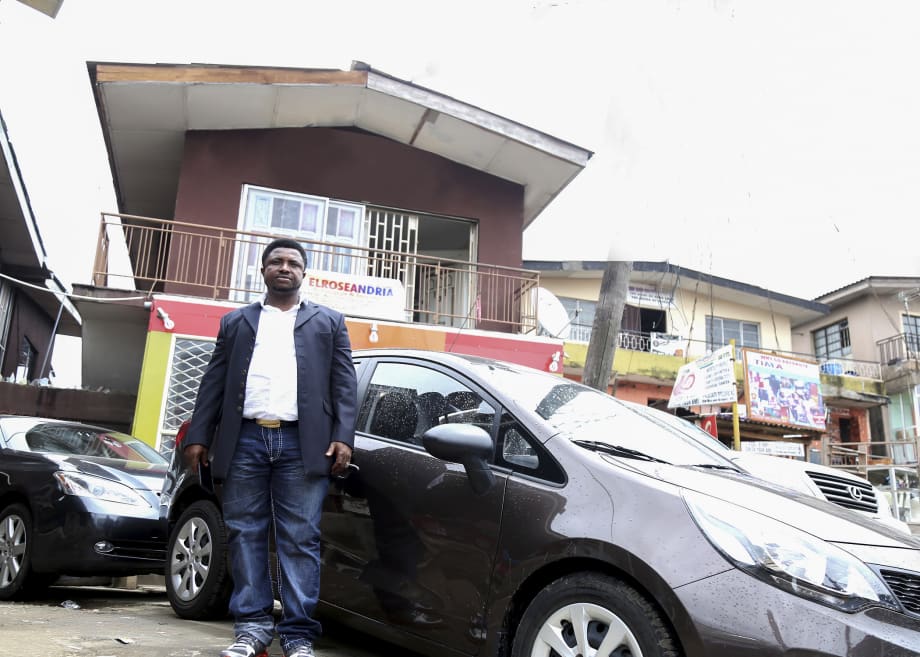
Elvis Ubaka Canice, co-owner of Elroseandria Automobile and Investment Limited in Lagos, feels he can grow his fleet of 15 vehicles to at least five new locations with present demand.
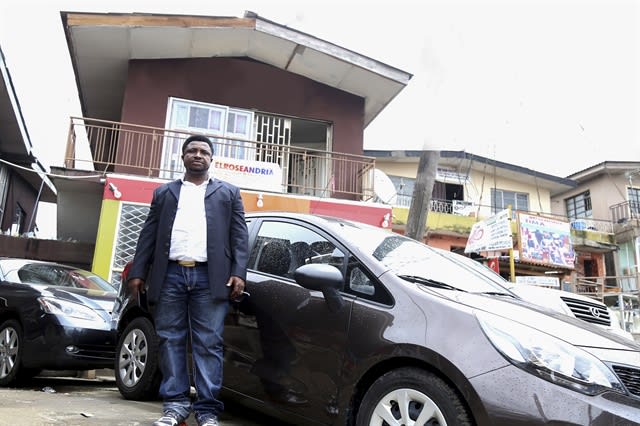
Elvis Ubaka Canice, co-owner of Elroseandria Automobile and Investment Limited in Lagos, feels he can grow his fleet of 15 vehicles to at least five new locations with present demand.
Elroseandria Automobile and Investment Limited in Lagos, Nigeria specializes in car sales, car parts, and car rental, as well as other services such as importing general merchandise, including keys and locks and security doors.
Owner Elvis Ubaka Canice and his partner started by importing used vehicles and car parts from overseas for sale in the local market. When some clients asked to rent a car instead of buy, they decided to put some of those imported used cars to rent.
Through its sales showroom situated between downtown Lagos and the international airport, the company serves local retail renters, government ministers, and managers in the oil and tire industries, including those on contract from overseas.
A few factors seem to be working in favor of car rental: demand is increasing, as more Nigerians are moving to cities such as Lagos, the largest in Africa, and the Nigerian middle class grows. At the same time, the government has not been able to keep up with demand by expanding public transportation options.
Nigeria, the second largest economy in Africa, is putting an effort into growing tourism and attracting foreign investment. According to Africa Tourism Monitor, international tourist arrivals grew by 7.1% in 2015 year over year — with an expectation to attract 919,000 international tourists, comparable to Honduras and Iceland.
The recent discovery of oil off the shores of the state of Lagos has created opportunities for service providers to the oil industry. While the recent oil price crash has dampened government spending, it has not slowed his business, Canice says.
Looking to Grow
Elroseandria’s rental business has only 15 vehicles at present, though Canice says he and his partner are looking into expanding to five more cities due to high demand, and they’re looking for a joint venture. “Car rental is a good and profitable business in Nigeria,” he says.
Canice travels to the U.S. frequently to buy and ship used vehicles back to Nigeria. Toyota, Hyundai, and Honda are popular import models. Vehicles stay in the rental fleet for about two years, and then Elroseandria sells them retail and to used car dealers. In Nigeria, resellers care more about vehicle condition than miles, Canice says.
In Nigeria, rental cars generally come with a driver, though it’s possible to rent “self-drive.” To protect against theft, car rental companies use GPS trackers.
Avis, Hertz, Europcar, and Sixt have franchise partners in the country, mostly as subsidiaries to national conglomerates. The Hertz franchisee, for instance, is part of a holding company that includes various forms of leasing, fleet management, staff outsourcing, and rental. Coscharis Group, the Sixt franchisee, spans sectors such as auto, medical, information technology, and agriculture.
Canice says there are many homegrown car rental companies bigger than his. But the market is still dominated by “unorganized” companies of a handful of vehicles, and the line is blurred between taxi services and car rental, as they predominantly offer the car with a driver. These services perform many fee-based one-way trips, such as from the airport to city center, or the driver can be retained for the day.
Canice says profit margins are good. He can request that renters pay upfront, which is beneficial especially for rentals lasting more than a month; a two-month rental is common. He markets the business through word of mouth, brochures, and flyers, and through online marketing, which is increasing in Nigeria.
“Demand is increasing and business is good,” Canice says. “Things are changing every blessed day.”
More Rental Operations

What Does It Take to Succeed in B2B Rentals?
The fundamentals may be familiar to daily car rental operators, but project-based truck rentals put different demands on the fleet and the business.
Read More →
NPR Builds on International Partnerships to Grow Rental Bookings
With Ana Laborde supporting broker development, NPR Auto Group is tailoring distribution strategies, rate packages, and partnerships to grow international reservations across its three brands.
Read More →
Advantage, Sixt Place Among Top Five in Annual Satisfaction Study
While Enterprise and National retain the top spots in JD Power’s 2026 rankings, the latest customer satisfaction results suggest renters can find competitive service beyond the biggest car rental names.
Read More →
The $100,000 Insurance Trap in Exotic Car Rentals
Exotic rental agencies often rely on customers’ personal auto policies to protect six-figure vehicles. But policy language can dramatically change the coverage for vehicles over $100,000 MSRP.
Read More →
The Booking Is Confirmed, But Is Your Customer Ready to Drive?
For international renters, a confirmed reservation doesn’t always mean they’re eligible to drive. Earlier checks can help operators catch documentation and payment issues before the customer reaches the counter.
Read More →
ICRS 2027 Opens Call for Papers
The International Car Rental Show seeks session proposals on the business, operational, and technology issues facing car rental operators. Submissions are due Jan. 15.
Read More →
Turo to Launch Vehicle Delivery Service
Turo Delivered will let travelers search for vehicles that hosts can deliver directly to hotels, homes, airports, train stations, and other locations.
Read More →
Palm Beach Airport Code Change Creates Car Rental Distribution Gap
A test of rental searches under the old PBI and new DJT airport codes returned largely different sets of brands and vehicles, highlighting a potential distribution problem for rental operators.
Read More →
U-Save Continues Dominican Republic Expansion with Launch in Punta Cana
The new franchise location builds on U-Save’s existing Santo Domingo operation and will begin taking reservations for October 2026.
Read More →
When AI Books the Rental Car, Who Controls the Sale?
As AI moves from comparing rental rates to completing transactions, operators need to understand how travelers find, interpret, rank, and ultimately see their offers. (Part 2 of 2.)
Read More →