



Zipcar Provides a Car Sharing Option for College Grads
With 2013 grads most worried about financial stability, according to a Zipcar survey, car sharing could be a more affordable alternative to owning a car.
According to a May 2013 survey by Zipcar, nearly 70 percent of respondents believed that grads would benefit from joining a car sharing service. In fact, more than 68% of surveyors stated grads want financial stability over other choices, including an on-demand lifestyle (16%), freedom (12%) and travel experiences (5%).
When asked about graduate transportation choices, the survey found that 65% of graduates do not own a car, and 49% of grads don’t plan to bring a car to their next endeavor after graduation.
After graduating, the biggest concerns about owning a car are parking availability and cost.
"After years of hard work, today's graduates are faced with large amounts of student loans to repay beginning immediately after graduation,” said Zipcar President Mark Norman. “Many recent graduates aren't able to afford the high cost of car ownership – and the last thing they need is to pile on more debt. Giving 2013 graduates a Zipcar membership provides them with all of the access and convenience of a personally-owned car, without the high price tag, associated loans and hassles, and gives them a powerful head start on the road to affordable, sustainable living."
The 2013 Zipcar Graduation Survey included answers from 510 respondents around the U.S. With operations in 21 major metropolitan markets and on more than 300 college campuses throughout North America, visit www.zipcar.com to make a reservation.
More Rental Operations

The $100,000 Insurance Trap in Exotic Car Rentals
Exotic rental agencies often rely on customers’ personal auto policies to protect six-figure vehicles. But policy language can dramatically change the coverage for vehicles over $100,000 MSRP.
Read More →
The Booking Is Confirmed, But Is Your Customer Ready to Drive?
For international renters, a confirmed reservation doesn’t always mean they’re eligible to drive. Earlier checks can help operators catch documentation and payment issues before the customer reaches the counter.
Read More →
ICRS 2027 Opens Call for Papers
The International Car Rental Show seeks session proposals on the business, operational, and technology issues facing car rental operators. Submissions are due Jan. 15.
Read More →
Turo to Launch Vehicle Delivery Service
Turo Delivered will let travelers search for vehicles that hosts can deliver directly to hotels, homes, airports, train stations, and other locations.
Read More →
Palm Beach Airport Code Change Creates Car Rental Distribution Gap
A test of rental searches under the old PBI and new DJT airport codes returned largely different sets of brands and vehicles, highlighting a potential distribution problem for rental operators.
Read More →
U-Save Continues Dominican Republic Expansion with Launch in Punta Cana
The new franchise location builds on U-Save’s existing Santo Domingo operation and will begin taking reservations for October 2026.
Read More →
When AI Books the Rental Car, Who Controls the Sale?
As AI moves from comparing rental rates to completing transactions, operators need to understand how travelers find, interpret, rank, and ultimately see their offers. (Part 2 of 2.)
Read More →
European Booked Car Rental Rates Fell 5%, Results Varied by Country
Ireland, Cyprus, and the United Kingdom saw steep declines, while booked rates rose in Poland and Hungary.
Read More →
Is It Time to Rethink Rental Categories?
As traditional economy and compact cars disappear from the market, longtime rental operator Mike DeLorenzo asks whether the industry’s familiar vehicle categories still make sense — and what operators need to rethink along with them.
Read More →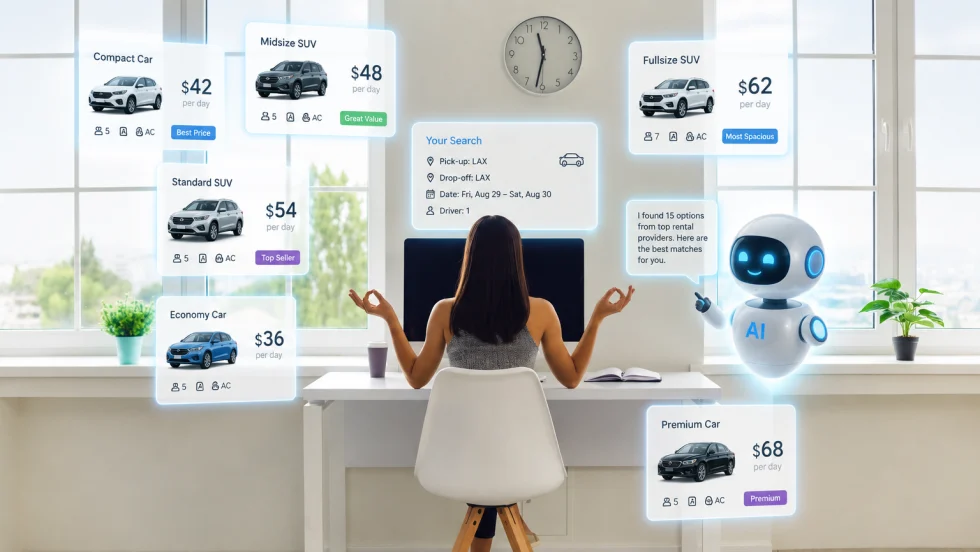
Who Owns the Rate? AI Is Creating a New Distribution Problem for Car Rental
Generative Engine Optimization asks whether AI can find a rental company, but operators also need to know whether the agent inspected enough of the market, compared equivalent offers, and presented a rate the traveler can actually book. (Part 1 of 2)
Read More →