




ACRA D.C. Action: 5 Major Car Rental Issues In 2024
Rental Car Leader Engages With Primary Industry Causes
Q&A Interview: Federal contracting, EV charging infrastructure, stolen vehicles, and policy advocacy drive an agenda for Carlos Bazan-Canabal that stretches beyond his car rental executive post.
September 8, 2025
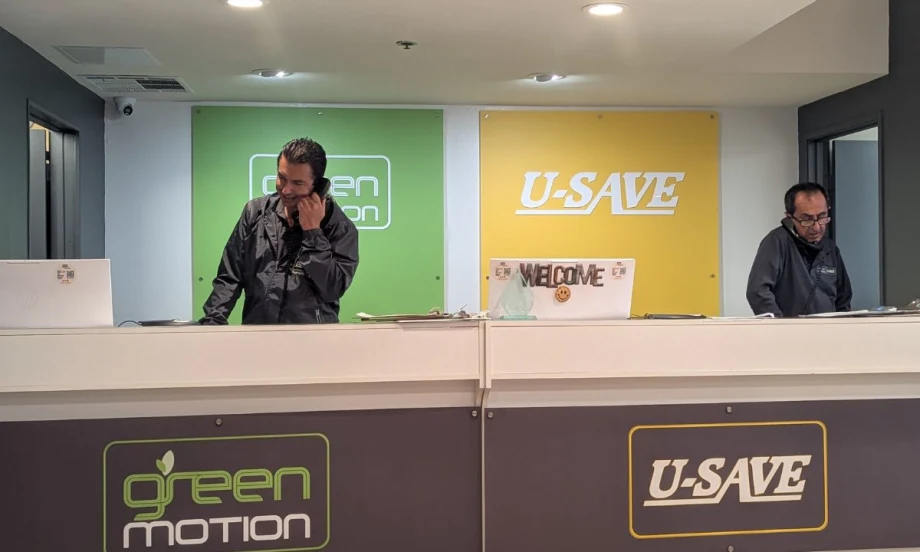
Carlos Bazan-Canabal, director for the Americas at Green Motion International and Amir Oreyzi the location manager for Green Motion and U-Save Car Rental in Orange County, California, work the phones at the company's rental location.
Photo: Green Motion International
7 min to read
- Carlos Bazan-Canabal is committed to tackling issues such as vehicle theft and advocating for relevant policy changes.
- Beyond his executive responsibilities, he champions various industry causes impacting car rentals.
*Summarized by AI
The rental car industry has gained a voice at an organization dedicated to federal government travel.
Carlos Bazan-Canabal, director for the Americas at Green Motion International and a board director of the American Car Rental Association (ACRA), was appointed in February to the Car Rental Committee of the National Defense Transportation Association (NDTA). The organization connects experts from the federal government and the commercial travel industry to examine a wide range of issues related to the government’s multi-billion-dollar travel enterprise.
Bazan-Canabal’s role brings more rental car industry members into planning transportation for federal customers. The NDTA develops and oversees the Department of Defense Rental Car Program, enabling access to rental cars for travel.
In addition, the longtime car rental operator has helped spur legislation in California that combats rental car theft and serves on a board that leads the growth of electric vehicle charging infrastructure.
ARN recently spoke with Bazan-Canabal about his multiple roles that help bring more visibility and business to the car rental industry.
Q: Give us an overview of the significance of this position for the car rental industry, and your priorities in fulfilling it.
A: It's complementary to ACRA, and more involved with the political arena. NDTA does not touch any operations. The agency establishes guidelines to outline how car rental companies can effectively serve the government and the Department of Defense (DOD) travel space. We learn how to provide the appropriate service level and rates while understanding the difference in the needs of a DOD traveler and a typical traveler.
Although ACRA and NDTA are separate, I can share practices and ideas with other ACRA board members to explore what works best for the industry. What best practices can be put into place? Which ones could impact our lobbying or political agenda, and how can we ensure we work for the best of the industry?
Every operator who works with a government program has to create standard operating procedures (SOPs) that they can share with NDTA and the Defense Travel Management Office (DTMO). That means we have a specific way of working with every stakeholder, whether a government employee or a team that works with travelers. They get the same experience across the board. We document and implement processes across all locations. We advise ACRA on helping operators understand the federal defense clientele.
Q: What do you hope NDTA will gain through the presence and contributions of an ACRA board director on their committee?
A: The big car rental companies that are part of the board of directors are also on the advisory council for the NDTA. I'm the only board director involved with the Car Rental Committee, and a firsthand resource that enhances communication to understand better the pains and needs of the NDTA, which ACRA can complement with its knowledge and resources. The information flow can help NDTA car rental operators improve their SOPs when working with government and DOD travelers and bring the best practices to both. At the ACRA level, that helps improve the industry overall.
Q: How does this new role inform your ongoing work at Green Motion International?
A: Working on SOPs while contracting with the DTMO helps with submitting information and documents for car rental agreements that build the relationships between the government and car rental operators.
Q: How can your service on the NDTA committee expand rental car contracting and service opportunities for rental car operators?
A: There is an issue of awareness. Many operators are not aware of opportunities beyond traditional retail rentals, which include niches like corporate travel, insurance replacement, and government travel. It provides the ability for operators to join new niches, and by being involved with the NDTA, we can bring this awareness to our franchises so they can service this niche of government and DOD travelers.
Q: You led a significant legislative initiative in California through AB 2741. What was the impact of that effort?
A: I authored the policy framework, presented it to the ACRA board, and moved it forward through voting and lobbying. While not all provisions made it into the final bill, the 24-hour embezzlement reporting rule did. That’s critical. Before that change, we were operating with a 72-hour gap that gave criminals too much time to disappear. Law enforcement was hamstrung. The new change wasn’t cosmetic. It gave California operators and police real-time coordination power. After the Jan. 1 incidents in New Orleans and Las Vegas, the urgency of that provision became self-evident. We are now working with law enforcement, so different police departments are aware of this change, and they can take our reports as fast as possible to recover our vehicles when we need to. I know it’s faster for us at Green Motion to recover vehicles.
Q: What results is ACRA seeing in the rental car industry’s operations thanks to this legislation?
A: This law improved our industry conditions by reducing the timeframe. There is a constant need for legislation that helps us prevent crimes or detect situations that could harm our operations, enabling us to act swiftly. California is a state that usually leads legislation. Whenever something happens in California, other states investigate it and follow suit right away. That doesn't mean it happens everywhere, but there is now a law we can refer to as ACRA to try to work with other states in enacting legislation to protect our assets and help prevent crime.
Q: You contribute to the National Renewable Energy Lab’s Athena ZEV project as a member of the advisory council. How does that connect to the rest of your work?
Athena is about modeling and forecasting EV integration at the fleet level. That means quantifying charging infrastructure, grid stress, and vehicle usage profiles. What I bring is the operator’s lens: How do these assumptions play out in real rental markets? What happens in mixed fleets? What about seasonal volatility? My participation ensures Athena’s output remains grounded in commercial reality. Companies like Green Motion can benefit directly, as we align our international footprint with those modeling insights.
The first phase has been completed with modeling tools now available to airports and CONRAC operators. These tools model fleet size, turnaround times, and energy load on the infrastructure to see what makes sense in different areas of the car rental facility and long-term staging of rental vehicles. Airports are starting to use this technology as
Athena moves into the subsequent phases of the project in other areas of transportation on both the landside and the airside.
For example, at Los Angeles International Airport, 500 EVs need to be turned around fast. Refueling with gas takes no time. With electricity, it could take hours depending on the level of charge and capacity. You need the right charging plan and strategy to keep cars on lots for the shortest time. How do you accomplish that with 20 Level 2 charges and five Level 3 chargers? When and how will you use them? How does it affect the power grid? How do you ensure rental car operations don't stagnate? This model considers return times, peaks, types of charges, and levels of charge in the cars. The system will tell you how to charge them, when to charge, which to charge first and last, and if you need to change the infrastructure with minimal impact on the grid. A lot of digital twin data modeling goes into this.
Q: As you look at the next few years ahead, what rental car-related priorities and goals are you pursuing as part of serving on the NDTA’s Car Rental Committee and on the ACRA board of directors?
A: The industry is heading in the right direction with recent successes of ACRA, bringing back full expensing, and with legislation like AB 2741. Other initiatives are geared toward securing the right of access to data generated in our vehicles. All of these are examples of how ACRA fortifies a 100-year-plus industry and benefits not only the operators but also consumers.
In terms of the NDTA, the car rental industry benefits from the ability to serve these government and DOD travelers with the highest quality of customer service, vehicle availability, and ease of travel that helps our industry grow its revenue and helps the U.S. federal government reduce its cost of travel.
In terms of Athena, EVs and alternative fuel vehicles are already here; eventually, as in other parts of the world, the industry here will embrace a healthy mix of these vehicles. As we establish our infrastructure and fleet deployment strategies, tools like Athena will enable us to grow and remain competitive in the future.
Subscribe to Our Newsletter
More Rental Operations
Advantage, Sixt Place Among Top Five in Annual Satisfaction Study
While Enterprise and National retain the top spots in JD Power’s 2026 rankings, the latest customer satisfaction results suggest renters can find competitive service beyond the biggest car rental names.
Read More →
The $100,000 Insurance Trap in Exotic Car Rentals
Exotic rental agencies often rely on customers’ personal auto policies to protect six-figure vehicles. But policy language can dramatically change the coverage for vehicles over $100,000 MSRP.
Read More →
The Booking Is Confirmed, But Is Your Customer Ready to Drive?
For international renters, a confirmed reservation doesn’t always mean they’re eligible to drive. Earlier checks can help operators catch documentation and payment issues before the customer reaches the counter.
Read More →
ICRS 2027 Opens Call for Papers
The International Car Rental Show seeks session proposals on the business, operational, and technology issues facing car rental operators. Submissions are due Jan. 15.
Read More →
Turo to Launch Vehicle Delivery Service
Turo Delivered will let travelers search for vehicles that hosts can deliver directly to hotels, homes, airports, train stations, and other locations.
Read More →
Palm Beach Airport Code Change Creates Car Rental Distribution Gap
A test of rental searches under the old PBI and new DJT airport codes returned largely different sets of brands and vehicles, highlighting a potential distribution problem for rental operators.
Read More →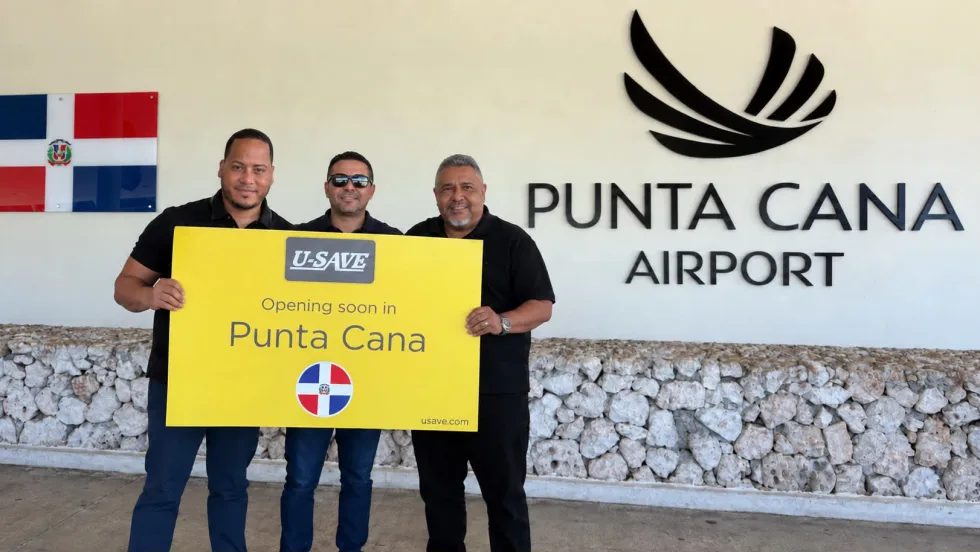
U-Save Continues Dominican Republic Expansion with Launch in Punta Cana
The new franchise location builds on U-Save’s existing Santo Domingo operation and will begin taking reservations for October 2026.
Read More →
When AI Books the Rental Car, Who Controls the Sale?
As AI moves from comparing rental rates to completing transactions, operators need to understand how travelers find, interpret, rank, and ultimately see their offers. (Part 2 of 2.)
Read More →
European Booked Car Rental Rates Fell 5%, Results Varied by Country
Ireland, Cyprus, and the United Kingdom saw steep declines, while booked rates rose in Poland and Hungary.
Read More →
Is It Time to Rethink Rental Categories?
As traditional economy and compact cars disappear from the market, longtime rental operator Mike DeLorenzo asks whether the industry’s familiar vehicle categories still make sense — and what operators need to rethink along with them.
Read More →