


Car Rental Q&A: Can The Big Koenig Loss-Of-Use Case Win In Colorado Benefit Me In Washington State?
Reader has heard about the Koenig case in Colorado that created a favorable "precedent" for loss of use and administrative fees in the car rental industry. But how does this benefit him if he lives in Washington State?
Q: I have heard about the Koenig case being a big deal for the industry. Since that was in Colorado, how does it help me in Washington?
— Perry Roper — Hertz licensee, Pasco, Wash.
A: This is a great question — no matter what state you live in. Colorado created a favorable “precedent” for loss of use and administrative fees in the car rental industry (the law of the land).
The 10th U.S. Circuit Court of Appeals’ first decision upheld reasonable administrative fees. The second Colorado Supreme Court decision established loss of use regardless of any fleet utilization.
To use Koenig, you will want to use proper citation, meaning quoting it properly:
On administrative fees:
PurCo v. Koenig, 240 P.3d 435 (Colo.App.Div. 3 2010) (“...the [administrative] fee should be ‘reasonable’”) aff’d. oth. grnds. Co. Sup. Ct., Koenig v. PurCo, 285 P.3d 979 (Colo. 2012)
On loss of use:
Koenig v. PurCo, 285 P.3d 979 (Colo. 2012) (“National [now PurCo] must be compensated for any ‘loss of use ... regardless of fleet utilization ...’ [i]n sum, we hold that the reasonable rental value of a chattel or, alternatively, net lost profits ... approximate loss of use damages. Plaintiffs may elect which measure of recovery to pursue, but either makes them whole.”)
For special circumstances, even stronger language:
Koenig v. PurCo, 285 P.3d 979 (Colo. 2012) (“If the [proposition] were correct that a commercial entity must prove a lost opportunity to recover loss of use damages, then anyone could wrongfully take possession of a commercially owned or leased chattel and eventually return it in a similar condition without liability unless the owner could prove a lost economic opportunity or lost profits. We find this position untenable.”)
But can you use it in your own jurisdiction? Certainly. It is a bit tricky, but not too difficult. Nowhere does any state law require you to prove all your cars were rented in order to recover lost use. But now there is state law (in Colorado) that says you don’t have to prove it.
The Colorado precedent can be used very effectively with a little key principle that attorneys use called “persuasive authority.” When there is an unanswered question in any court, you can “persuade” your judge to follow another jurisdiction. There is a rule on loss of use and administrative fees in first party or third party property damage claims called “common law tort” (damage done) case precedent in every state. Simply stated, a responsible party (“tortfeasor”) must put the injured party into the position as if the incident had never happened.
Someone in the insurance industry (I’m sure someone is still patting him or herself on the back) had an idea: “at-fault” parties feel like they’re getting robbed if they pay damage claim estimates on property (“chattels”) never repaired. Those tortfeasors want payment to actually go to repairs.
[PAGEBREAK]
The problem with “proof of repairs” thinking is that the law in each state says an injured party maintains full authority whether to repair or not repair. This same flawed logic with loss of use and administrative fees must be pointed out. Insurance companies think that we are not due loss of use if we had another car sitting idle.
They are wrong. Think of it like losing an arm in an accident. Can someone make you get a prosthetic before paying you? Can they refuse to pay you for your efforts on getting a prosthetic fitted or delivered? Could they not pay just because you have another arm? That would be ridiculous (“untenable,” the Colorado Supreme Court said).
So, the way to use the Colorado argument is to first understand it and then cite it properly to your renter, insurance adjuster or judge. Remember, there is no case law anywhere supporting their position, but now there is one supporting ours. That is significant.
This may all sound a little daunting, but your ability to recover losses on a continual basis is at stake. If you need help, companies like PurCo (of the PurCo v. Koenig Colorado case) are more than willing to step in and do this for you. It can result in thousands, perhaps millions, of dollars you are just leaving on the table by handing it to the insurance company.
What's Your Question?
Email your car rental operation-related questions to Auto Rental News by emailing chris.brown@bobit.com
Experts from PurCo are happy to answer your business and fleet financing questions to help you grow your car rental operations. Feel free to contact David Purinton at davidp@purco.com
More Rental Operations
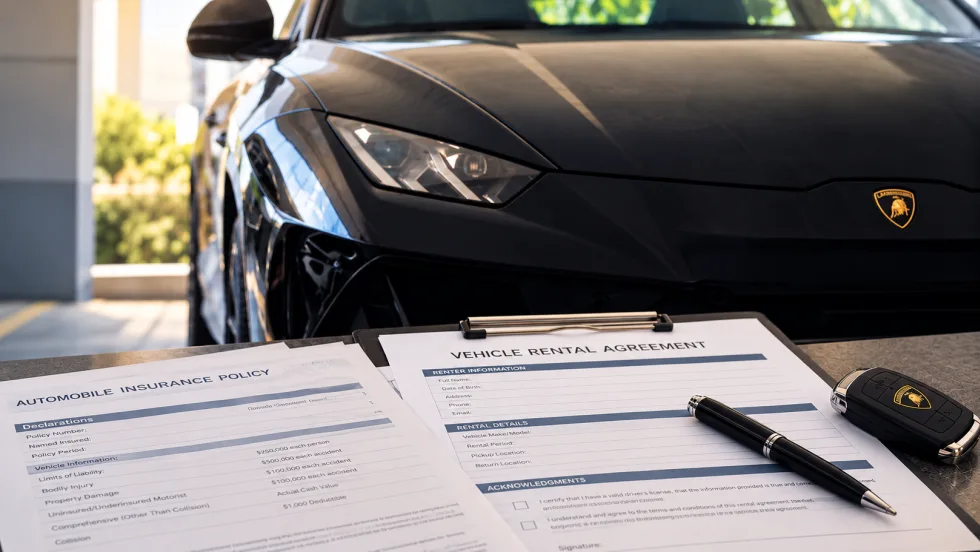
Clean on Paper: Red Flags in Exotic Car Rental Verification
A suspicious $45,000 Lamborghini booking reveals the strengths and limitations of renter verification, from forged insurance documents to coverage gaps and unauthorized drivers. (Part 2 of 3)
Read More →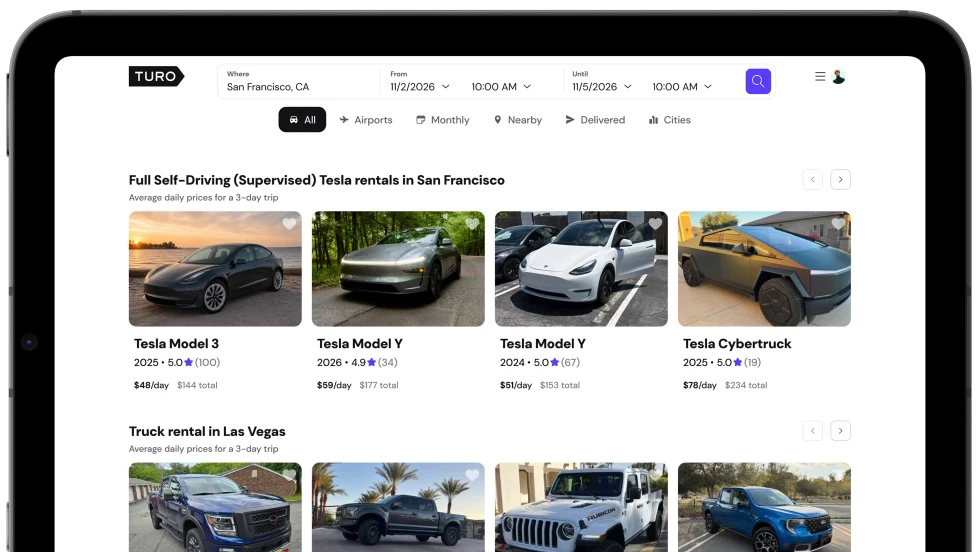
Turo and Tesla Take the Next Step Toward Autonomous Car Rentals
The partnership brings Tesla's Full Self-Driving (Supervised) technology into the rental experience, offering a glimpse of how increasingly automated vehicles could change car rental.
Read More →
How Rental Operators Can Navigate Personalized Pricing Rules
As regulators scrutinize the use of customer data in pricing, rental operators need to know whether they can explain why one renter pays more than another.
Read More →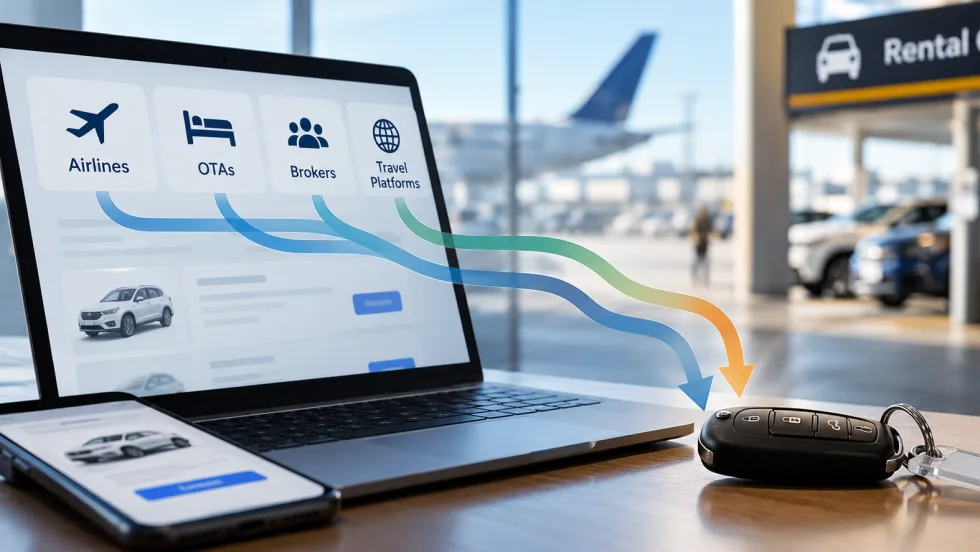
Direct, Broker or Hybrid? How Travel Retailers Source Rental Cars
As travel retailers weigh direct supplier relationships against third-party distribution, rental operators need to understand how those decisions affect their business.
Read More →
How Did This Independent Rental Operator Grow to 170 Vehicles in 4 Years?
With 170 vehicles across three Kentucky locations, Joel Price relies on an overseas team to handle reservations, payments, and after-hours customer service. It's one part of an unconventional approach to growing an independent rental operation.
Read More →
What Does It Take to Succeed in B2B Rentals?
The fundamentals may be familiar to daily car rental operators, but project-based truck rentals put different demands on the fleet and the business.
Read More →
NPR Builds on International Partnerships to Grow Rental Bookings
With Ana Laborde supporting broker development, NPR Auto Group is tailoring distribution strategies, rate packages, and partnerships to grow international reservations across its three brands.
Read More →
Advantage, Sixt Place Among Top Five in Annual Satisfaction Study
While Enterprise and National retain the top spots in JD Power’s 2026 rankings, the latest customer satisfaction results suggest renters can find competitive service beyond the biggest car rental names.
Read More →
The $100,000 Insurance Trap in Exotic Car Rentals
Exotic rental agencies often rely on customers’ personal auto policies to protect six-figure vehicles. But policy language can dramatically change the coverage for vehicles over $100,000 MSRP.
Read More →
The Booking Is Confirmed, But Is Your Customer Ready to Drive?
For international renters, a confirmed reservation doesn’t always mean they’re eligible to drive. Earlier checks can help operators catch documentation and payment issues before the customer reaches the counter.
Read More →