


Self-Driving Startup to Launch Ride-Hailing in Texas
Drive.ai will gradually on-board partners into the program and allow Frisco residents access to its ride-hailing app beginning in July.

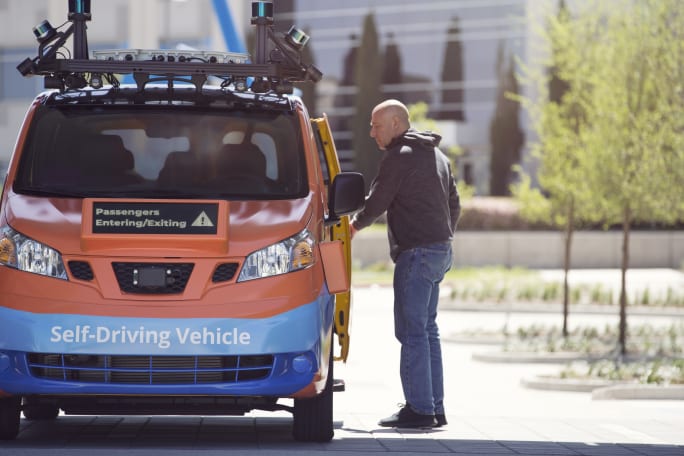
Drive.ai’s self-driving, on-demand service will be operated in conjunction with Frisco TMA, a public-private partnership dedicated to bringing innovative last-mile transportation options to the growing population of Frisco. Photo: Drive.ai
Photo via Drive.ai.
California-based self-driving car company Drive.ai will launch a pilot program to bring an on-demand, self-driving car service to Frisco, Texas beginning in July, the company announced today.
Drive.ai will offer rides to over 10,000 people in self-driving vehicles within a geofenced area comprised of retail, entertainment, and office space. The company is partnering with the Frisco Transportation Management Association (TMA).
The initial pilot will run for six months, beginning with fixed pickup and drop-off locations around HALL Park and The Star, and with planned expansion into Frisco Station. This program is a milestone for the State of Texas, marking the first time members of the public will have access to an on-demand, self-driving car service on public roads.
This pilot program is a model for the deployment of self-driving vehicles in a public setting, one of the first of its kind in the nation, and a major step forward for the industry. Drive.ai’s self-driving, on-demand service will be operated in conjunction with Frisco TMA, a public-private partnership dedicated to bringing innovative last-mile transportation options to the growing population of Frisco.
Related Content: Ford Begins Testing Driverless Delivery Service in Florida
Leading up to the July launch date, office employees, residents, and patrons of TMA's partners will gradually on-board into the program, gaining access to Drive.ai’s ride-hailing smartphone app. Once the program is live, riders will use the app to hail complimentary on-demand rides in self-driving cars that connect to popular destinations in one of Frisco’s most lively areas.
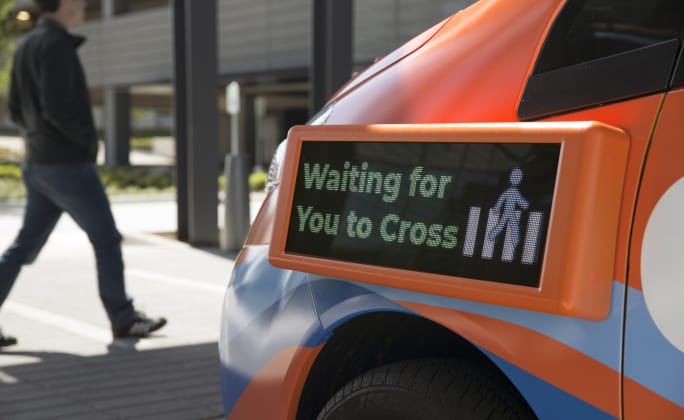
Drive.ai's vehicles will be painted a highly-visible orange, and they will feature four external screens that communicate the vehicles’ intended actions to pedestrians and other drivers on the roads. Photo: Drive.ai
“Frisco is recognized as a leader in using ‘smart,’ innovative traffic technologies,” said Frisco Mayor Jeff Cheney. “Drive.ai’s autonomous vehicles will help people get around one of our most vibrant, commercial areas along Frisco’s North Platinum Corridor. Today definitely marks a mobility milestone for our entire region. It also gets us closer to achieving one of our council’s ‘Top Ten’ goals, which is to improve traffic throughout Frisco...”
Drive.ai is dedicated to partnering with cities and transit authorities to safely deploy self-driving technologies in a scalable, measured way. Leading up to the July launch, Drive.ai will work with its partners to engage with members of the Frisco community, ensuring they are educated about and comfortable with the self-driving program.
In addition, informational signage will be placed throughout the route, the vehicles will be painted a highly-visible orange, and they will feature four external screens that communicate the vehicles’ intended actions to pedestrians and other drivers on the roads.
“Self-driving cars are here, and can improve the way we live right now,” said Sameep Tandon, co-founder and CEO of Drive.ai. “Our technology is safe, smart, and adaptive, and we are ready to work with governments and businesses to solve their transportation needs. Working with the City of Frisco and Frisco TMA, this pilot program will take people to the places they want to go and transform the way they experience transportation.”
Related Content: Aptiv, Lyft to Launch 30 Autonomous Vehicles in Las Vegas
More Rental Operations

How Did This Independent Rental Operator Grow to 170 Vehicles in 4 Years?
With 170 vehicles across three Kentucky locations, Joel Price relies on an overseas team to handle reservations, payments, and after-hours customer service. It's one part of an unconventional approach to growing an independent rental operation.
Read More →
What Does It Take to Succeed in B2B Rentals?
The fundamentals may be familiar to daily car rental operators, but project-based truck rentals put different demands on the fleet and the business.
Read More →
NPR Builds on International Partnerships to Grow Rental Bookings
With Ana Laborde supporting broker development, NPR Auto Group is tailoring distribution strategies, rate packages, and partnerships to grow international reservations across its three brands.
Read More →
Advantage, Sixt Place Among Top Five in Annual Satisfaction Study
While Enterprise and National retain the top spots in JD Power’s 2026 rankings, the latest customer satisfaction results suggest renters can find competitive service beyond the biggest car rental names.
Read More →
The $100,000 Insurance Trap in Exotic Car Rentals
Exotic rental agencies often rely on customers’ personal auto policies to protect six-figure vehicles. But policy language can dramatically change the coverage for vehicles over $100,000 MSRP.
Read More →
The Booking Is Confirmed, But Is Your Customer Ready to Drive?
For international renters, a confirmed reservation doesn’t always mean they’re eligible to drive. Earlier checks can help operators catch documentation and payment issues before the customer reaches the counter.
Read More →
ICRS 2027 Opens Call for Papers
The International Car Rental Show seeks session proposals on the business, operational, and technology issues facing car rental operators. Submissions are due Jan. 15.
Read More →
Turo to Launch Vehicle Delivery Service
Turo Delivered will let travelers search for vehicles that hosts can deliver directly to hotels, homes, airports, train stations, and other locations.
Read More →
Palm Beach Airport Code Change Creates Car Rental Distribution Gap
A test of rental searches under the old PBI and new DJT airport codes returned largely different sets of brands and vehicles, highlighting a potential distribution problem for rental operators.
Read More →
U-Save Continues Dominican Republic Expansion with Launch in Punta Cana
The new franchise location builds on U-Save’s existing Santo Domingo operation and will begin taking reservations for October 2026.
Read More →