



Related Article: Can You Imagine A World Without Rental Counters?
On-Demand Transportation Apps Changing Rental Industry
As the marketplace moves away from the rental counter and into "anytime, anywhere" mobile bookings, now is the time for car rental companies to embrace the notion of carsharing and its on-demand transportation technology.
by Alan Woodland
March 13, 2015
4 min to read
With approximately two million vehicles in the U.S. rental fleet, why are the 17,000 vehicles employed in carsharing getting more media attention?
Daily rentals dwarf the emerging “per minute” urban transportation service today. Carsharing revenues, membership and vehicles are growing at rates less than 10%, but investments establishing new carsharing services in mid-size cities and university campuses are being announced weekly.
Zipcar, a carsharing company owned by Avis Budget Group, has conducted several millennial surveys that demonstrate mobile phones and on-demand transportation apps are more important to millennials than car ownership.
The smartphone is an urban mobility tool that allows users access to self-drive vehicles and car and driver services and generates multi-modal A-to-B trip itineraries with applications like RideScout. As the marketplace moves away from the rental counter and into the realm of “anytime, anywhere” mobility bookings, the mobile wireless user experience is driving demand for transportation services.
Additionally, fleet managers are also paying attention to how technology can be used to optimize asset utilization and improve administrative efficiencies.
Apart from the traditional leisure, business and replacement markets for daily rentals, carsharing opens up a new opportunity that competes with the privately owned car. How can carsharing deliver the same convenience and flexibility of having your own car?
In cities, car ownership can be a hassle. Parking is hard to find and expensive whenever you leave home. Costs of vehicle financing, insurance and depreciation are increasing. The responsibilities of maintenance, cleaning and refueling are not attractive.
For many urban commuters, taking the train or the bus allows time to read, send and receive messages and plan their day while making a journey, according to “A New Way to Go” report by U.S. PIRG Education Fund and Frontier Group. Even with a hands-free phone in the car, drivers who are distracted with other tasks have an increased risk of being involved in a crash, according to a Virginia Tech Transportation Institute study.
Hourly and daily rentals also provide the consumer with greater flexibility when a car is needed. To suit the specific needs of the consumer, both carsharing and car rental offer a diverse fleet with a choice of pickup locations, short-term or long-term rentals and a range of insurance coverage and pricing plans.
Station-based, round-trip carsharing is primarily used for short durations (average four to five hours) and low mileage (less than 20 miles). Round-trip carsharing is useful for getting groceries, attending appointments/meetings or going to social events where having the same car for the return trip is important.
Point-to-point (or one-way) carsharing trips are shorter on average (both in time and distance) compared to round-trip carsharing. For example, point-to-point might be preferred if you are seeing an evening performance downtown where it makes sense to take a one-way trip downtown and drop off the car before the show.
For the return trip, you can take a taxi or public transportation or you can book another one-way shared car — rather than paying for parking and the hourly rate for the carsharing vehicle while at the show.
Much of a carsharing system’s success depends on parking. For a car to be useful, it has to be conveniently located so the car is nearby when the user wants to drive it. Unlike daily rentals, carsharing operators must have a well-distributed network of parking spots across a service area where the customer demand is present.
We take the view that carsharing and car rental are part of a “portfolio of mobility options,” which makes a reasonable alternative to the privately owned car in urban environments.
When a fleet of technology-enabled vehicles can be shared to meet the mobility need of urban residents — and personal car ownership decreases even slightly — demand for short-term access to car rentals and carsharing will increase. Auto rental companies should position themselves to take advantage of the opportunities these trends present.
The size of today’s carsharing market is relatively small, but the potential of technology, consumer preference and the changing urban environment makes the future for shared cars an opportunity worth focusing on.
Subscribe to Our Newsletter
More Rental Operations

ICRS 2027 Opens Call for Papers
The International Car Rental Show seeks session proposals on the business, operational, and technology issues facing car rental operators. Submissions are due Jan. 15.
Read More →
Turo to Launch Vehicle Delivery Service
Turo Delivered will let travelers search for vehicles that hosts can deliver directly to hotels, homes, airports, train stations, and other locations.
Read More →
Palm Beach Airport Code Change Creates Car Rental Distribution Gap
A test of rental searches under the old PBI and new DJT airport codes returned largely different sets of brands and vehicles, highlighting a potential distribution problem for rental operators.
Read More →
U-Save Continues Dominican Republic Expansion with Launch in Punta Cana
The new franchise location builds on U-Save’s existing Santo Domingo operation and will begin taking reservations for October 2026.
Read More →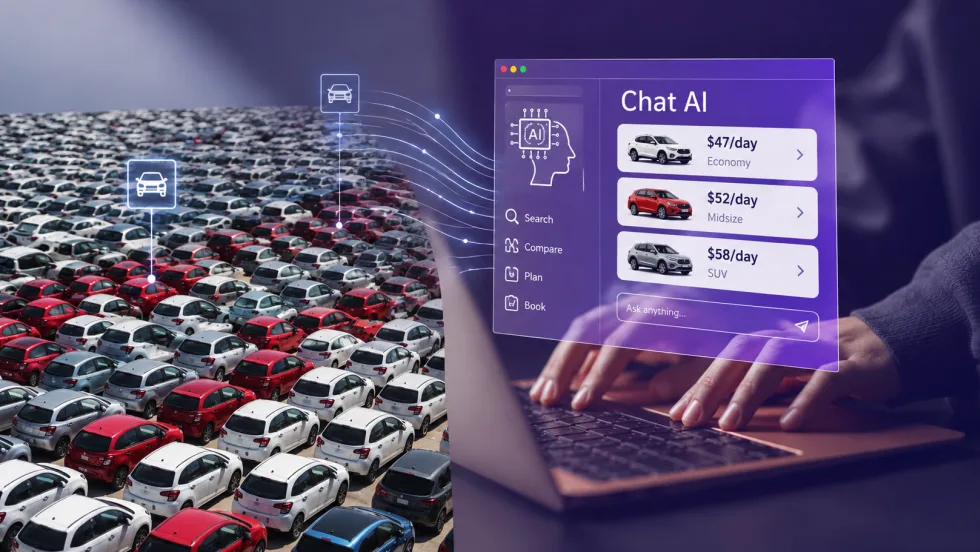
When AI Books the Rental Car, Who Controls the Sale?
As AI moves from comparing rental rates to completing transactions, operators need to understand how travelers find, interpret, rank, and ultimately see their offers. (Part 2 of 2.)
Read More →
European Booked Car Rental Rates Fell 5%, Results Varied by Country
Ireland, Cyprus, and the United Kingdom saw steep declines, while booked rates rose in Poland and Hungary.
Read More →
Is It Time to Rethink Rental Categories?
As traditional economy and compact cars disappear from the market, longtime rental operator Mike DeLorenzo asks whether the industry’s familiar vehicle categories still make sense — and what operators need to rethink along with them.
Read More →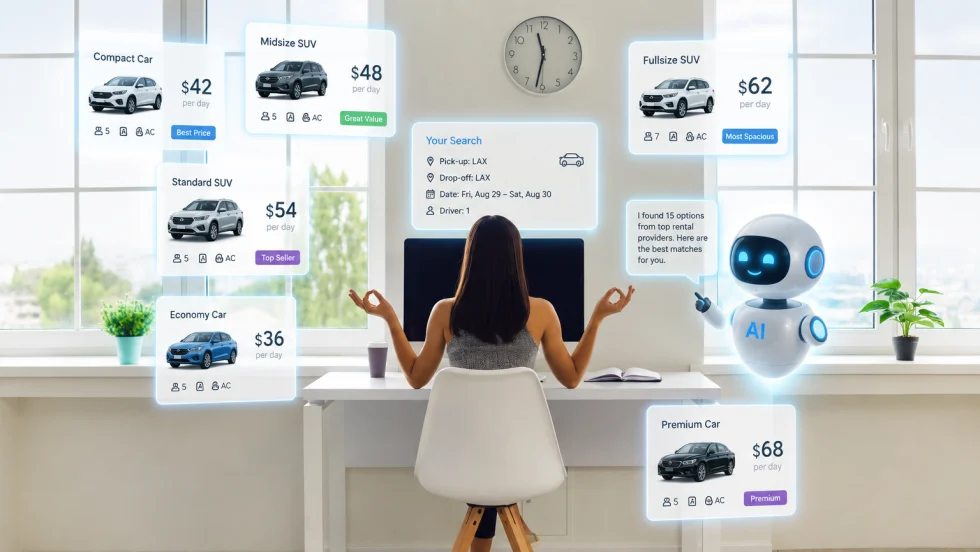
Who Owns the Rate? AI Is Creating a New Distribution Problem for Car Rental
Generative Engine Optimization asks whether AI can find a rental company, but operators also need to know whether the agent inspected enough of the market, compared equivalent offers, and presented a rate the traveler can actually book. (Part 1 of 2)
Read More →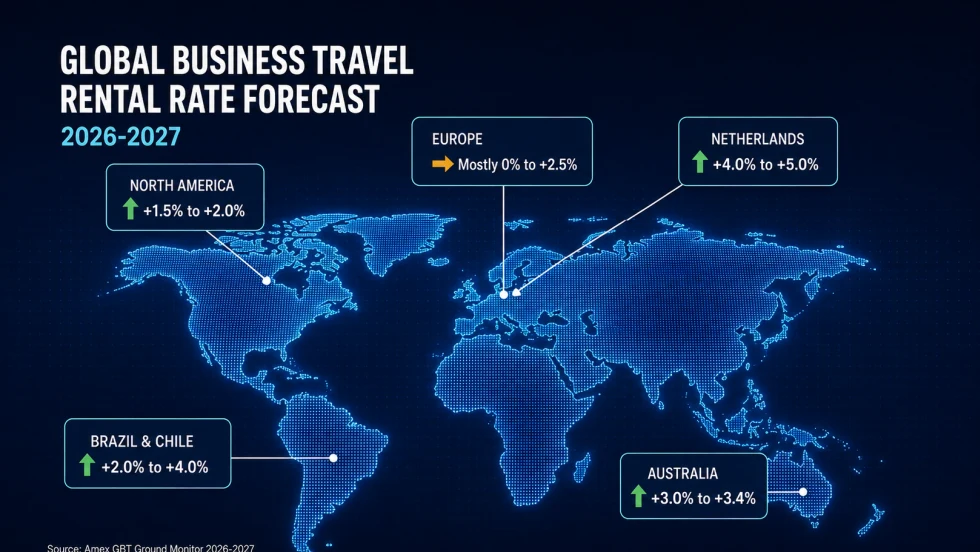
U.S. Business Travel Car Rental Rates Forecast to Rise Up to 2%
Improved fleet supply should limit pricing gains in 2026-27, while insurance, repair costs, and softer residual values continue to pressure rental operations, according to Amex GBT.
Read More →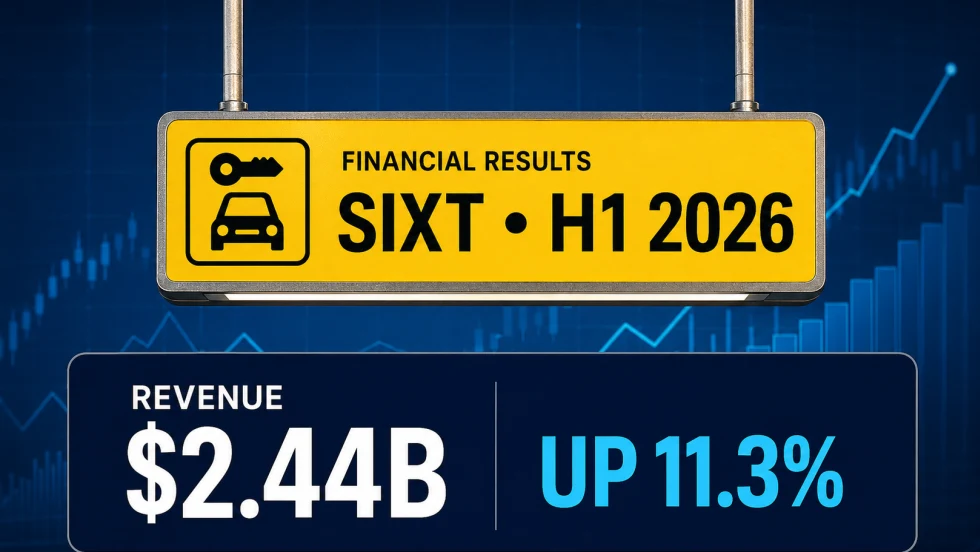
Sixt Revenue Tops $2.4 Billion in First Half of 2026
Sixt’s first-half revenue surpassed $2.4 billion for the first time as demand outpaced fleet growth, lifting utilization and earnings despite weaker consumer sentiment in North America.
Read More →