




Car Rental and TNC: Has the Threat Turned to Opportunity?
On its first quarter conference call, Hertz was candid about the impact of Uber and Lyft — as well as the unrealized revenue potential.

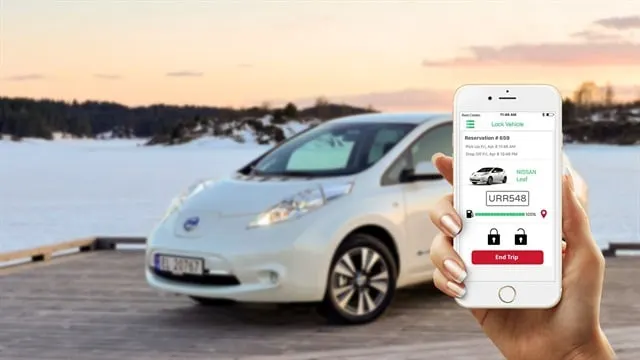
Photo courtesy of Rent Centric.
It’s been awhile since a leader in the car rental industry has defined the negative financial impact the explosion of the Transportation Network Company (TNC) model has caused on its business.
Yet Hertz Global Holdings’ CEO Kathryn Marinello did just that on questioning during the company’s first quarter conference call. She labeled TNC’s original impact as a “mid-to-high single-digit erosion of our business.”
The erosion was primarily short-term rentals, she said, “which frankly aren’t that great for us,” because of the costs to turn the vehicles. This is generally in line with statements Avis Budget Group and other industry watchers have made before, though I’ve heard “mid-to-low” single digits.
Hertz can probably feel comfortable making that statement because it’s realized, ironically, a new business sector in the last couple of years — renting to TNC drivers. Marinello said that renting to Uber and Lyft has replaced Hertz’s revenue erosion from TNC competition, and then some.
Avis Budget Group, too, has finally gotten into the TNC rentals game, though with much smaller numbers. The company has partnered with Lyft to rent about 1,500 cars in three pilot cities with more to follow this year. The platform is integrated into the Lyft driver app, allowing for an on-demand transaction.
Hertz earned nearly $300 million in TNC revenue in 2018 on 42,000 cars dedicated to that market. Back-of-the-napkin math puts revenue per unit (RPU) at about $600 per month.
That’s not disappointing when considering the lower cost structure in the model: Instead of selling 18-month old units with 40,000 miles, Avis and Hertz “cascade” them to the TNC market and sell them at about 80,000 miles. In this band, depreciation isn’t as steep, resulting in lower per-mile fleet costs.
The Avis cars are connected, meaning Avis is watching them closely to manage mileage. Further, Hertz is refining its model, and according to CFO Jamere Jackson on the call, has recently driven “about a mid-single digit increase in RPD (revenue per day) on our TNC business.”
As TNC grows — and it looks like there is still more TNC penetration to be taken in the coming years — you’d think car rental volume would have taken a commensurable hit. This hasn’t been the case, if these two public companies are worthy barometers.
In 2018, Avis increased rental volumes 1% in “Americas” (U.S. and Latin America) compared to 2017. In the first quarter of 2019 Avis saw 1% lower rental volumes in Americas (the government shutdown played a role) though it is forecasting an “unchanged to up 2%” for the year.
Hertz had significant volume growth in 2018, some of that admittedly due to its own growth in TNC rentals and some perhaps due to taking back share. This growth continued into the first quarter of 2019.
We all know what has happened to the taxi industry in the past eight years. So, we should ask ourselves: Absent the existence of the TNC phenomenon, would the car rental industry have experienced a flood of additive volume these past few years? It’s hard to say, as nothing exists in a vacuum.
But let’s not forget that the U.S. is the most mature of any car rental market. It has longstanding competitive pressures and some new ones (read: Sixt).
Let’s also keep in mind that both Uber and Lyft are self-sustaining because they’ve raised so much capital — they can continue to subsidize every transaction in ways that incumbent car rental never could. Investors have enough faith in the business model that they let Lyft accrue a staggering $2.4 billion in operating losses over the last three years.
While Hertz and Avis have been pressured for generations to show profitability, Uber and Lyft are only beginning to face these pressures now. In typical (but revealing) “investor speak,” Lyft claims in its IPO paperwork that “it may never be profitable.”
The TNC market itself will face its own disruption. When personal car ownership erodes, will Uber and Lyft and the rest of the gig economy face a smaller market for drivers? At the very least, some entity will still need to put those drivers in cars.
This is an exciting market, and we all felt this this energy at the International Car Rental Show in April. Car rental is — and always will be — about personal mobility. The way we get around will change yet again, but car rental is poised to meet these new demands.
Related: Mobility and Car Rental: Six Near-Term Trends
More Blog Posts

What Happens During a “Day on the Hill?”
Walking into a congressional office to discuss legislation certainly is outside the normal workday for most of us. But it’s a worthy, fun, and meaningful experience.
Read More →
What New Tariff Uncertainty Means for Rental Fleet Planning
Automakers won’t relocate production overnight, but uncertainty over Canadian tariffs could affect vehicle pricing, sourcing, and allocation well before the proposed Jan. 1 deadline.
Read More →
I'm Back
Life moves forward, as it inevitably does, but it sometimes seems to move in circles too. You end up in a different place, but you never close a door. Because you may walk back through it again.
Read More →
AI Can Supply The Damage Data, But Operators Must Apply The Judgments
The rental car industry held its first open discussion about the most controversial issue of the past year. Here are some key lessons, takeaways, and viewpoints.
Read More →
ICRS 2026 Countered The AI Drama, Thanks To These Panelists
One of my favorite sessions laid out the AI techno-optimism available to rental car operators ready to adapt their services for the decades ahead.
Read More →
Why Is JFK’s Grandson Interested In Your Rental Fleets?
Car rental operations should follow consistent practices when applying AI to vehicle damage assessments.
Read More →
‘Zero Friction’ Is The New Buzz Phrase for ICRS
This year’s International Car Rental Show hits the hot buttons on industry change and challenges.
Read More →
Rental EV Adoption Requires Local, Targeted Approach
The EV frenzy of the last few years has disillusioned the motoring public about going all-electric. Now it’s time to meet the market where it’s at.
Read More →
Why Car Rental Operations Must Use AI To Gain More Renters
A race has started between generations embracing AI and companies willing to adapt it to their operations.
Read More →
Speed Overtakes Car Rental Industry Practices
Technology, data, and digital advances are combining to create a business climate full of information, impatience, and instant results.
Read More →