



A Nuanced View on Auto Tariffs, Trade, and Technology
Veteran auto executive Jim Press recently talked with Auto Rental News about how tariffs could reshape the global automotive industry.


As with past tariff policies, automakers and their fleet customers can find useful approaches to offsetting the costs of tariffs.
Photo: Markus Winkler / Pexels
- Jim Press offers insights into the potential effects of tariffs on the global automotive industry.
- Trade policies heavily influence automotive market dynamics.
- The role of technology will shape the future landscape of the automotive sector.
*Summarized by AI
I recently had the privilege of interviewing an A-list OEM expert and executive, whose career spans 66 years of positions in the auto industry.
Jim Press is best known for his roles at Toyota, Chrysler, Hyundai, and Ford. He spent 37 years at Toyota Motor Sales and Toyota North America, where he rose to become president, COO, and senior managing director. After stepping down in 2007, he became co-president and vice chairman of Chrysler for two years.
His resume stretches over two screens on his LinkedIn profile.
He started out in May 1959 as an attendant, mechanic, and night manager at a Phillips 66 station in Prairie Village, Kansas, and then three years later, working in parts, service, and sales at a Chevrolet dealership in Kansas City.
With a firm grounding in automotive and many larger roles in the following decades, you can ask him about any topic connected to vehicle production, markets, and transactions.
He's also learned a few things about today's central challenge in the automotive industry: tariffs. It's a prime topic among automotive professionals networking at industry conferences.
To be exact, Press encountered tariffs for the first time 55 years ago, on April 17, 1970.
As he recounts, he worked for "an unknown little company that imported cars from Japan," called Toyota.
“People thought we made sewing machines. We needed to create everything. The car company didn't have a structure. One of the first things that happened in our first year of operation was that President Nixon decided to stop having the yen pegged to the dollar, and we went to a floating yen. It raised our prices by a third. We would be out of business in six weeks. Well, Toyota is still here.”
Balancing Free Trade & Tariffs
Press mentions this point to underscore how free trade enhances the global auto industry's competitiveness in import and export directions. "I am a free trader from the standpoint of benefiting every company, every country, and the people and workers of all the countries over the long term.
“In the short term, free trade has created some issues as the lower-level economic countries have begun to compete with the higher-level economic countries.”
However, tariffs are a business challenge that dealers, ship operators, executives, rental car companies, OEMs, and suppliers will meet, he said.
“As long as the companies continue to focus on their prime directives such as delivering value to customers, providing solutions for problems, and using that focus to overcome the impact of tariffs, it will allow us to move out of the need for tariffs over the long term.”
Protectionism brings unanticipated consequences — and opportunities, he said.
“In Toyota's case, we grew in the 1970s, outgrew the capacity of Japan, and recognized that we needed to be a full citizen of the U.S. to produce vehicles here, but we could not get the capital or the commitments of the parent company to trust building vehicles in remote locations.”
So, Toyota bought the former NUMMI plant in Fremont, California, and jointly produced vehicles there with General Motors, to prove they could make a go of U.S.-based production, he said. "We also bought a small wire fabricator in Long Beach that became our truck bed manufacturing plant. These were very small ventures.”
Fast-forward to the Clinton Presidency in the 1990s, when the administration aimed to eliminate Japanese automakers from the market by imposing a 100% tax on carmakers like Lexus, Press said.
“There was a huge effort to protect the U.S. manufacturers. That protectionist effort caused us to build our plants in the U.S. over time; those plants have replaced the cars produced in Detroit. They're U.S. plants with U.S. workers, and it’s the way it should work. That's free trade, but it's with tariff encouragement.”
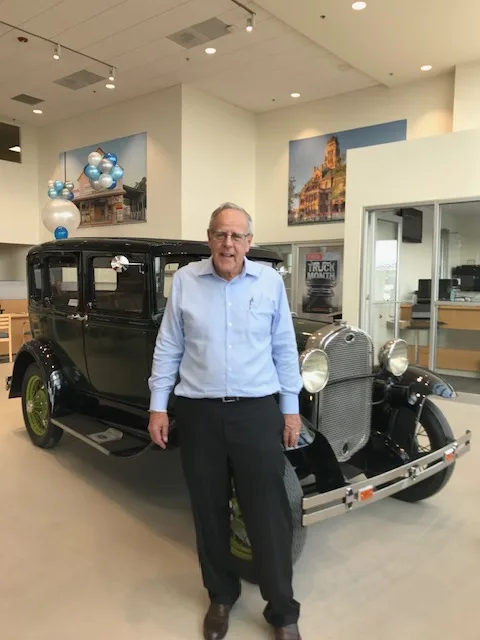
Although Press wasn't around during the Model A era, his automotive career began in 1959, joining Toyota in 1970. He is seen here at the Waxahachie Ford dealership south of Dallas with a Model A Ford that replaced the Model T in 1927.
Photo: Jim Press
Tariffs Can Influence Wider Outcomes
That brings him to a more rounded, nuanced view of the current tariff situation.
“If you look at the economic disparity in the U.S. and the fact that we've not been able to replace our manufacturing base at many of the locations where we had manufacturing activity, I think this will help stimulate us to become more competitive. In many ways, with these new tariffs, the negotiating process has been somewhat painful, and there's been much uncertainty. Still, now we're beginning to see some definition of where we're going,” he said, citing a 15% tariff on Japanese cars that are “not a knockout punch.”
Tariff pressure from the Nixon administration precipitated what is referred to as the “insourcing” of foreign OEM manufacturing in the U.S., Press said.
“If you go back to when the Nixon shock occurred, it eventually caused us to find a way to build a better car for less money in this country, contributing to the economy. And I think those kinds of challenges won’t come internally. Those are external, and it's a necessary way for the developing and developed countries to begin to move more towards unification and eliminate the differences.”
Looking back, tariff scares were worse than the realities, Press said. “The reality is manageable by companies that aren't weak. The tariffs will be a problem for weaker companies and brands. You're seeing that with Nissan, and you will see that with Stellantis. As the market becomes more competitive with not just tariffs, but the costs of supplies and components, channel management will be necessary.”
He said competition and the need for new technology will separate the stronger and weaker automotive brands and their balance sheets.
A History Lesson On Tariffs
I asked Press about media reports that compare Trump's tariffs with the Nixon approach and the Smoot-Hawley Tariff Act of 1930, which generated an effective tariff rate of 25% and compounded the miseries of the Great Depression.

Protectionism brings unanticipated consequences — and opportunities, for those that know how to navigate them, says OEM expert and executive Jim Press.
Photo: Jim Press
“The Smoot-Hawley scare occurred at a relatively weak part of the global economy,” Press said. He points out that Trump’s intentions result in less damage than the Smoot-Hawley tariffs generated.
“At that time, the tariff was the main source of income for the government. That was the only way to have an income tax before our country became economically strong with tariffs. I think he's using these to balance the flow of jobs and wealth that has been moving from the developed to the developing countries, to manage that flow now that the developing countries are stronger.”
In the first half of the 20th Century, the U.S. economy wasn't as strong as it is now globally, and the developing countries were much smaller, Press said. Tariffs of 10% to 15% combined with deregulation and some permanent tax improvements could yield a more balanced outcome, he added. While tariffs could cause inflation depending on their total costs, they are not applied to finished products.
For a $70,000 vehicle, 15% doesn't apply to all the components, and the transfer value of that vehicle is negotiated with the country of origin, he said. "The actual impact is a price increase pressure, but it is not the size of the tariff.”
Press said he’s more concerned about two other automotive market factors:
Affordability among auto consumers. Vehicle financing now can reach up to 72 months, with used cars costing more than what new ones used to cost. The market lacks enough entry-level vehicles for buyers. "Affordability will be a problem for the economy, for us, as in the auto industry, and it will probably take at least a 1–to 5-year product cycle to engineer through this affordability issue."
Higher costs of raw materials such as aluminum and steel will also affect vehicle costs.
A Way Forward For Fleets
In response to my question about how automotive inflation will affect fleet operators' decisions about vehicle purchases, Press advised that they will have to balance depreciation and operating costs, which are likely to remain stable, against capital cost increases.
“What will happen is you will have longer product cycles and fewer models, less complexity in the product line, longer ownership, and a move to alternative power trains,” Press predicted.
For fleet operators, it's still too early to assess the purchase and cycling picture fully, but he advised that they stay with basic vehicles that have a life after their use.
Commercial operators should make sure they introduce the concept of mobility, whereby people are not buying a car but an asset that costs a few cents a mile.
“You should look at the cost and operating exposure, not based on the capital cost, but the cost over the depreciation, with all other factors involved. Manufacturers will start looking at cars per mile driven.”
Those calculations cover “the spectrum of that money they make” with the income streams of parts, service, retention, and resale values. That becomes more important in this high-affordability crisis environment.
Fleet operators also should consider using AI tools and other information about lifetime mobility management to find ways to save money.
“They need to know where to bring them in, when to take them out, where the exposure is for repairs and service, and make sure they're making the right choices today that will create desirable used cars in three to seven years.”
He summarized that despite the possible short-term inflation brought by the tariffs, the long-term rebalancing of the market, coupled with innovation and mobility, can make vehicles more affordable.
“Tariffs are never as bad as they appear,” he said. “I think the tariff can motivate our good companies with great management of strong organizations to improve, but at the same time, weaker companies will fall behind.”
A New Tech Approach
Looking beyond tariffs, Press refers to technology, AI, and innovation as long-term solutions for automotive challenges. This statement defines his latest role as an advisor to Work Truck Solutions, a company that provides website inventory services for commercial vehicle dealerships.
Press has been interested in working with startups. “Companies that intrigue me now are making money using their minds, not their hands, in the technology side of the business,” he said.
Press now focuses on the tech tools that will enable dealers to operate more efficiently in the future. "With work trucks, it's a chance for me to help them understand how the dealers operate, how the OEMs operate, how to integrate in a meaningful way and build a platform that can be used for commercial vehicle sales, operations, and service, and in a way that mirrors what's happened in retail.”
Since commercial vehicles comprise about 17% of dealer profits, the dealers need to embrace technology to tap the full potential of commercial business, he said.
“One of my early jobs at Ford was when we opened the Louisville truck plant and started building commercial trucks,” Press said. “I've always enjoyed the commercial vehicle industry, especially large trucks, and now I help them as an advisor, with their strategic planning, contacts with the OEMs, and how to develop programs and products that add value beyond what the dealers are doing.”
The Work Truck Solutions system can more accurately catalogue the details of truck inventory, identifying upfit specs, operational information, and cost breakdowns by connecting the cab chassis with the particular upfit, Press said. That determines the capabilities, age, and overall value.
“Now WTS has prime contracts with the Detroit three and other OEMs running their commercial truck website inventories, and they have a marketplace and several tools for dealers for inventory control, marketing, merchandising, and creating leads,” Press said.
“It’s been wonderful to see this plant flourish and grow.”
More Blog Posts
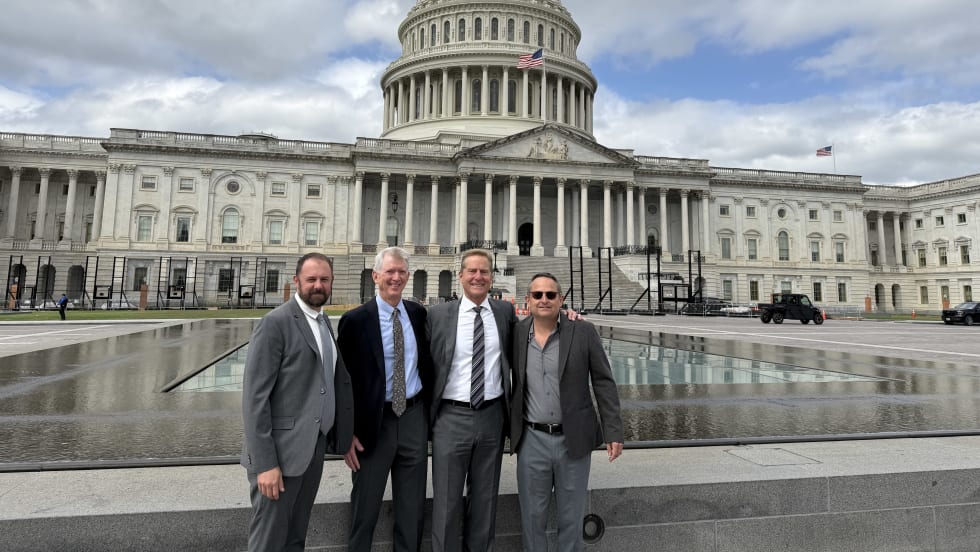
What Happens During a “Day on the Hill?”
Walking into a congressional office to discuss legislation certainly is outside the normal workday for most of us. But it’s a worthy, fun, and meaningful experience.
Read More →
What New Tariff Uncertainty Means for Rental Fleet Planning
Automakers won’t relocate production overnight, but uncertainty over Canadian tariffs could affect vehicle pricing, sourcing, and allocation well before the proposed Jan. 1 deadline.
Read More →
I'm Back
Life moves forward, as it inevitably does, but it sometimes seems to move in circles too. You end up in a different place, but you never close a door. Because you may walk back through it again.
Read More →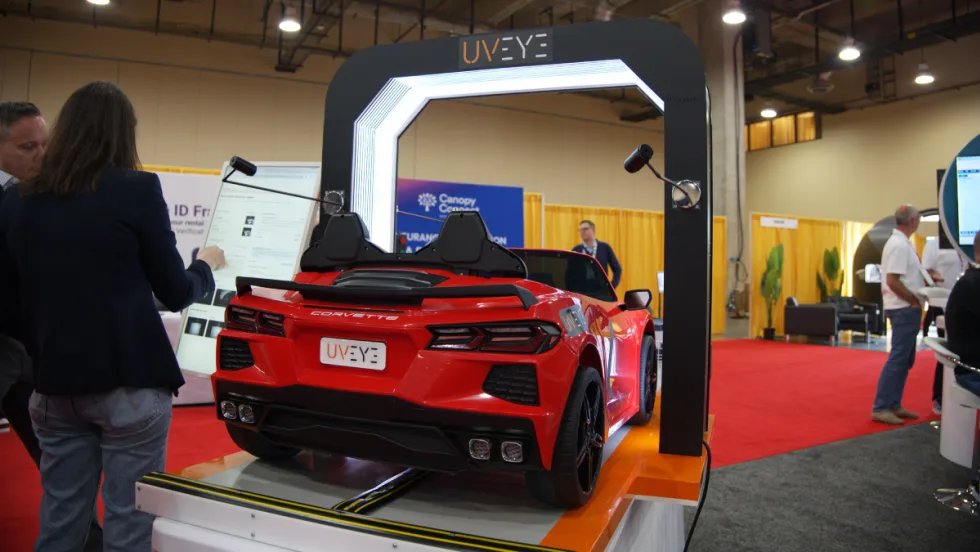
AI Can Supply The Damage Data, But Operators Must Apply The Judgments
The rental car industry held its first open discussion about the most controversial issue of the past year. Here are some key lessons, takeaways, and viewpoints.
Read More →
ICRS 2026 Countered The AI Drama, Thanks To These Panelists
One of my favorite sessions laid out the AI techno-optimism available to rental car operators ready to adapt their services for the decades ahead.
Read More →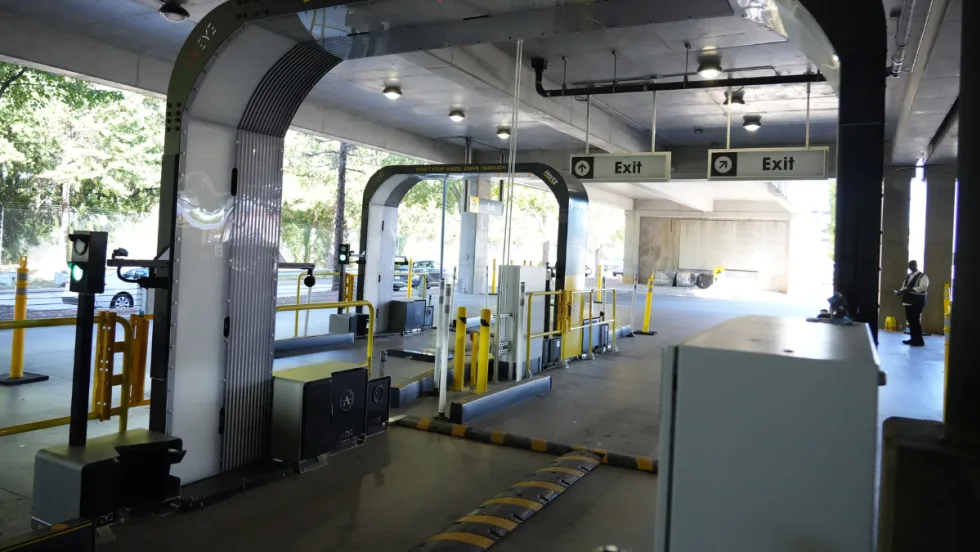
Why Is JFK’s Grandson Interested In Your Rental Fleets?
Car rental operations should follow consistent practices when applying AI to vehicle damage assessments.
Read More →
‘Zero Friction’ Is The New Buzz Phrase for ICRS
This year’s International Car Rental Show hits the hot buttons on industry change and challenges.
Read More →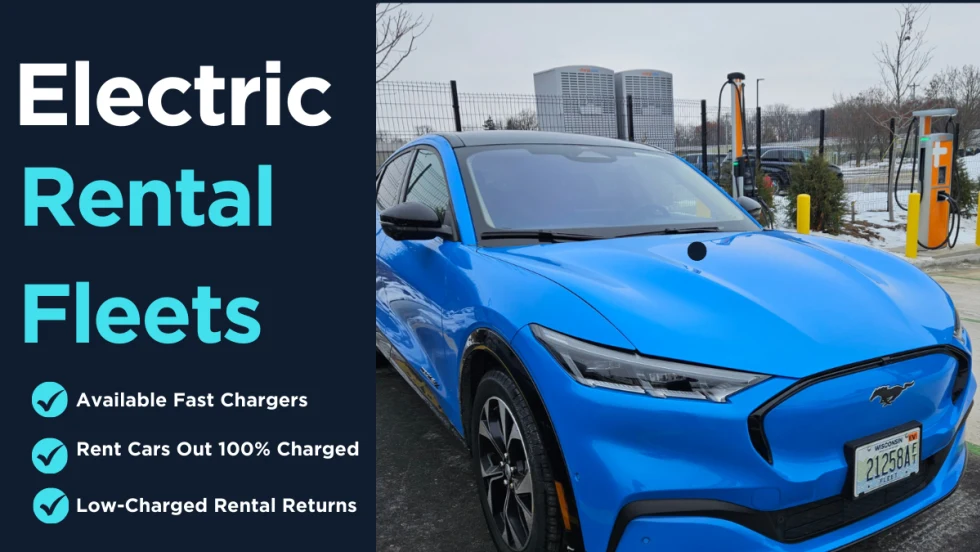
Rental EV Adoption Requires Local, Targeted Approach
The EV frenzy of the last few years has disillusioned the motoring public about going all-electric. Now it’s time to meet the market where it’s at.
Read More →
Why Car Rental Operations Must Use AI To Gain More Renters
A race has started between generations embracing AI and companies willing to adapt it to their operations.
Read More →
Speed Overtakes Car Rental Industry Practices
Technology, data, and digital advances are combining to create a business climate full of information, impatience, and instant results.
Read More →