



Hiring Drivers as Contractors in California? Be Careful.
Per new regulations, if you operate a fleet in California and you’re using drivers on a contractual basis, be prepared to make fundamental changes to your business.


Photo via David Boozer/Pexels.
In the Dynamex Operations West, Inc. v. Superior Court opinion issued April 30, the California Supreme Court clarified the standard for determining whether California workers should be classified as independent contractors or employees.
The ruling establishes a much stricter standard and thus forces a variety of fleet types — from trucking, car rental, vocational, and last-mile delivery, as well as companies in the “gig” economy such as Uber and Lyft — to alter fundamental business practices to comply.
The new rule is based on statutes in New Jersey and Massachusetts. Modeled after a modified “ABC” test, they’re the strictest in the country.
The ABC test determines if: (A) the worker is free from all control and direction from the business; (B) the worker is performing other work outside the usual course of the business; and (C) the worker is customarily engaged in an independently established trade or business.
The new rule usurps the more flexible Borello test, used since 1989, which examined whether the employer had a “right to control” the manner in which the contractor performed the work. Essentially, employers could control how and when employees performed the work, whereas independent contractors would deliver results, but perform the work when and how they see fit.
Other determinations included whether the work was part of the hiring company’s regular business and whether the company or the contractor supplied the equipment, tools, and workplace. As well, the Borello test did not classify contractors as employers unless those criteria were met.
Here’s the kicker: With the new rule, the burden is now on employers. “This new standard completely flips it — any independent contractor is presumed to be an employee unless the business can prove all three of the ABC factors,” says Todd Wulffson, managing partner for the Orange County office of Carothers, Disante & Freudenberger.
“The B standard is the tough one,” says Wulffson. That standard focuses on whether the worker is “providing services to the business in a role comparable to that of an employee,” as opposed to that of a traditional independent contractor.
Wulffson explains that a plumber performing work for a trucking company would still be classified as an independent contractor. But a trucking firm, sales and service fleet, or car rental company using part-time drivers would need to reclassify those workers as employees, because the task of driving is intrinsic to their businesses.
California employers such as trucking companies engaged in interstate commerce catch a break — they fall under federal Department of Transportation regulations that supersede state laws. But that would create an unfair playing field in favor of those operating in California and other states, Wulffson says.
Nonetheless, the new legal standard effectively reclassifies hundreds of thousands of independent contractors as employees. For those fleet operators affected, what can be done?
What Can You Do?
The first step is to audit every non-employee contract. “The scope of workers within the new rule will be wider than you thought,” Wulffson says. “For trucking fleets, all drivers and mechanics would be classified as employees, and even administrative roles in logistics.”
In the cases in which contractors don’t have to be converted, make sure those contractor agreements comply with the new standard.
There are ways to avoid full conversion to employees.
Companies could hire drivers through temp agencies, as the driver would be the employee of the temp agency which would assume the administrative hassle. “The new rule will be a boon for temp agencies,” Wulffson says.
Another route is to create an LLC, which gives the worker a small ownership percentage in the business. All drivers would have one membership unit and get paid based on their “ownership participation.”
Another option would be to have drivers form their own LLC, and that company would contract with the owner of the fleet to provide drivers.
In the great majority of cases, the most straightforward solution is to convert your independent contractors to employees. Yes, this assumes the responsibilities of minimum wage, overtime, meal and rest breaks, sick leave, healthcare contributions, and paid parental leave.
While these are significant costs, Wulffson says, the risks of doing nothing are even greater — an action from the labor commissioner, an employee bringing a court action, an employee organizing a class action, or a private attorney general’s action on behalf of all similar employees.
“If you’ve got a couple dozen independent contractors or more, you risk a class action,” he says. “And all you need for a class action is one employee.”
More Blog Posts

What Happens During a “Day on the Hill?”
Walking into a congressional office to discuss legislation certainly is outside the normal workday for most of us. But it’s a worthy, fun, and meaningful experience.
Read More →
What New Tariff Uncertainty Means for Rental Fleet Planning
Automakers won’t relocate production overnight, but uncertainty over Canadian tariffs could affect vehicle pricing, sourcing, and allocation well before the proposed Jan. 1 deadline.
Read More →
I'm Back
Life moves forward, as it inevitably does, but it sometimes seems to move in circles too. You end up in a different place, but you never close a door. Because you may walk back through it again.
Read More →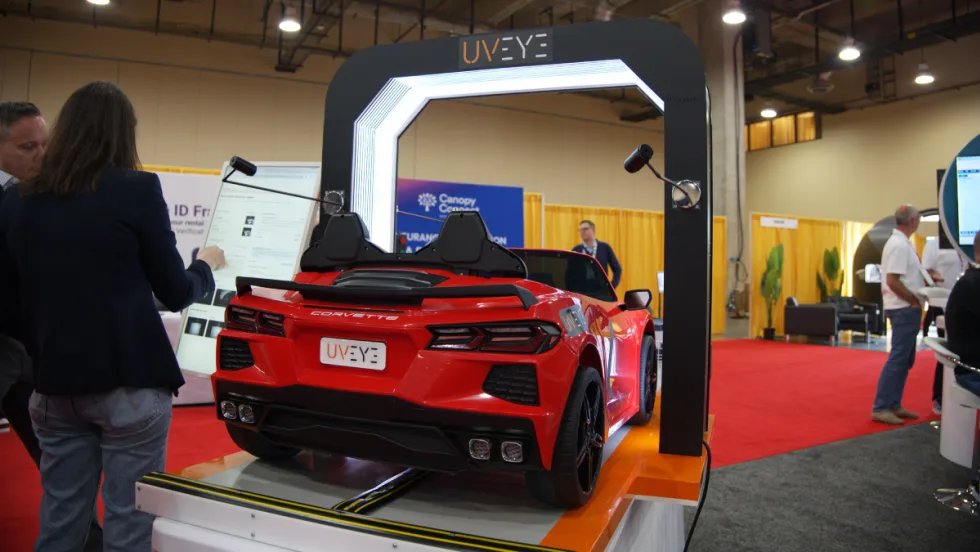
AI Can Supply The Damage Data, But Operators Must Apply The Judgments
The rental car industry held its first open discussion about the most controversial issue of the past year. Here are some key lessons, takeaways, and viewpoints.
Read More →
ICRS 2026 Countered The AI Drama, Thanks To These Panelists
One of my favorite sessions laid out the AI techno-optimism available to rental car operators ready to adapt their services for the decades ahead.
Read More →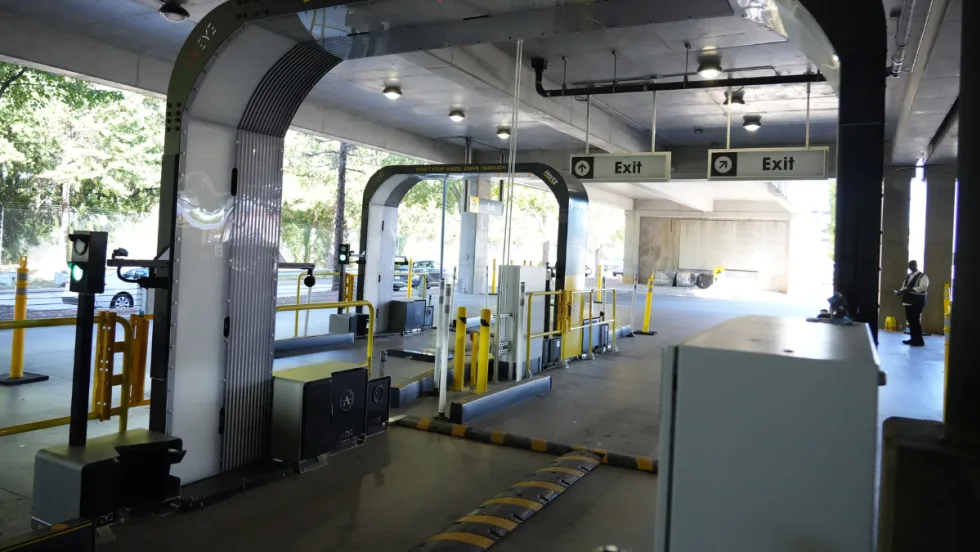
Why Is JFK’s Grandson Interested In Your Rental Fleets?
Car rental operations should follow consistent practices when applying AI to vehicle damage assessments.
Read More →
‘Zero Friction’ Is The New Buzz Phrase for ICRS
This year’s International Car Rental Show hits the hot buttons on industry change and challenges.
Read More →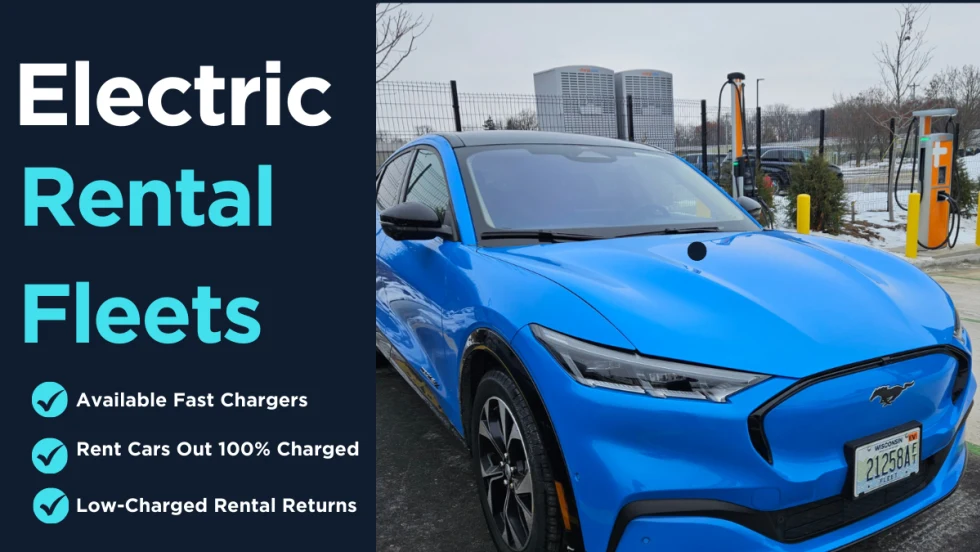
Rental EV Adoption Requires Local, Targeted Approach
The EV frenzy of the last few years has disillusioned the motoring public about going all-electric. Now it’s time to meet the market where it’s at.
Read More →
Why Car Rental Operations Must Use AI To Gain More Renters
A race has started between generations embracing AI and companies willing to adapt it to their operations.
Read More →
Speed Overtakes Car Rental Industry Practices
Technology, data, and digital advances are combining to create a business climate full of information, impatience, and instant results.
Read More →