



Different Approaches to Environmentally Friendly Motoring
A test drive pits the Nissan Leaf against the Chevrolet Volt.
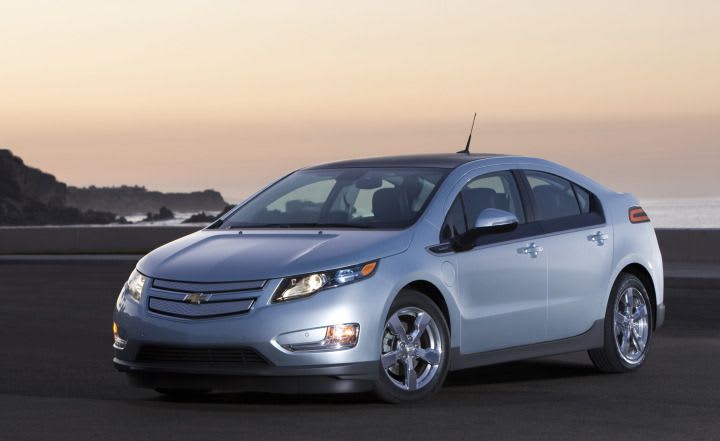
Chevy Volt
The Nissan Leaf and Chevrolet Volt take different approaches to environmentally friendly motoring. On the road the Volt is a pleasant cruiser and commuter, while the Leaf is more lively and may appeal more to a driving enthusiast, according to an automobile blog in the New York Times.
Writer Christopher Jensen participated in a test drive for both vehicles in Hell, Mich., which is about 65 miles northwest of Detroit. Journalists at the event were selecting the North American Car and Truck of the Year, and the Volt and the Leaf are among the 14 semifinalists for the 2011 award.
On exterior designs, Nissan favored whimsy, Jensen wrote, while Chevrolet went after a smoother and more energetic look.
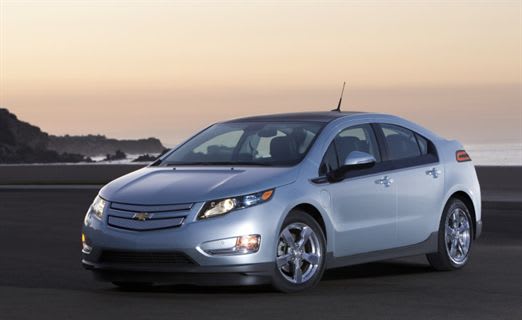
Differences are also evident in price. The Volt, a plug-in hybrid, starts at $41,000; the battery-electric Leaf at $33,600. Both cars qualify for federal tax credits of up to $7,500 and potentially for state and local incentives as well.
Also about the same is the cars' overall length: 177.1 inches for the Volt and 175 inches for the Leaf. Empty, the Volt weighs almost 3,800 pounds. Nissan has yet to release the weight of the Leaf. Both have front-wheel drive.
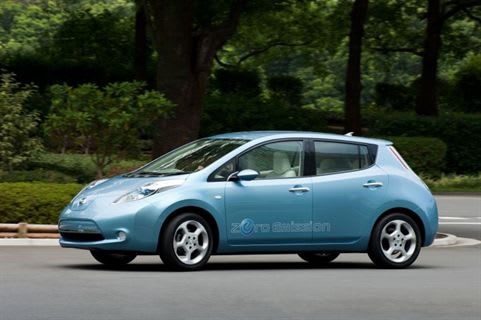
On challenging two-lane roads, the Leaf and Volt each performed well, even traveling at brisk speeds. The Leaf's steering is lighter and has better feel than the Volt's. The Leaf was quicker to head into a turn, and the Volt felt more nose-heavy. There was more of a pause before the Volt began to change direction.
Both cars' bodies felt solid, perhaps partly because their large battery packs provide some additional bracing for vehicles' structures. The ride quality of each car was adequately comfortable even on a broken surface. The feel of the Leaf's brakes was better than the Volt's, on which the pedal felt too soft.
The electric motors in each car provide instant as well as relatively strong and steady acceleration. Chevrolet says the Volt will go from zero to 60 m.p.h. in about 8.5 seconds. Nissan has not released a zero-to-60 time, but a writer for Green Car Advisor recently reported clocking the Leaf at 7.7 seconds. Chevrolet says the Volt can go up to 50 miles on a charge. Nissan says the Leaf will go up to 100 miles.
A benefit of the Volt is that once the battery is depleted, the vehicle can continue on with its gasoline engine providing the electricity. The Leaf is a pure electric car, so once the battery is depleted, the Leaf will need an electrical outlet before it can run again.
More Rental Operations

Direct, Broker or Hybrid? How Travel Retailers Source Rental Cars
As travel retailers weigh direct supplier relationships against third-party distribution, rental operators need to understand how those decisions affect their business.
Read More →
How Did This Independent Rental Operator Grow to 170 Vehicles in 4 Years?
With 170 vehicles across three Kentucky locations, Joel Price relies on an overseas team to handle reservations, payments, and after-hours customer service. It's one part of an unconventional approach to growing an independent rental operation.
Read More →
What Does It Take to Succeed in B2B Rentals?
The fundamentals may be familiar to daily car rental operators, but project-based truck rentals put different demands on the fleet and the business.
Read More →
NPR Builds on International Partnerships to Grow Rental Bookings
With Ana Laborde supporting broker development, NPR Auto Group is tailoring distribution strategies, rate packages, and partnerships to grow international reservations across its three brands.
Read More →
Advantage, Sixt Place Among Top Five in Annual Satisfaction Study
While Enterprise and National retain the top spots in JD Power’s 2026 rankings, the latest customer satisfaction results suggest renters can find competitive service beyond the biggest car rental names.
Read More →
The $100,000 Insurance Trap in Exotic Car Rentals
Exotic rental agencies often rely on customers’ personal auto policies to protect six-figure vehicles. But policy language can dramatically change the coverage for vehicles over $100,000 MSRP.
Read More →
The Booking Is Confirmed, But Is Your Customer Ready to Drive?
For international renters, a confirmed reservation doesn’t always mean they’re eligible to drive. Earlier checks can help operators catch documentation and payment issues before the customer reaches the counter.
Read More →
ICRS 2027 Opens Call for Papers
The International Car Rental Show seeks session proposals on the business, operational, and technology issues facing car rental operators. Submissions are due Jan. 15.
Read More →
Turo to Launch Vehicle Delivery Service
Turo Delivered will let travelers search for vehicles that hosts can deliver directly to hotels, homes, airports, train stations, and other locations.
Read More →
Palm Beach Airport Code Change Creates Car Rental Distribution Gap
A test of rental searches under the old PBI and new DJT airport codes returned largely different sets of brands and vehicles, highlighting a potential distribution problem for rental operators.
Read More →